The study of 521 woolly mammoth genomes (dated roughly 30,000–20,000 years ago) finds a strong sex-bias difference between contexts: natural, dispersed deposits were mostly male (66%), while dense bone concentrations near human activity were about 70% female. The authors argue this pattern indicates human hunting or repeated scavenging helped create female-biased archaeological assemblages, though herd behavior and predictability may also have played roles. The analysis also reports the first known case of X0/XX sex-chromosome mosaicism in an extinct mammal from Wrangel Island.
Ancient DNA Suggests Ice Age Humans Favored Hunting Female Woolly Mammoths
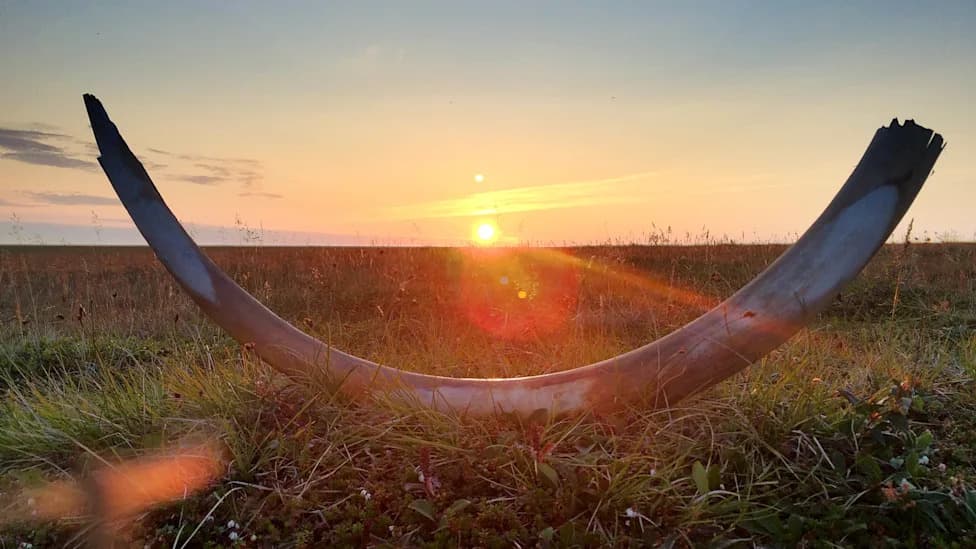
A mammoth tusk found in Wrangel Island in Russia.
Woolly mammoths (Mammuthus primigenius) were prized targets for Ice Age hunter-gatherers, offering meat, fat, hides and bones for shelters, as well as ivory for tools, art and ornaments. A new study published in Current Biology uses ancient DNA to argue that prehistoric humans may have preferentially targeted female mammoths when forming large bone assemblages near human sites.
The research team extracted genome data from 521 mammoth remains dated to roughly 30,000–20,000 years ago, recovered from key Ice Age sites across present-day Europe, Asia and North America. By comparing genetic sex ratios from naturally dispersed deposits with those from dense bone concentrations associated with human activity, the authors reveal contrasting patterns that point to human influence.
Male Bias in Natural Deposits, Female Bias Near Humans
Remains from dispersed, apparently natural accumulations were predominantly male: about 66 percent of those individuals were genetically male. The authors suggest this is consistent with solitary, sometimes aggressive males being more likely to die in natural traps such as sinkholes or landslides, where their bones could be preserved for millennia.
By contrast, bone concentrations found near archaeological sites and places with evidence of human activity were heavily female biased, with roughly 70 percent of remains genetically female. The disparity supports the interpretation that human hunting or repeated scavenging played a major role in forming these large mammoth assemblages.
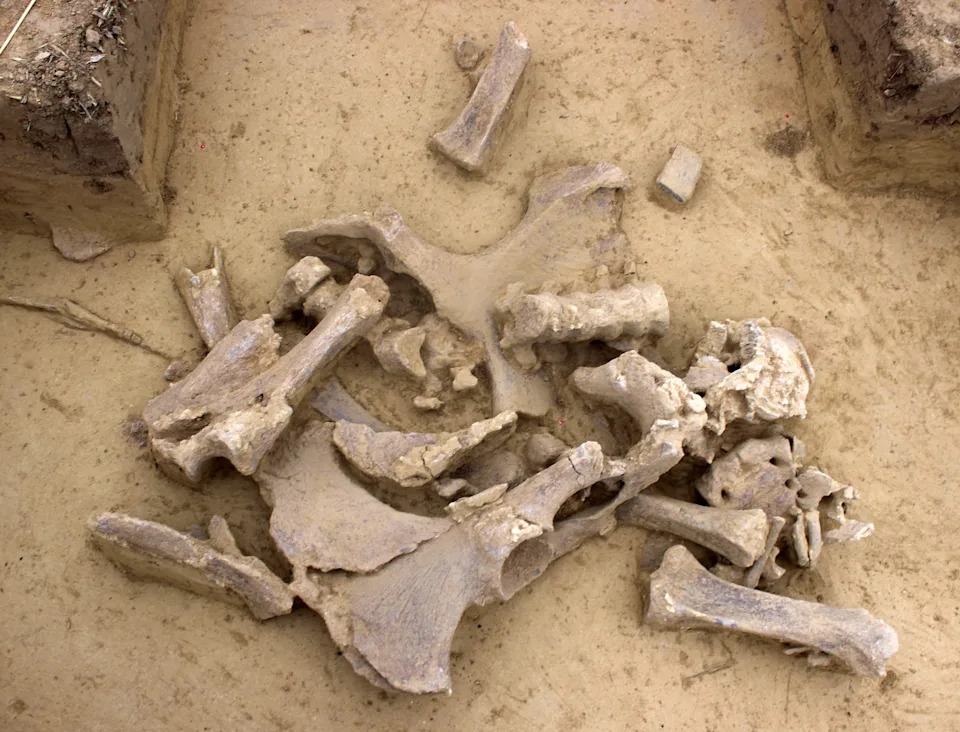
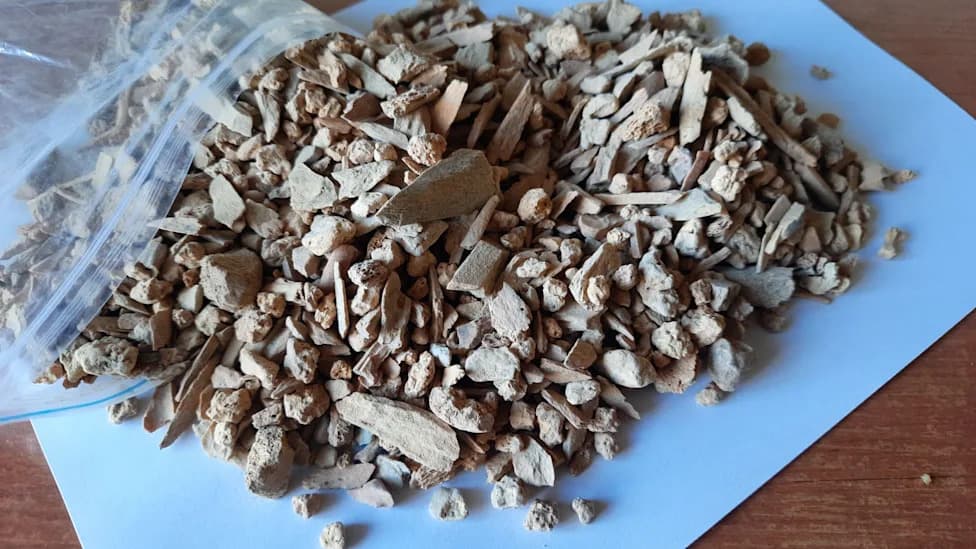
Bones collected from an excavation in Langmannersdorf, Austria in 2025.Image: Marc Händel.
David Díez del Molino, a paleogeneticist at Stockholm University and co-author of the study, said that comparing genetic sex ratios across contexts allows researchers to infer that human activity was the primary driver behind many massive mammoth bone accumulations.
Why Females?
The study outlines several nonexclusive explanations for the female bias. Hunters may have preferred females because they were generally smaller than adult males. Alternatively, if mammoths had social dynamics like modern elephants, females lived in matriarchal herds that moved predictably across the landscape, making them easier to locate. Herd defenses could also have made live attacks riskier, so humans might have preferentially targeted isolated females, calves or scavenged remains.
Projectile points embedded in mammoth bones demonstrate that Upper Palaeolithic peoples (roughly 50,000–12,000 years ago) at times hunted mammoths directly, while scavenging remains a plausible complementary behavior. The authors emphasize that a combination of hunting, scavenging and ecological factors likely produced the observed patterns.
Unexpected Genetic Finding
Among the specimens, researchers also identified a notable outlier from Wrangel Island, Russia: an individual showing X0/XX mosaicism, in which some cells carry a single X chromosome and others two. This pattern is analogous to Turner syndrome in humans and is the first documented case of such sex-chromosome mosaicism in an extinct species.
Love Dalén, an evolutionary genomicist at Stockholm University and co-author, highlighted that scaling up ancient DNA sample sizes can move studies beyond evolutionary history to reveal past animal behavior and human cultural practices tens of thousands of years ago.
Bones collected during a 2025 excavation in Langmannersdorf, Austria, were among the materials included in the analysis. The multi-regional sample and genetic approach give weight to the study's conclusion that people shaped many of the large mammoth bone deposits archaeologists encounter.
Reference: Study published in Current Biology; authors affiliated with Stockholm University and the Polish Academy of Sciences, among other institutions.
Help us improve.