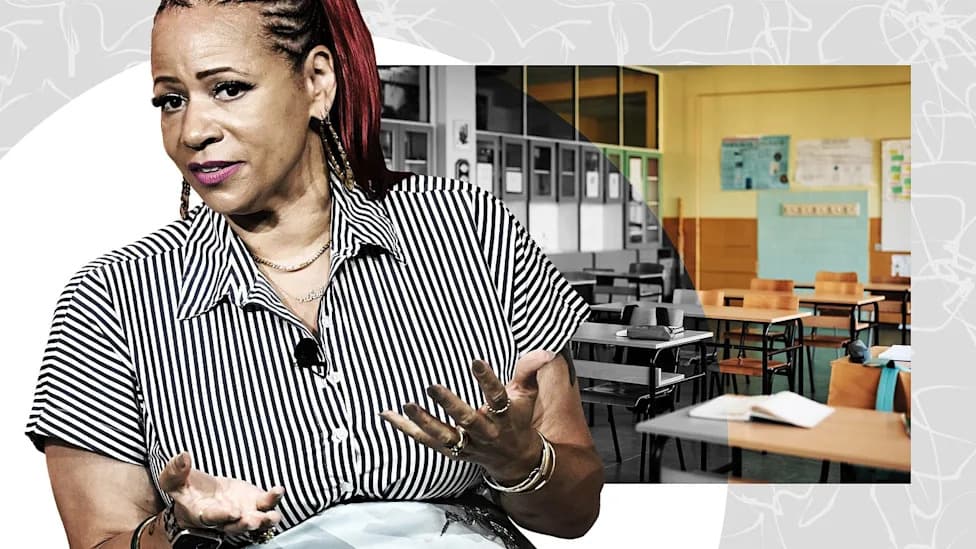
Nicolle Dexter transformed an Algebra II option at Holmen High into a fully project-based data science pilot that taught 12 students Python, statistics and data visualization through real-world projects. The course eliminated tests and worksheets in favor of hands-on work—from probability experiments to lobbying expenditure analysis—raising engagement and college readiness. While students found the work challenging, they emphasized learning problem-solving over memorization. The pilot suggests integrating data literacy into K–12 curricula better aligns math instruction with real-world needs.
How a Wisconsin Teacher Rebooted High School Math With Project-Based Data Science
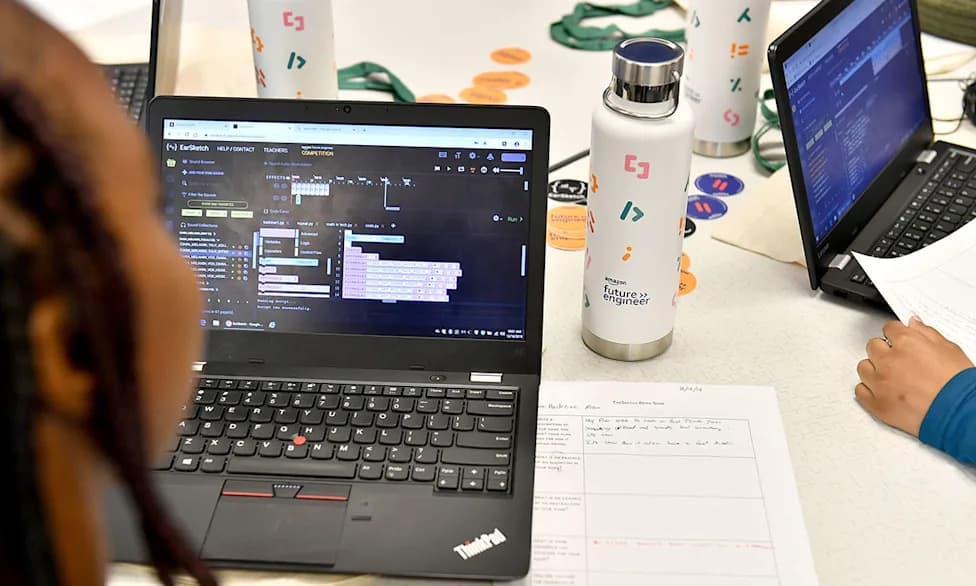
Data science is no longer a niche—it's woven into business, healthcare, media and everyday decisions. At Holmen High School in Wisconsin, teacher Nicolle Dexter transformed a traditional math offering into a project-based data science pilot that replaced an Algebra II option and gave a dozen students hands-on experience with statistics, Python and data storytelling.
A New Model for High School Math
After years teaching traditional math, Nicolle Dexter completed a graduate program in data science and proposed a pilot course to her school district as an alternative to Algebra II for students who had completed Geometry. District leaders approved the idea and 12 students enrolled. Dexter deliberately modeled the class on her master’s coursework rather than conventional high-school math: no tests, no worksheets, and no rote nightly drills—only projects that move students from data collection to visualization to model building.
Learning by Doing
Students pursued projects tied to their interests while learning core data-science practices. They collected personal-behavior data to reveal patterns, drew candy to explore probability, and built histograms using Pokemon card statistics. One project examined lobbying expenditures for Wisconsin's congressional delegation and showed that a small number of actors account for a large share of contributions; another analyzed phone notifications and found promotional college emails dominated Owen Shaw’s inbox.
"I think that my students would incorrectly say that they do less math in this class than in other classes, because they have a misconception about what math is," Dexter said. "It is not a procedural math they could rely on in the past. Some of the uncertainty that is an important part of data science is what we are interested in."
Student Impact and Challenges
Students reported higher engagement and clearer career relevance. Jackson Dwyer, who had taken AP Statistics and Computer Science, appreciated combining those fields; Maria Suarez, who plans to study chemistry, found applied statistics more compelling than the prospect of AP Statistics; and Owen Shaw said the class felt directly applicable to college. By year’s end, Maria admitted the class changed her view of statistics: “It doesn't have to be super boring!”
The class was not easy: students learned Python syntax alongside analytical thinking, and Dexter’s biggest adjustment was stepping away from a teacher-led model. Still, students emphasized the work focused on problem solving rather than memorizing code.
Why It Matters
This pilot breaks subject silos by asking students to synthesize algebra, coding, domain knowledge and communication—mirroring how data is used outside the classroom. As employers demand data literacy, leaving data-science skills at the margins of K–12 risks shortchanging students. Dexter’s classroom shows how flexibility, real-world projects and teacher empowerment can make math more relevant and better prepare students for technology-driven careers.
Even in a small cohort of 12, results are notable: two students plan majors in computer science and electrical engineering, and another plans to study chemistry with interest in further data-science coursework. If public schools shift from yesterday’s priorities toward applied, interdisciplinary instruction, they can better equip students for tomorrow’s workforce.
Help us improve.