Chancellor Friedrich Merz is commissioning confidential plans to prevent AfD‑led state governments from obstructing NATO troop and equipment movements through Germany. Officials fear that AfD control in eastern states could slow logistics via permit delays, police non‑cooperation and transport prioritisation tactics. Berlin is developing legal and operational options to protect intelligence services, secure critical infrastructure and ensure the Reinforcement and Sustainment Network can function, though constitutional limits and a required two‑thirds Bundestag vote complicate emergency measures.
Merz Draws Up Secret Plans To Bypass AfD‑Run States That Might Block NATO Deployments
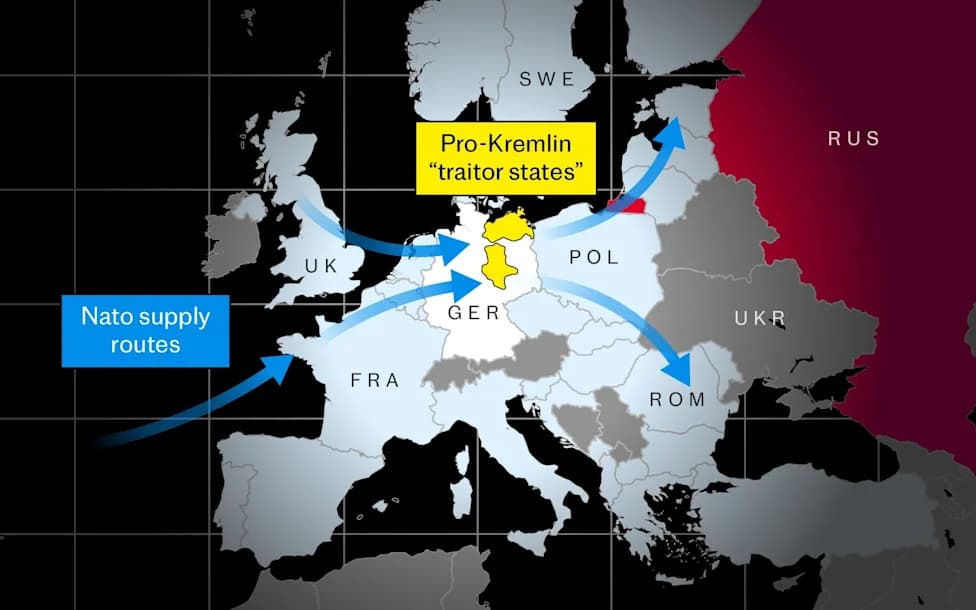
Illustration of Europe
Chancellor Friedrich Merz is overseeing confidential contingency measures designed to prevent German state governments aligned with the pro‑Kremlin Alternative for Germany (AfD) from obstructing NATO troop and equipment movements in the event of a Russian threat, according to government and defence sources.

Vladimir Putin controls drones carrying Alice Weidel, the AfD co-leader, in a carnival float reflecting fears about the party's links with the Kremlin - AFP
Why Berlin Is Worried
Opinion polls indicate the AfD could win absolute majorities in at least one of two eastern states — Saxony‑Anhalt or Mecklenburg‑Vorpommern — in September's elections. If that happens, AfD‑led state governments would control policing, local transport priorities and many administrative permits that affect military logistics. Officials fear such governments could use bureaucratic delays, restrictive permit processes and a refusal to prioritise military convoys to slow or frustrate NATO reinforcements moving across Germany.
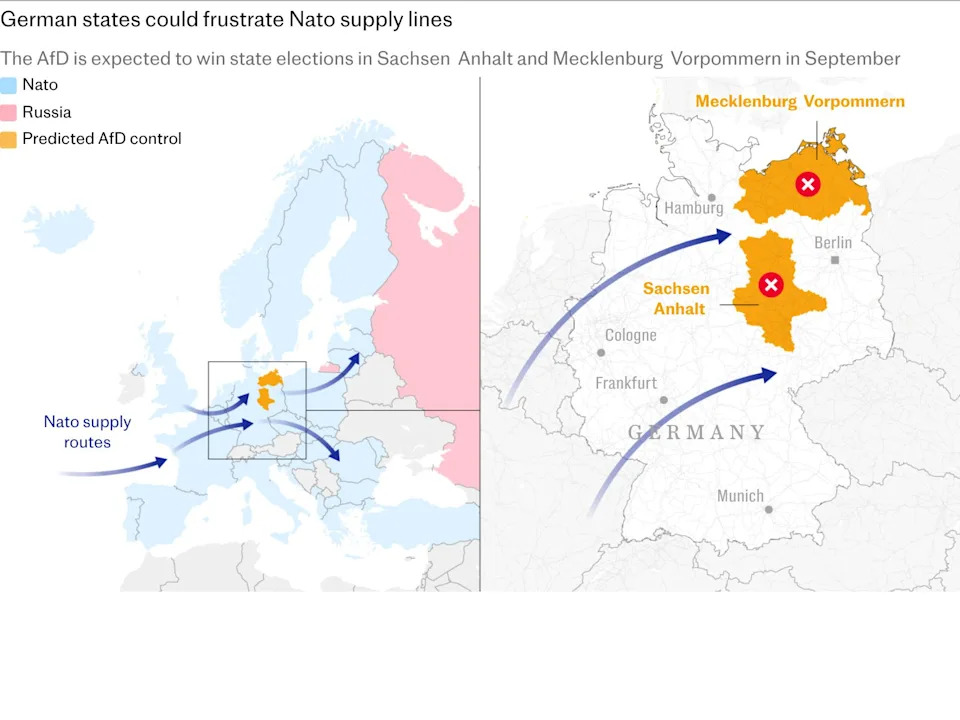
3007 Nato AfD
What The Federal Government Is Planning
To guard against these risks, Mr Merz's team is drawing up legal and operational mechanisms that could, in a crisis, allow federal authorities to override obstructive state decisions, protect key personnel and secure critical infrastructure in neighbouring states. Interior ministry officials are reportedly exploring options for safeguarding intelligence services, assigning responsibility for vital facilities to neighbouring administrations and ensuring uninterrupted logistics for the alliance's Reinforcement and Sustainment Network (RSN).
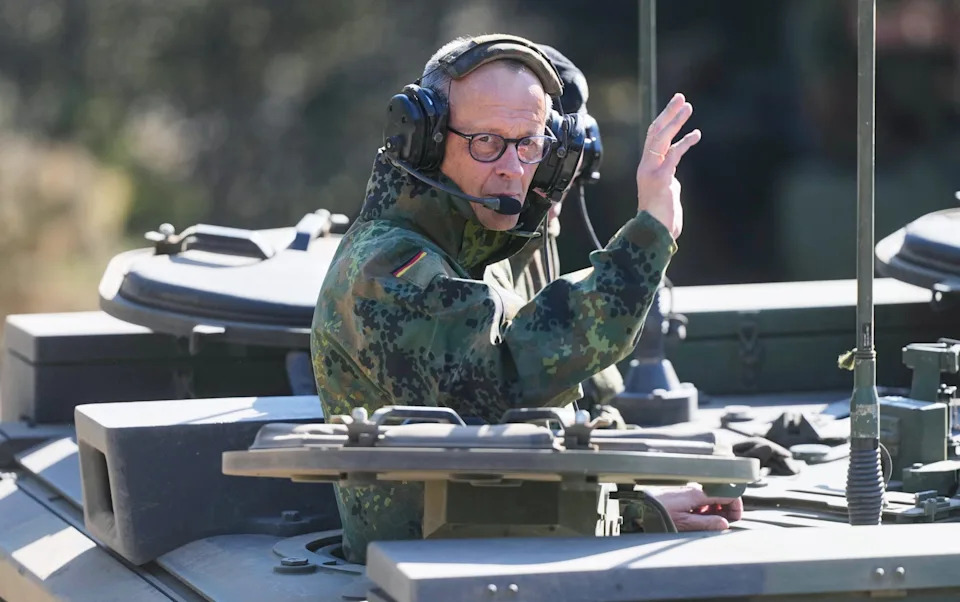
Chancellor Friedrich Merz wants to avoid a scenario where an AfD-controlled state prevents Nato from moving soldiers and military hardware - AP
“For Putin, it may not be necessary to beat NATO militarily; exploiting political cracks inside the alliance is a shortcut to weakening it,”
The quote above reflects a concern shared by Western defence sources: Kremlin‑friendly politicians abroad could be used to create administrative friction that delays a rapid allied response on NATO's eastern flank.

AfD co-leader Alice Weidel with Ulrich Siegmund, the party's top candidate for Saxony-Anhalt - Getty
Legal And Practical Constraints
Germany's federal structure gives its 16 states substantial authority over policing, transport and local infrastructure. Any federal attempt to supersede state powers in peacetime faces constitutional limits. Emergency legislation exists to speed up military logistics, but one precondition is a declaration of a state of tension (Spannungsfall), which requires a two‑thirds majority in the Bundestag. Mr Merz's coalition does not have that supermajority and has ruled out cooperating with either the far‑Left Die Linke or the AfD to secure it.
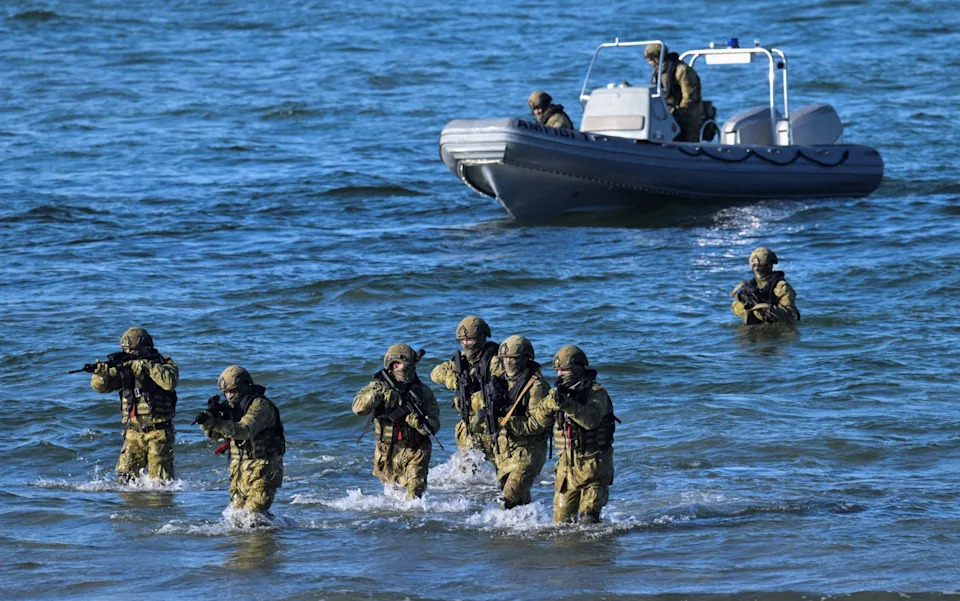
German troops take part in a Nato exercise in Putlos in February - Getty
Even under crisis rules, much cross‑border movement in Europe remains subject to diplomatic clearances, customs checks and civilian permits. Heavy military transports typically require authorisations similar to oversized commercial loads; rail and road operators must be asked to prioritise military convoys. NATO planners estimate that assembling and moving major reinforcements to the eastern flank could take roughly five to six weeks once the transport corridors and paperwork are in place.
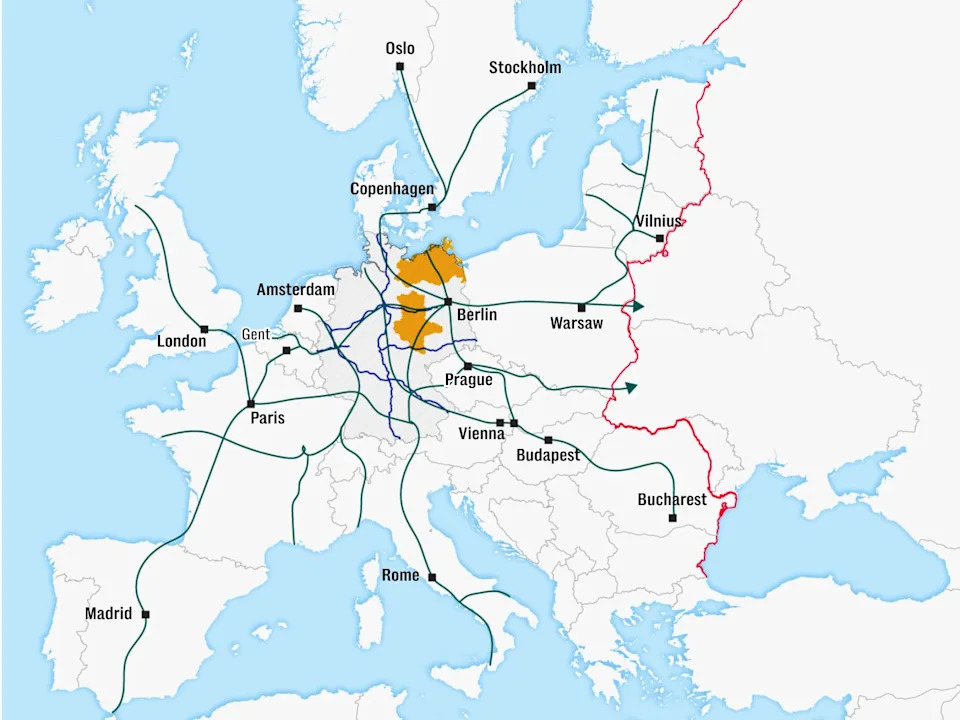
3007 Germany AfD major highways rail network
Hybrid Threats And Intelligence Concerns
Defence officials warn that political obstruction is only one part of a broader hybrid threat. Sabotage, cyber‑attacks and other measures aimed at congesting or degrading the RSN could be combined with administrative foot‑dragging. NATO's rules limit its ability to intervene in domestic politics or to gather intelligence on member states' internal risks, which complicates pre‑emptive countermeasures.
Separately, Germany's domestic intelligence service (BfV) has classified the AfD as a far‑right extremist threat to democracy; the party is contesting that designation in court. Defence Minister Boris Pistorius has signalled that AfD‑run state governments might be excluded from some classified briefings because of their ties to Moscow.
Political Context
The AfD has a record of opposing sanctions on Russia and of calling for negotiations to end the war in Ukraine. AfD figures have explicitly supported restoring cheaper energy links, including supplies from Russia. Berlin's concern is not only ideological alignment but the practical risk that sympathetic regional officials could—intentionally or unintentionally—hamper allied movement during a crisis.
Federal authorities say contingency options are being refined to stay within constitutional limits while ensuring that Germany remains a reliable logistics hub for NATO. Officials declined to provide details publicly, citing the sensitive nature of the planning.
Key facts: potential AfD gains in eastern states; federal contingency planning to protect intelligence and infrastructure; constitutional constraints including the Spannungsfall two‑thirds Bundestag requirement; RSN deployment timeline of about five to six weeks; vulnerability to hybrid tactics such as cyber‑attacks and administrative obstruction.
Help us improve.