The chicken kidney sponge (Chondrosia reniformis) shows strong potential as a natural tool to improve polluted harbors, a study in Frontiers in Marine Science reports. In field trials at Marina Palamós (Girona), researchers transplanted 42 sponges onto artificial reefs; the chicken kidney sponge survived best, with 91.7% persistence over 455 days and evidence of asexual reproduction. Scientists will now carry out multi-year monitoring—especially of the sponge’s microbial partners—to determine how microbes may aid pollutant tolerance and long-term resilience.
Messy Nickname, Big Impact: Chicken Kidney Sponge Could Help Clean Polluted Harbors
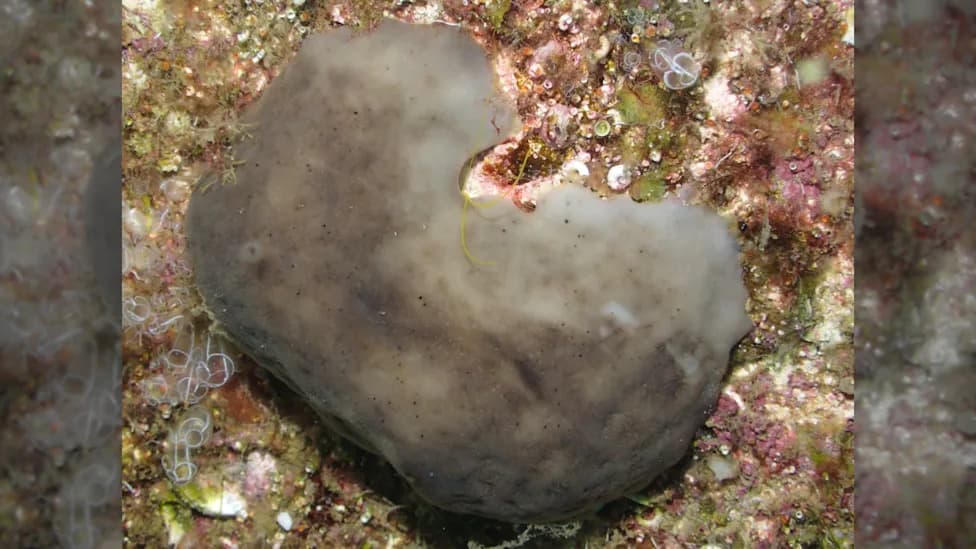
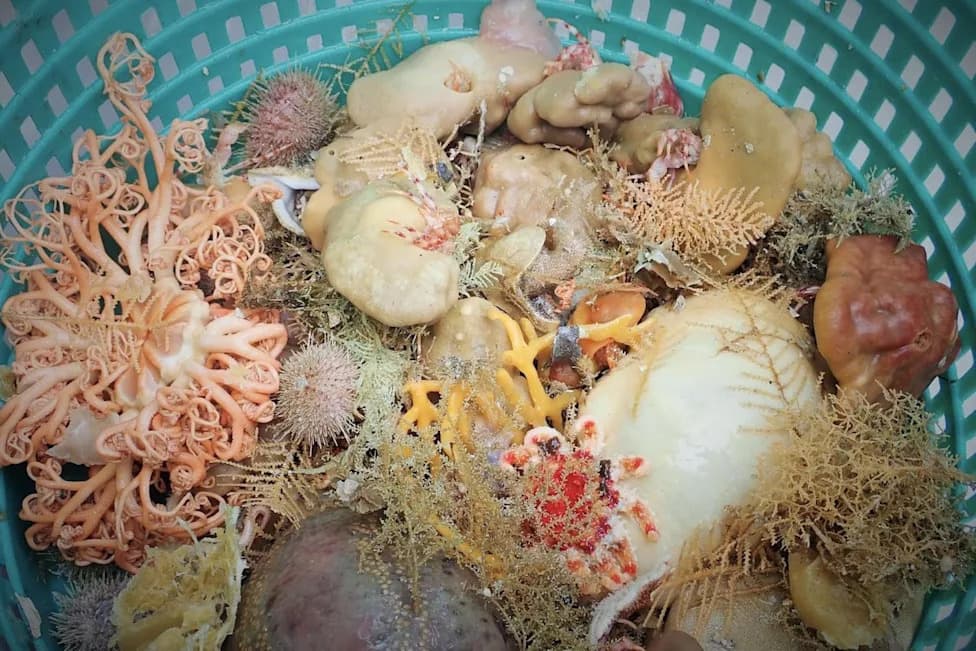
Specimen of the chicken kidney sponge ('Chondrosia reniformis') transplanted into the harbor
Cleaning heavily polluted ports may one day get help from an unlikely marine ally: the chicken kidney sponge. A new study published in Frontiers in Marine Science tested several sponge species in a Mediterranean harbour and found that Chondrosia reniformis (the chicken kidney sponge) tolerated port conditions far better than its peers, making it a promising candidate for natural remediation efforts.
Why ports need help
Ports are vital to global trade, but enclosed harbors often accumulate oil, trash and toxic compounds. Ballast-water transfers can introduce invasive species that displace native fauna, and activities such as dredging and propeller action cause additional physical disturbance and noise pollution.
Sponges as nature’s filters
Sea sponges are powerful filter feeders: many species process thousands of gallons of seawater per day, removing organic particles, pathogenic microbes and some heavy metals. Their filtration improves water quality and recycles nutrients and organic matter into the local food web. Sponges also provide microhabitats for worms, crustaceans and juvenile fish.
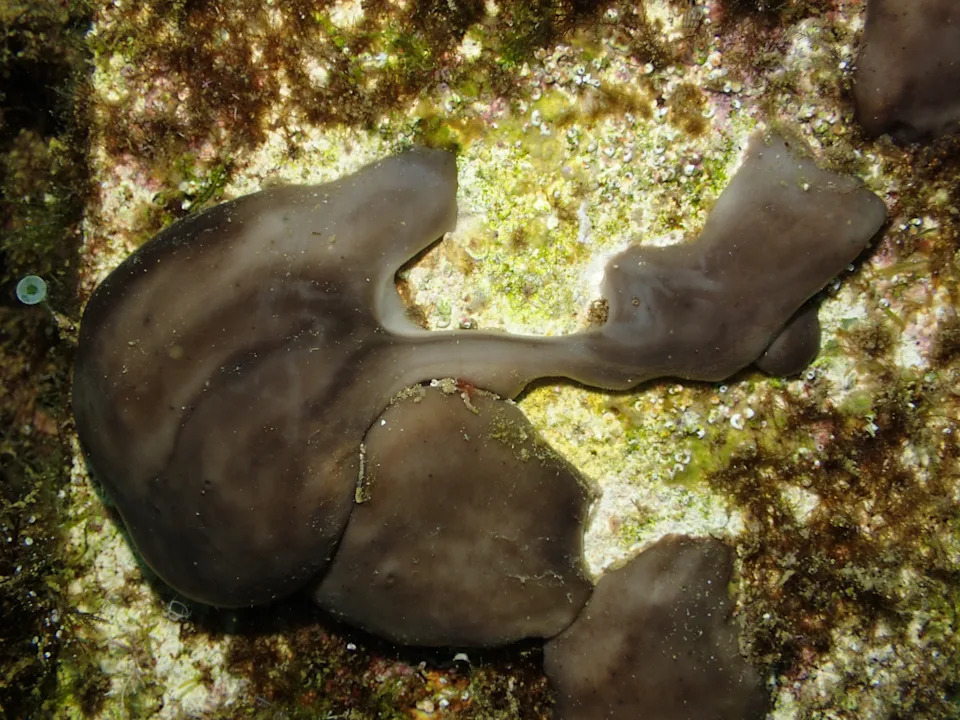
Three specimens of the chicken kidney sponge transplanted into the harbor. One specimen is migrating toward the edge of the experimental plate used as the substratum. During this migration, its body is undergoing division into two clonal descendants, which remain connected by a narrow bridge of tissue.Image: Carlota Escarré.
Field trial in Marina Palamós
A Spanish team tested five distantly related sponge species for tolerance to port conditions at Marina Palamós (Girona): Corticium candelabrum, Crambe crambe, Scalarispongia scalaris, Ircinia oros, and the chicken kidney sponge, Chondrosia reniformis. Specimens were acclimated at the Blanes Marine Research Center on ceramic plates in 132-gallon tanks supplied with unfiltered running seawater, then transplanted between 2024 and 2025 onto artificial reefs made of metal grids coated with calcium carbonate and fixed to the marina seawall. One species, C. candelabrum, did not survive the laboratory phase and was not transplanted.
Standout results
Of the 42 sponges placed on the artificial reefs, Chondrosia reniformis emerged as the most resilient. It established on the reef, reproduced asexually by fission, and showed remarkable survival: 91.7% of the original individuals persisted through a 455-day monitoring period. By contrast, C. crambe, S. scalaris and I. oros progressively shrank and survived only 20–165 days.
"Unlike many sponges, the chicken kidney sponge can 'creep' away if local conditions deteriorate—for example, when nearby organisms compete," said Dr. Manuel Maldonado, a study co-author and biologist at the Center for Advanced Studies of Blanes. "It can relocate from exposed rock surfaces—where UV radiation, polluted sediments and predators are stronger—into sheltered crevices where those stresses are reduced. It also reproduces asexually by fission, which lets populations expand quickly and later reproduce sexually, improving the odds of successful fertilization."
Next steps
The researchers plan long-term monitoring of sponges transplanted from the port, with special attention to the microbial communities living inside the chicken kidney sponge. Understanding whether those microbes help the sponge tolerate pollutants will be key to assessing its practicality for active remediation in degraded harbors.
Implications
While not a silver bullet, using resilient sponge species like Chondrosia reniformis could complement traditional cleanup and management strategies by improving water quality, recycling nutrients, and providing habitat—especially in sheltered or semi-enclosed port environments where pollution accumulates.
Help us improve.