NOAA scientists described nine new deep‑sea sponge species from the Gulf of Alaska and the Aleutian Islands, raising Alaska's known sponge count to 232. The specimens—some collected as early as 2012—were identified using microscopic skeletal analysis and newly developed DNA barcodes. Dense sponge communities provide essential fish habitat and may harbor compounds useful for biomedical research. Conservation advocates warn that proposed deep‑sea mining and expanded bottom trawling could severely damage these fragile seafloor ecosystems.
NOAA Scientists Describe Nine New Deep‑Sea Sponge Species Off Alaska
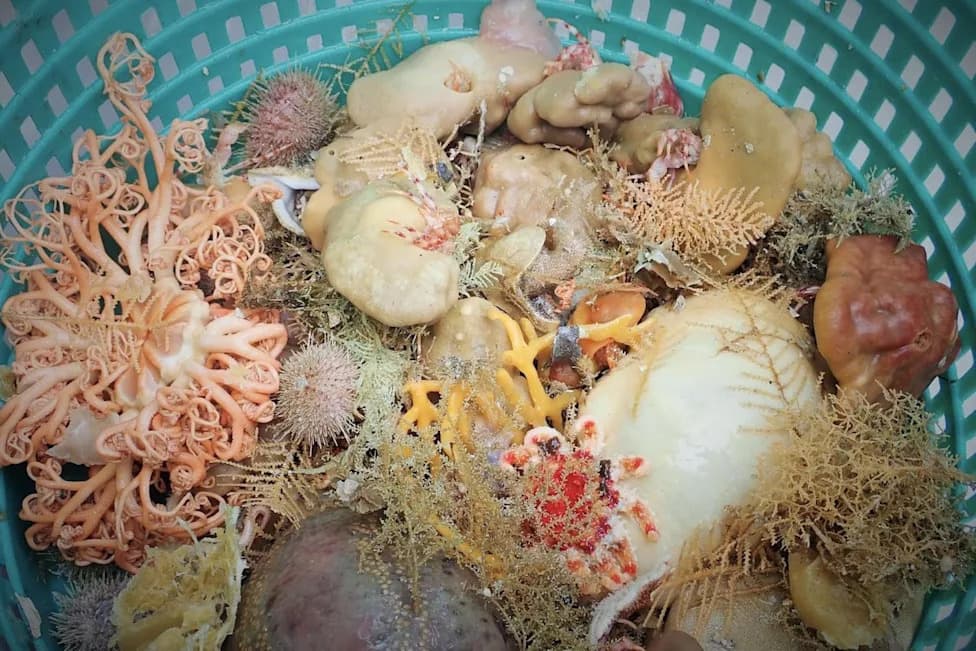
Deep-sea sponges and other invertebrates collected during a bottom-trawl survey.Photograph: Noaa Fisheries
NOAA researchers have identified nine previously undescribed deep‑sea sponge species from the Gulf of Alaska and the Aleutian Islands, expanding Alaska's documented sponge diversity to 232 species. The discoveries come from specimens collected during NOAA Fisheries' bottom‑trawl surveys, some of which date back to 2012, and were described in two recent scientific papers.
Why Sponges Matter
Sponges are among Earth’s oldest multicellular animals, with a fossil record stretching back more than 600 million years. Often described as "living water pumps," they filter seawater and build three‑dimensional structure on the seafloor that provides habitat and refuge for fish, crabs and other marine life. Dense sponge communities are classified by NOAA as essential fish habitat because they support survival, growth and recovery of commercially important species.
How They Were Identified
Unlike many animals that are distinguishable by external traits such as fins or body shape, sponges often lack distinctive outward features. Taxonomists relied on microscopic examination of skeletal elements and newly developed DNA barcodes to differentiate the new species. "DNA barcodes provide a quick genetic reference," said Meredith Everett, a biologist at NOAA's Northwest Fisheries Science Center, noting that sponge samples can be complicated by foreign DNA and biochemical inhibitors from their filter‑feeding lifestyle.
"Sponges are ecologically important," said Sean Rooney, a NOAA fisheries biologist and co‑author of the studies at the Alaska Fisheries Science Center. "They aren't plants, but like trees in a forest, they provide complex structure along the seafloor that creates habitat and refuge for commercially important fish and crabs."
Potential Biomedical Value
Sponges produce a variety of chemical compounds used to deter predators and competitors. Some of these compounds have shown promise in early biomedical research, including studies exploring potential cancer treatments, making sponge biodiversity not only ecologically but also medically significant.
Conservation Concerns
Despite their importance, Alaska's deep‑sea sponge communities face mounting threats. The article notes proposals under the Trump administration to expand deep‑sea mining for critical minerals such as nickel and copper, and to allow increased bottom trawling in some areas. Environmental groups warn that mining and intensive bottom trawling could damage fragile seafloor ecosystems—especially in deep, rocky habitats that are difficult to study and recover once disturbed.
"Bottom trawl fishing is so damaging and unsustainable because it indiscriminately destroys the habitats that support future generations," said Cooper Freeman, Alaska director of the Center for Biological Diversity. "Adding seafloor mining to the picture adds insult to injury, scraping up and devastating life on the bottom of the ocean."
Researchers stressed that many Alaskan sponge species likely remain undiscovered, especially in deep or rocky areas that standard trawl surveys cannot access. Continued surveying, taxonomic work and protective measures are needed to understand and conserve these complex seafloor communities.
Help us improve.