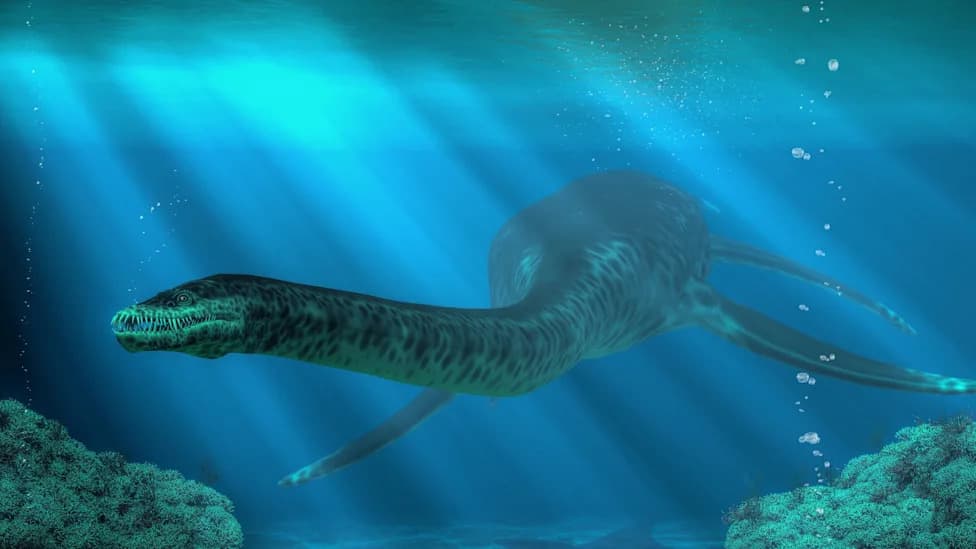
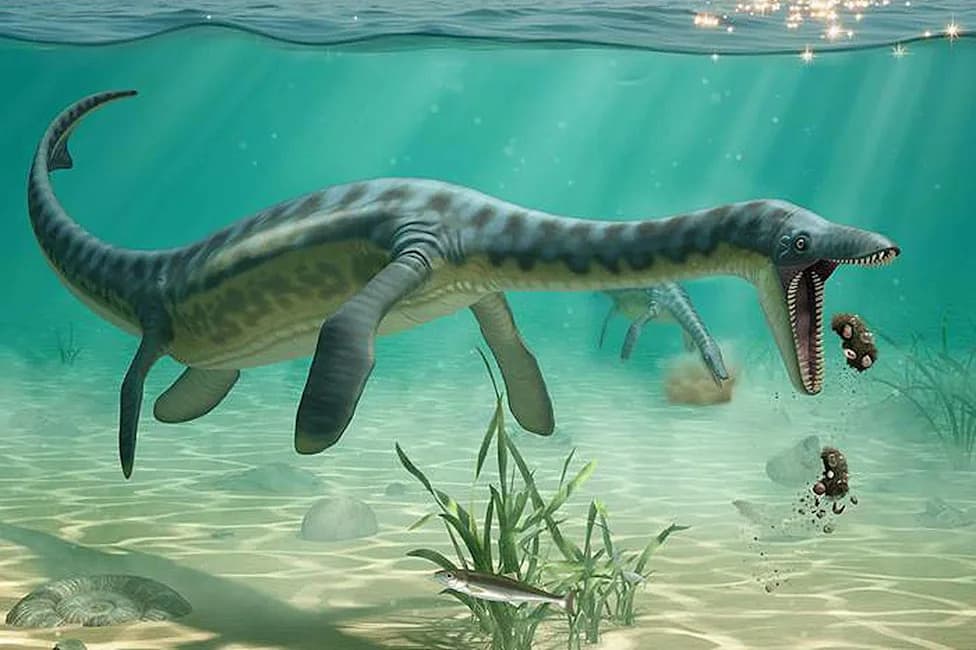
This Australian fossil preserves a rare three-tier feeding event: a pterosaur was eaten by an ichthyosaur (Platypterygius australis), and that ichthyosaur was then apparently attacked and partly consumed by a giant pliosaur, likely Kronosaurus queenslandicus. Neutron tomography of a stomach concretion revealed fish, cephalopod remains and two pterosaur jaw fragments—the first direct evidence of ichthyosaurs consuming pterosaurs. The ichthyosaur's bones show crushing bite marks and other traumatic damage consistent with attack by an apex predator, offering an unprecedented snapshot of Cretaceous food-web interactions in the Eromanga Sea.
Cretaceous 'Turducken': Fossil Shows Pterosaur Eaten by Ichthyosaur, Which Was Then Devoured by a Giant Pliosaur
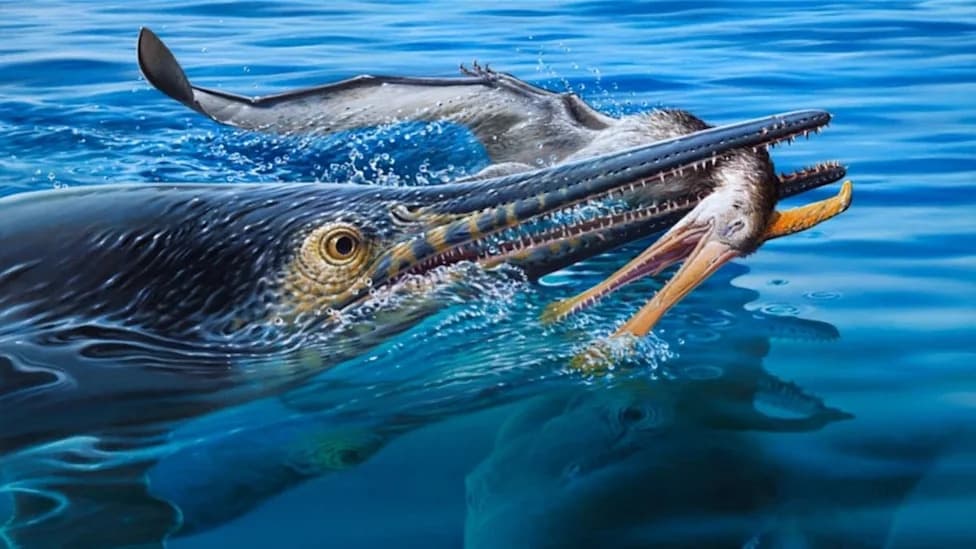
An artist's impression of a Platypterygius eating a pterosaur – while a larger predator lurks below. (Peter Trusler)
Paleontologists in Australia have unearthed a remarkable fossil that preserves a three-tier predation event from the Early Cretaceous: a flying pterosaur swallowed by an ichthyosaur (Platypterygius australis), which in turn shows injuries consistent with having been attacked and partly eaten by a much larger pliosaur, likely Kronosaurus queenslandicus.
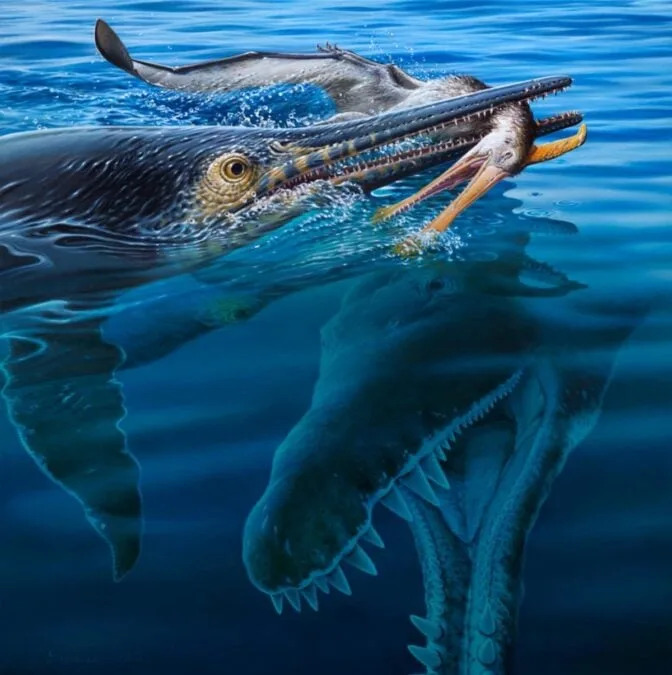
An artist's impression of a Platypterygius eating a pterosaur – while a larger predator lurks below. (Peter Trusler)
The Discovery
The specimen, recovered from deposits deposited by the ancient Eromanga Sea, belongs to Platypterygius australis, an ichthyosaur estimated at roughly 6–7 meters (20–23 feet) long. Within the ichthyosaur's ribcage researchers found a rounded concretion interpreted as fossilized stomach contents.
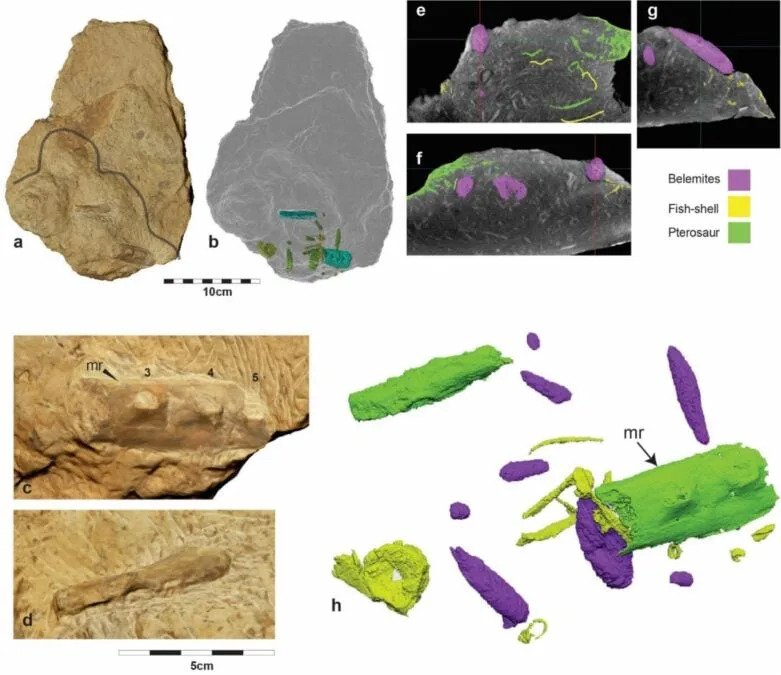
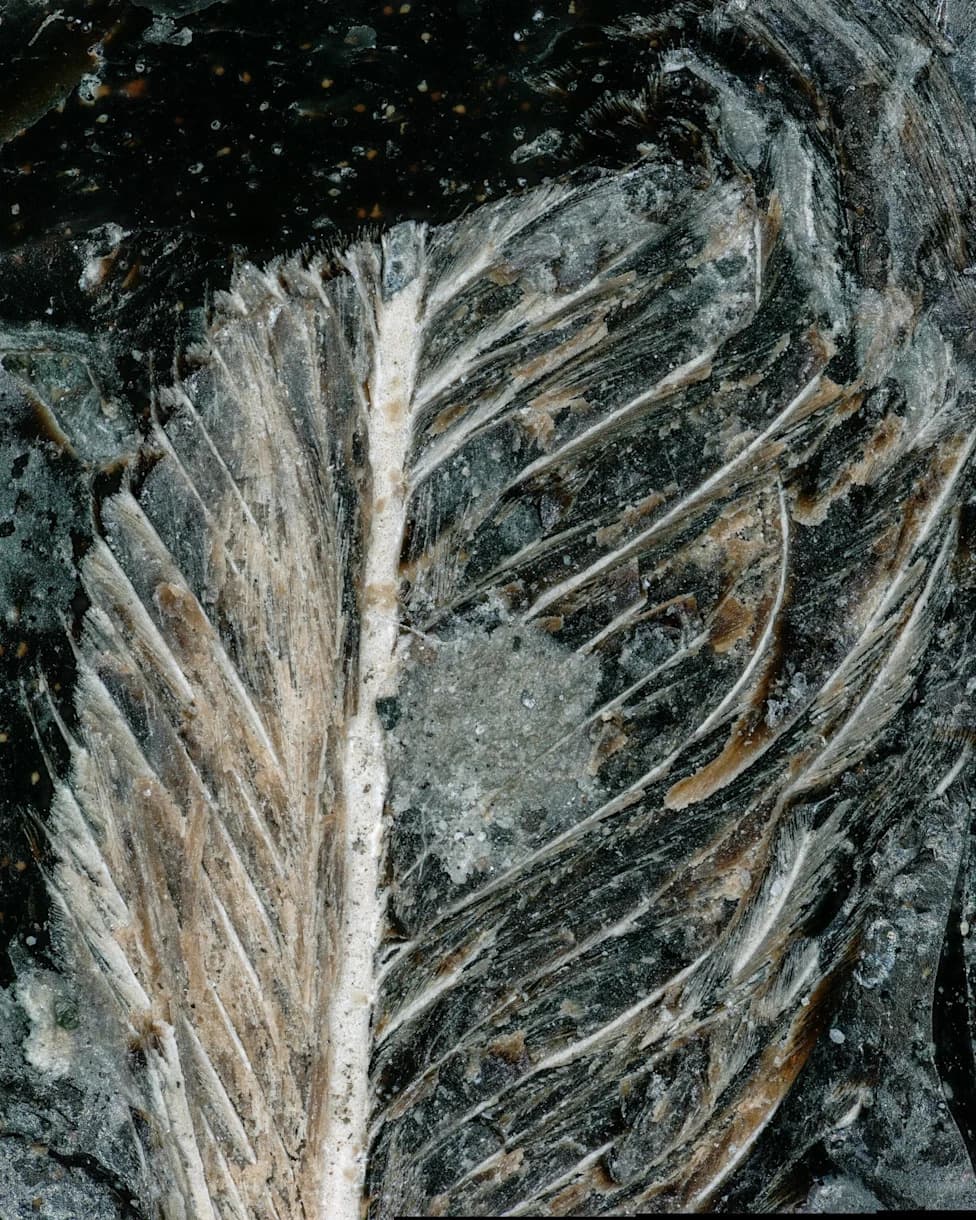
Analysis of the creature's fossilized stomach contents, including the two pterosaur bones (c and d). (White et al.,Gondwana Res., 2026)
What the Stomach Revealed
Neutron tomography of the concretion revealed the expected marine fare—fish bones, shell fragments and pieces of squid-like cephalopods—alongside something unexpected: two fragments of a pterosaur jawbone. This provides the first direct evidence that ichthyosaurs sometimes consumed pterosaurs that came too close to the sea surface.

Subscribe to ScienceAlert's free fact-checked newsletter
'It is one of the clearest examples ever discovered of a three-tier predator interaction and offers an unprecedented snapshot of behavior in Australia’s Cretaceous seas,' said Dean Lomax (University of Manchester), who was not part of the study.
Who Ate Whom?
Although the ichthyosaur clearly consumed the pterosaur remains, the ichthyosaur specimen itself shows dramatic signs of violent death. Several vertebrae are split, ribs are missing, and numerous bones bear large crushing bite marks. One vertebra even preserves a rib jammed against a broken margin, which the authors interpret as evidence of forceful jaw processing rather than simple, post-mortem damage.
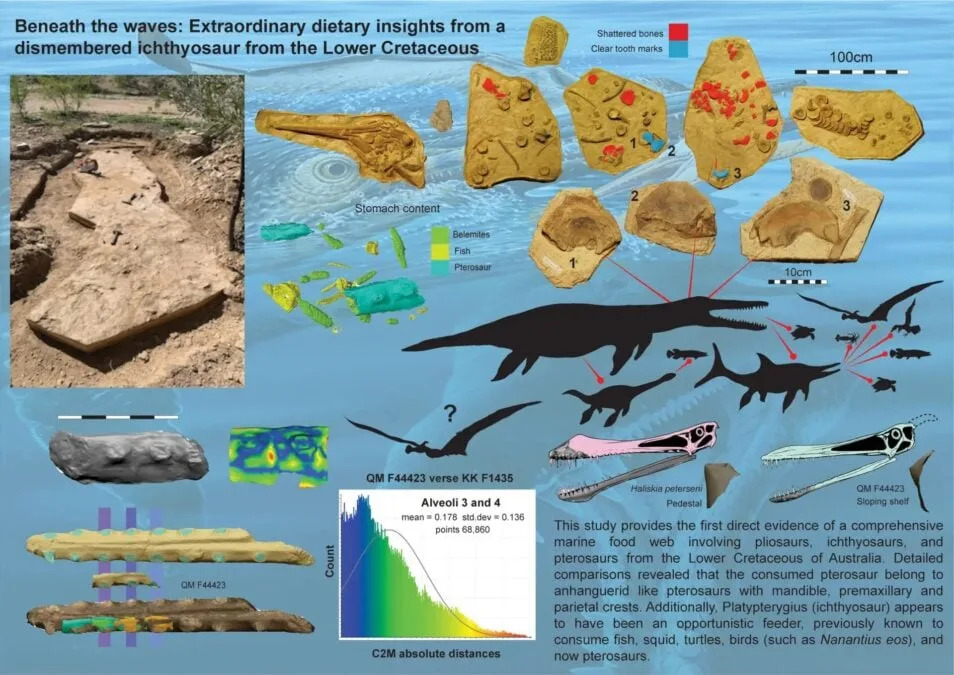
The graphical abstract for the study. (White et al.,Gondwana Res., 2026)
Based on the nature and scale of these injuries and the fauna known from the Eromanga Sea, the researchers implicate the giant pliosaur Kronosaurus queenslandicus—an apex predator that grew to more than 10 meters long—as the most likely attacker.
Why This Matters
Combined, the anatomical, taphonomic and imaging evidence allows the authors to reconstruct a plausible chain of events: a small pterosaur was captured and eaten by Platypterygius; before that meal was fully digested, the Platypterygius was attacked and partly consumed by a larger predator, likely Kronosaurus. The study represents the first definitive record of an ichthyosaur containing pterosaur remains and provides rare, direct evidence of predator–prey relationships among pterosaurs, ichthyosaurs and pliosaurs in Australia’s Cretaceous seas.
The find was documented in Gondwana Research (White et al., 2026) and is illustrated by an artist’s reconstruction by Peter Trusler showing a Platypterygius eating a pterosaur while a larger pliosaur lurks below.
Broader Context
Fossils that capture behavior—feeding, hunting, scavenging—are uncommon but exceptionally informative. Other recent examples include pterosaur trackways that suggest terrestrial hunting, theropod specimens preserving stomach contents or prey in their mouths, and even instances of fossilized regurgitation that preserve predator–prey relationships.
Citation: White et al., Gondwana Research, 2026.
Help us improve.