The Air Force expects an NGAP prototype engine to be integration-ready around 2030, while the classified F-47 fighter is targeted to make its first flight in 2028. If NGAP slips, early F-47 prototypes or initial production jets could fly with existing in-production engines (F135, F110 or similar). Adaptive-cycle engines promise major fuel-efficiency and thrust gains, but late-fitting them to a tightly optimized airframe could be costly and technically challenging. The service is funding NGAP heavily while preparing interim propulsion options.
Will the F-47 Have to Fly Early Tests With Existing Engines? NGAP Timing Raises Questions
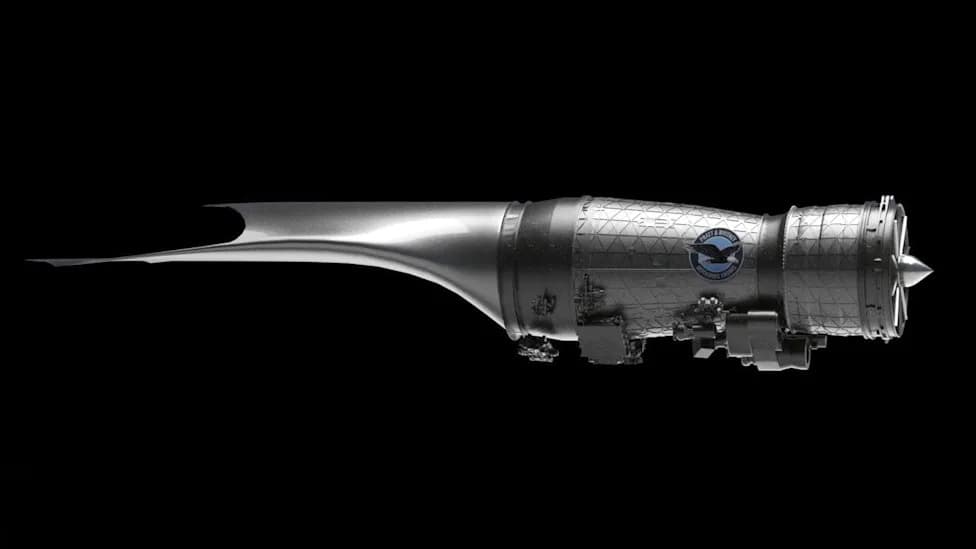
Pratt & Whitney's XA103 engine is one of two designs already in development under the NGAP program.
The U.S. Air Force now expects a prototype engine from the Next Generation Adaptive Propulsion (NGAP) program to be ready for aircraft integration around 2030. NGAP has long been considered the likely powerplant for the classified F-47 fighter and other future platforms, but that timeline sits awkwardly against the service's target first flight for the F-47 in 2028. If NGAP development extends into the early 2030s, the first F-47 prototypes or early production jets could fly with existing, in-production engines before an adaptive-cycle unit is fitted.

An official rendering of the F-47.USAF
Timeline, Budget and Program Status
Air Force officials, including John Sneden of the Air Force Life Cycle Management Center (AFLCMC), told industry stakeholders the service is "getting ready for potential [NGAP] integration activities in the 2030 timeframe." Budget documents support that timing: the FY2027 submission lists NGAP's "Prototype Fabrication & Engine Assessment" phase through at least September 2031 and shows a near-term spending surge — roughly $513.7 million in the upcoming fiscal cycle, then $905.7 million (FY2028) and $865 million (FY2029), before dropping to about $300 million per year in FY2030–31.
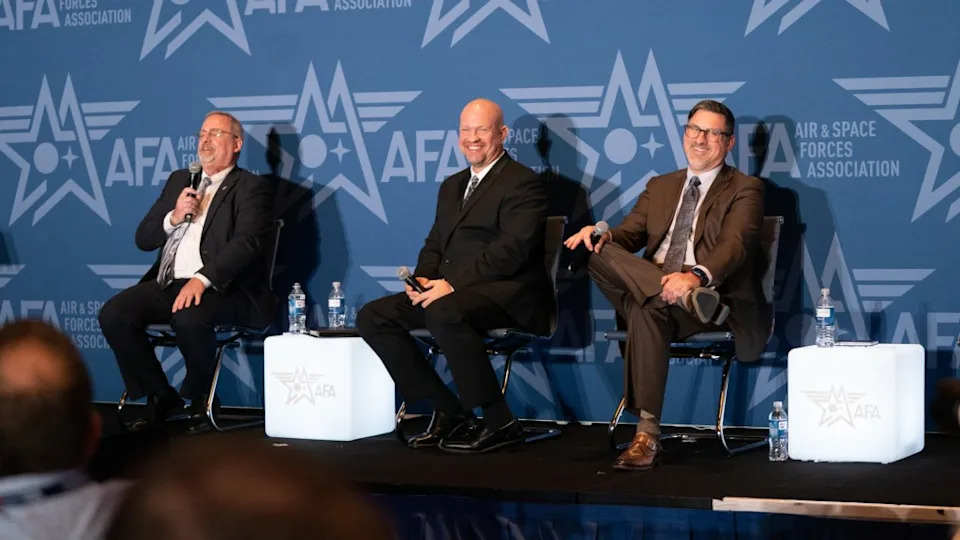
John Sneden, head of the Propulsion Directorate at the AFLCMC, at far right, speaks at the Air & Space Forces Association's main annual conference in 2022. Also on stage are Dr. Michael Gregg, Director of the Aerospace Systems Directorate at the Air Force Research Laboratory (AFRL), at far left, and Dr. Shawn Phillips, chief of AFRL's Rocket Propulsion Division, in the middle.USAF
Vendors and Technology
Two teams—General Electric (XA102/XA100 lineage) and Pratt & Whitney (XA103)—remain active in NGAP and have cleared major assembly-readiness milestones. Both firms have been advancing adaptive-cycle prototype work for several years and saw NGAP contract ceilings rise last year to roughly $3.5 billion, covering development through 2032.
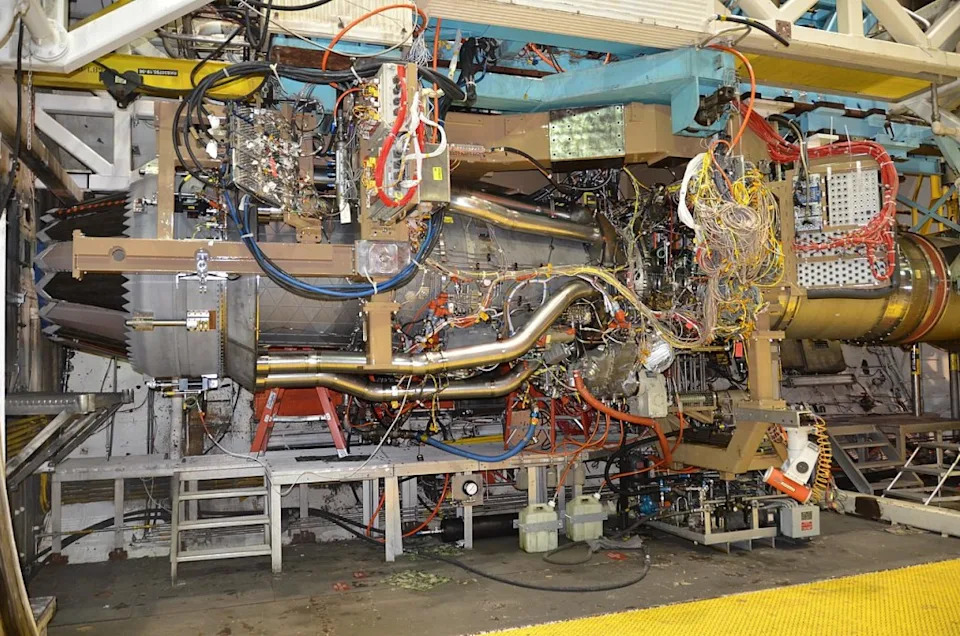
An engine test rig at the Air Force's Arnold Engineering Development Complex (AEDC) being used to test a three-stream fan as part of work on Pratt & Whitney's XA101 design.USAF
Adaptive-cycle engines can shift operating modes to prioritize fuel efficiency in cruise and higher thrust in combat or high-speed segments, offering improved range, loiter time and tactical flexibility. GE has previously said its XA100 (AETP lineage) showed about 25% better fuel efficiency than the F135 in some profiles and delivered 10–20% more thrust in others—gains that are particularly valuable for long-range, Pacific-oriented missions.
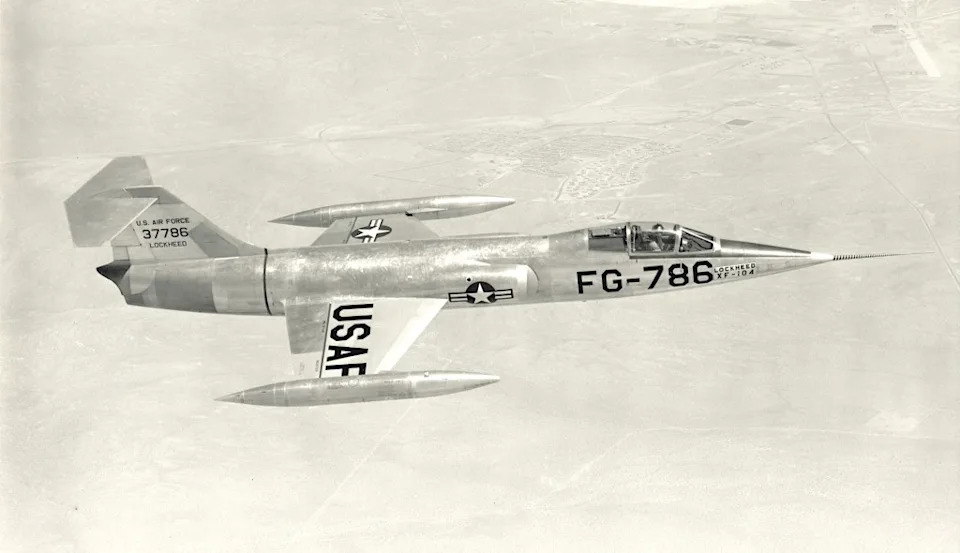
One of the J65 engine-powered XF-104 Starfighter prototypes.USAF
What This Means For The F-47
The Air Force continues to evaluate which platforms might first integrate an NGAP demonstrator; the F-47 is a candidate but not guaranteed. Because the service does not expect NGAP hardware to be integration-ready before the F-47's planned 2028 first flight, the jet will likely use an interim engine for early flying and possibly for initial production. Candidate alternatives include in-production turbofans such as Pratt & Whitney's F135 or F100 families and General Electric's F110; higher-performance options like the F119 (F-22 powerplant) could also be considered for tests, though the F119 is not in current production.
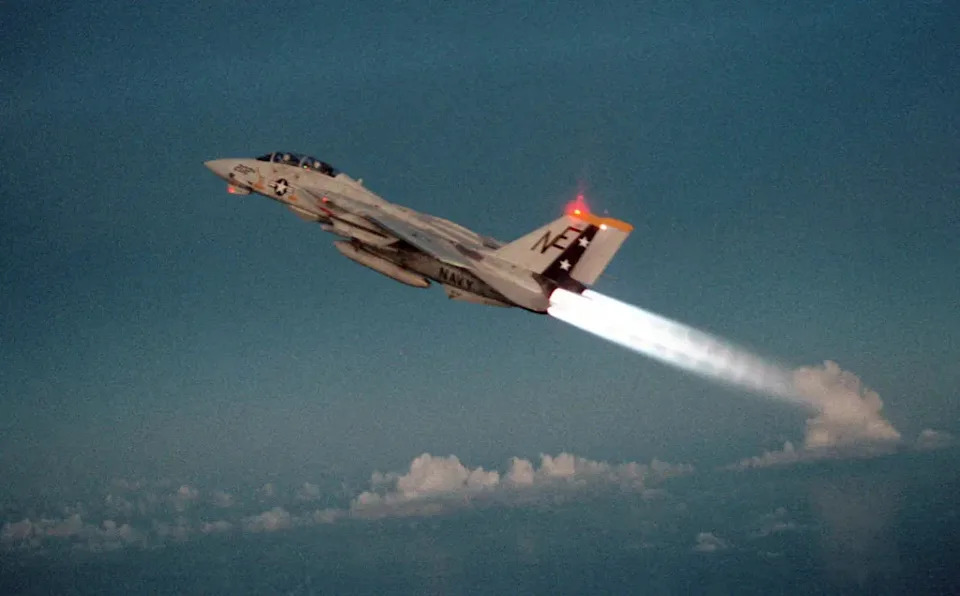
An F-14A Tomcat seen with its afterburners engaged.USN
However, the F-47 is reportedly a highly optimized, tightly integrated design with performance goals like supercruise and high-altitude operation. Fixed constraints—internal engine bay volume, fuel and cooling systems, accessory drives and stealthy intake geometry—limit how easily a different engine can be swapped in later without expensive airframe redesign.
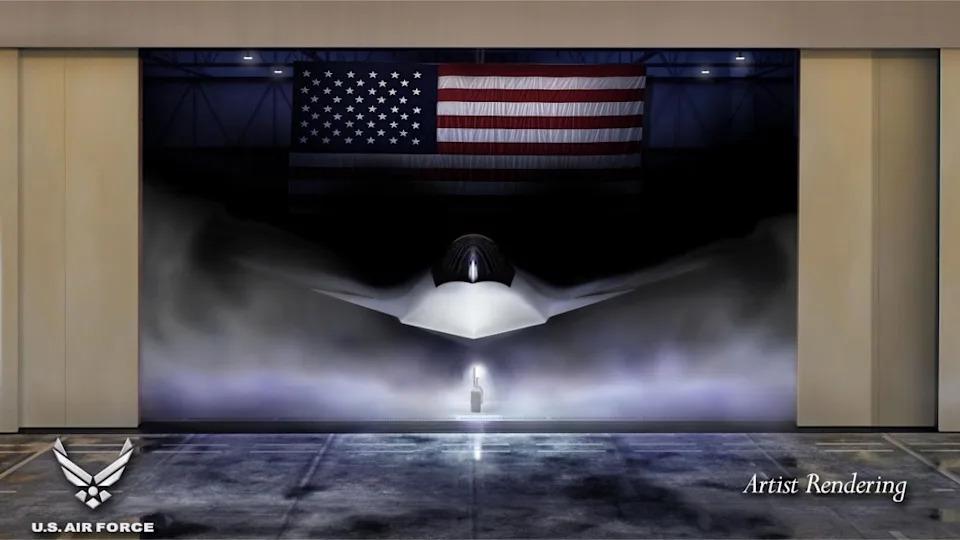
Another official rendering of the F-47.USAF
Historical Precedent and Program Risks
Using interim engines for prototypes or early production is not without precedent. Examples include the Lockheed XF-104 prototypes flying with Wright J65s before the intended GE J79 was available, and early F-14s using Pratt & Whitney TF30s until GE F110s solved performance problems. Such spirals can work, but they may degrade early performance and complicate testing and fielding.
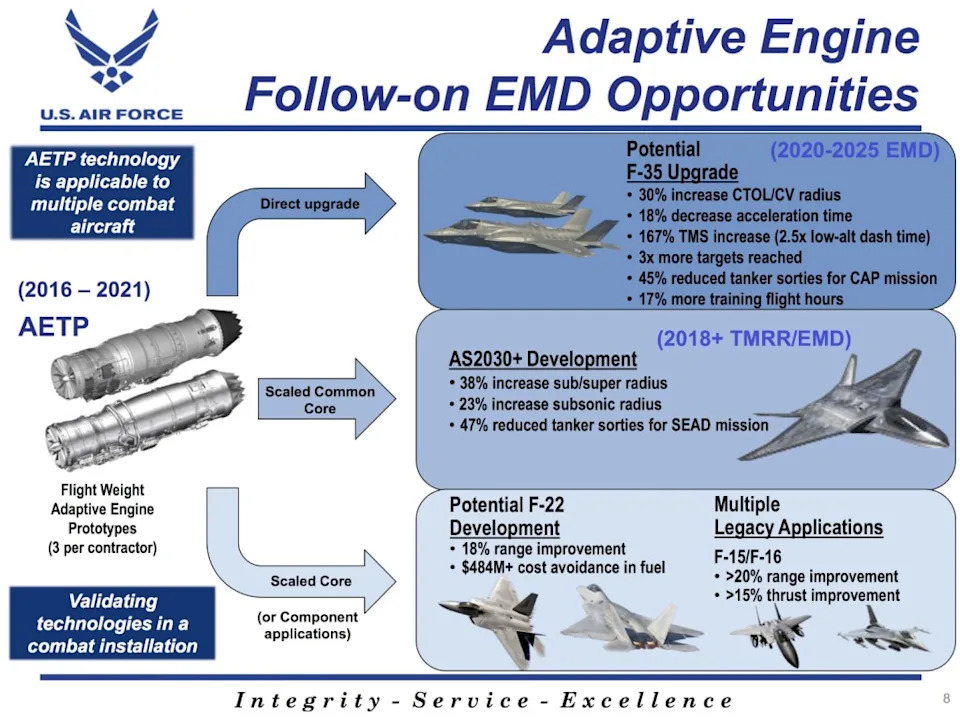
A U.S. Air Force briefing slide, dating back to at least 2018, showing potential benefits that could be released through the AETP program and follow-on efforts for various aircraft types.USAF
Maintaining multiple engine options can also provide resilience against production or supply disruptions. The cancellation of an alternate F-35 engine (the GE/Rolls-Royce F136) is often cited as a cautionary example when single-source production faces capacity or quality issues.
Outlook
The Air Force's strong budgeting and program planning indicate a robust commitment to NGAP, and officials expect at least one NGAP design to reach flight test readiness within the next few years. Still, if propulsion and airframe schedules hold as currently stated, the F-47 will probably fly and possibly enter service initially with an existing engine architecture, with NGAP units being retrofit or integrated on later examples if feasible.
Contact: [email protected]
Help us improve.