Concordia Station on the Antarctic Plateau recorded −119.4°F (−84.1°C) on July 18, the coldest single air temperature reading on Earth since 2012. The measurement — logged twice that morning — highlights how extreme radiative cooling in the polar night can produce extraordinary lows even amid global warming. Concordia’s location, elevation and isolation make it uniquely suited to climate, seismic and space‑analogue research, and such observations help refine climate models and forecasts.
Antarctic Plateau Plunges to −119.4°F: Concordia Records Earth's Coldest Reading Since 2012
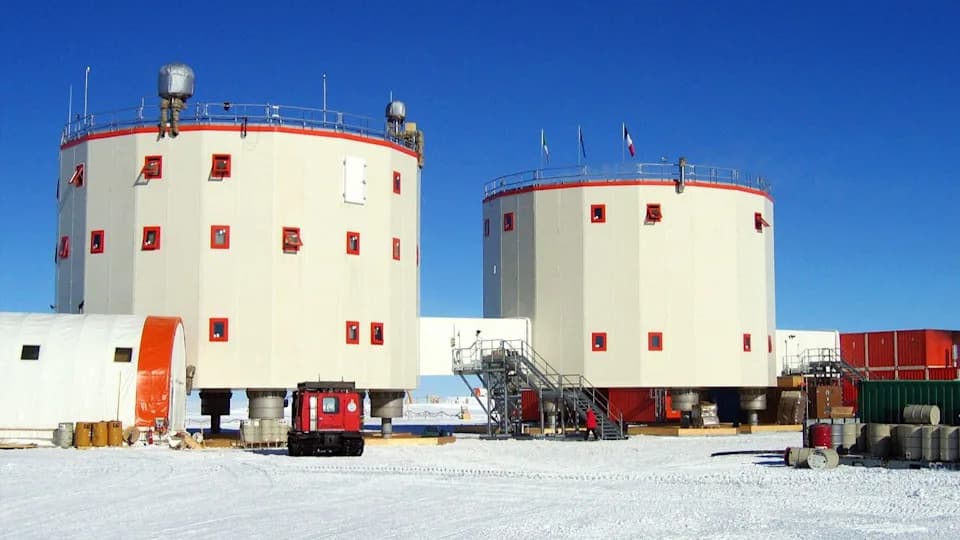
Concordia is considered the most isolated field station in the world. | Credit: GUY CLAVEL/AFP via Getty Images
Concordia, the high‑altitude research outpost on the Antarctic Plateau, recorded a temperature of −119.4°F (−84.1°C) on July 18 — the coldest single reading on Earth since 2012. The measurement, logged twice that morning, underscores how extreme local weather can still produce exceptional lows even as global average temperatures rise.
Where and How the Reading Was Measured
The reading was taken at Concordia Station, jointly operated by the French Polar Institute Paul‑Émile Victor and Italy’s National Antarctic Research Program (PNRA). Raw data provided by the French institute show the temperature dropped to −84.1°C at 6:25 a.m. and again at 6:34 a.m. local time on July 18.
Why Concordia Gets So Cold
Concordia sits more than 3,200 meters (about 10,500 feet) above sea level atop an ice cap roughly 3,300 meters (10,800 feet) thick and more than 1,000 kilometers (about 600 miles) from the coast. During the polar winter there is no sunlight for months, the air is extremely dry and the skies are often clear. These conditions allow heat to radiate efficiently into space, producing dramatic nighttime cooling.
“Even here, where extreme cold is expected, temperatures below −84°C are remarkable and highlight how variable Antarctic weather can still be,” said Gabriele Carugati, Concordia’s station leader for PNRA.
Context: Records and Satellites
Concordia’s new low is close to its all‑time minimum of −120.5°F (−84.7°C), recorded in 2010. The world record remains Russia’s Vostok station, which registered −128.6°F (−89.2°C) in July 1983. Satellite analyses and modeling suggest surface‑skin temperatures in isolated East Antarctic basins can fall even further — near −144°F (−98°C) in some modeled cases.
Cold Events and Global Warming
At first glance, extreme cold at Concordia might seem to contradict long‑term warming. It does not. Climate change describes long‑term shifts in global averages caused by human emissions of greenhouse gases; individual weather events and regional atmospheric dynamics can still produce exceptional cold spells. Scientists say observations like Concordia’s July reading help refine atmospheric models and improve forecasts.
Antarctica itself shows contrasting trends: parts of West Antarctica and the Antarctic Peninsula have warmed rapidly, putting glaciers and ice shelves at risk, while much of East Antarctica — where Concordia sits — remains comparatively more stable but not immune to change. A notable example: an unprecedented Antarctic winter heat wave in March 2024 pushed temperatures near Concordia to a record high of 15.1°F (−9.4°C), about 32°F (18°C) above previous March records.
Scientific Value of Concordia
Beyond climate monitoring, Concordia supports seismic observations, astronomy and paleoclimate research. Its extreme isolation also makes it a useful analogue for human spaceflight: crews are studied to better understand the physical, psychological and social stresses of long‑duration missions. In winter the station is unreachable by aircraft and lies roughly 600 kilometers from the nearest base.
Looking Ahead
Global climate patterns such as El Niño and continued greenhouse‑gas emissions increase the probability of more extreme temperature records in coming years. Researchers say continued monitoring at polar stations like Concordia is vital for improving climate models and understanding both extremes and long‑term trends.
Bottom line: Concordia’s −119.4°F reading is a striking example of regional atmospheric dynamics at work on the coldest continent, and it contributes valuable data to the study of Earth’s climate system.
Help us improve.