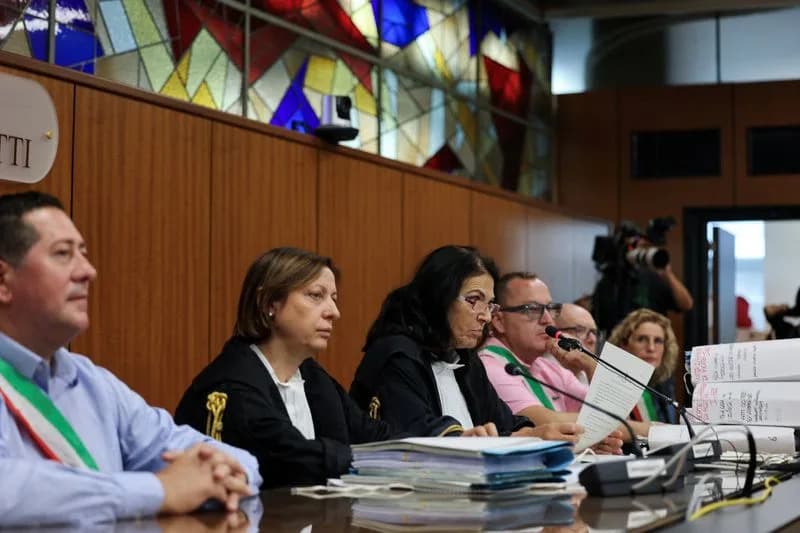
The Corte di Cassazione’s Sezioni Unite overturned an October 2024 rule on July 27 that had denied Italian citizenship to children born in ius soli countries when their parents naturalized. The ruling — issued after an April 14 hearing on three family cases — reaffirms that Italian citizenship iure sanguinis is acquired at birth and cannot be lost except by voluntary renunciation. While the decision restores eligibility for many, consular practices may still require lawsuits or a new government circular to implement the change. Separate 2025 reforms (a two-generation limit and restrictions on dual citizenship) remain under review at the European Court of Justice.
Italy’s Supreme Court Overturns ‘Minor Issue’, Restores Citizenship Path for Diaspora

Italy's supreme court has reversed a decision that had blocked the path to citizenship for hundreds of thousands of foreign descendants. - Antonio Masiello/Getty Images
Nearly 500 days after sweeping citizenship changes were introduced in March 2025, Italy’s legal fight over citizenship by descent has produced a major victory for the country’s global diaspora.
On July 27 the Corte di Cassazione’s Sezioni Unite (the supreme court’s united sections) overturned an October 2024 policy known as the “minor issue” that had blocked tens of thousands of descendants from claiming Italian citizenship. The decision follows an April 14 hearing in which the court examined three test cases — one Venezuelan and two American families — that had been denied under the policy.
What the Ruling Says
The court held that children who automatically acquired citizenship at birth in ius soli countries (also spelled jus soli) do not forfeit their Italian citizenship when their parents naturalize elsewhere. In a 28-page opinion the Sezioni Unite reaffirmed a core principle of Italian nationality law: citizenship iure sanguinis is acquired at birth, constitutes an original legal status, and is imprescriptible and inalienable — it can be asserted at any time and can only be renounced by the right-holder.
Who Was Affected
The so-called minor issue, first applied by some lower courts from about 2019 and confirmed in a June 2023 ruling, was codified into consular practice by an October 2024 government circular instructing consulates to reject applications affected by the rule. The policy hit descendants born in ius soli countries — particularly across the Americas (the United States, Brazil, Argentina, Canada, and others) — by closing a previously available route to an Italian passport, which ranked fourth on July’s Henley Passport Index.
Voices From The Case
Monica Restanio, the attorney who argued for the Venezuelan family, called the decision a dream realized: “Achieving this result was a personal dream — the kind that drives every lawyer when they decide to defend a right that they believe in deeply.” She credited years of research and the joint legal strategy presented with Professor Leo Piccininni of Rome University.
Gustavo Monasterios, one of the plaintiffs appealing a rejection based on his Italian grandmother, said he felt “deeply relieved and overjoyed” and paid tribute to the three women he named as central to the victory: his grandmother, his mother and his lawyer. “Restanio’s fierce determination and tenacity turned a long, exhausting journey with many setbacks into a final victory,” he said.
Practical Implications and Remaining Hurdles
Although the ruling reopens the legal pathway for many descendants, practical obstacles remain. Lower courts are bound to follow the Cassazione’s decision, but consular offices and other government bodies are not automatically required to change their procedures without a new government circular. That means many newly eligible people may still face delays or have to file domestic lawsuits to obtain recognition of their citizenship.
The ruling also arrives amid other contested reforms: a two-generation limit introduced in March 2025 and provisions introduced in 2025 that effectively restrict dual citizenship for some people born abroad. Those measures have been referred to the European Court of Justice for review. Attorneys involved in the recent cases said they believe some people previously blocked by the minor issue can still succeed in court even if affected by the 2025 reforms, by arguing they were improperly led to believe they were ineligible under the earlier rule.
What Comes Next
Advocates and legal experts expect more litigation as claimants seek implementation of the Sezioni Unite ruling at consulates and in administrative courts. A new government circular or administrative guidance would speed recognition, but absent that, many potential applicants should be prepared for legal proceedings.
For the diaspora, the decision is being celebrated as an important reaffirmation of the iure sanguinis principle and a practical reopening of a path to Italian citizenship for thousands worldwide.
Help us improve.