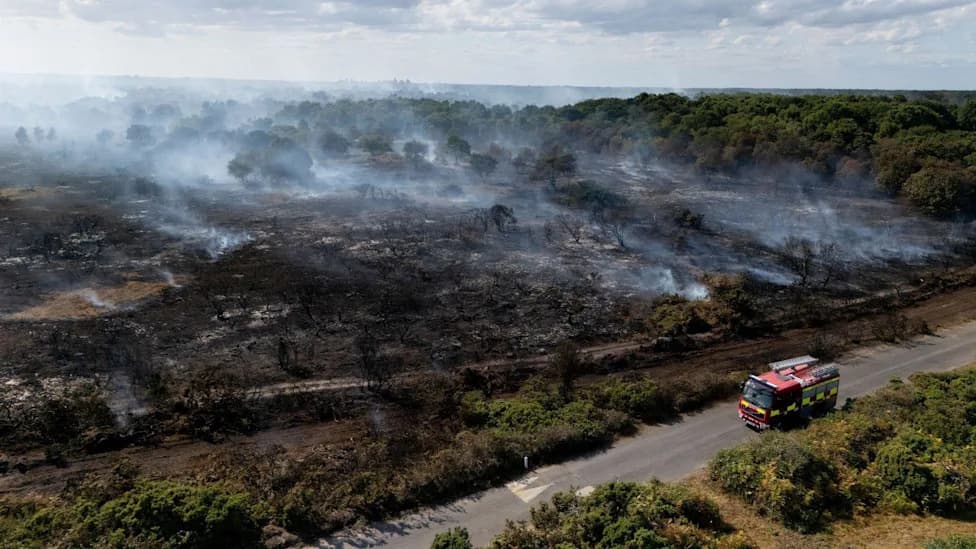
On 24 July 2026 heatwave‑driven wildfires forced a national emergency in Madrid and Ávila, highlighting the special risks at the wildland‑urban interface (WUI). Greece and Australia offer practical regulatory models: Greece now requires risk‑based passive and active protections for buildings within 300 m of forest and a 10 m perimeter buffer, while Australia’s code assigns six bushfire risk categories with tailored construction rules. Experts stress stronger building standards must be paired with sustained preventive forest management, economic incentives for ongoing land stewardship and a multi‑stakeholder, evidence‑based reform process.
Spain Must Overhaul Laws To Protect Homes From Wildfires — Lessons From Greece And Australia
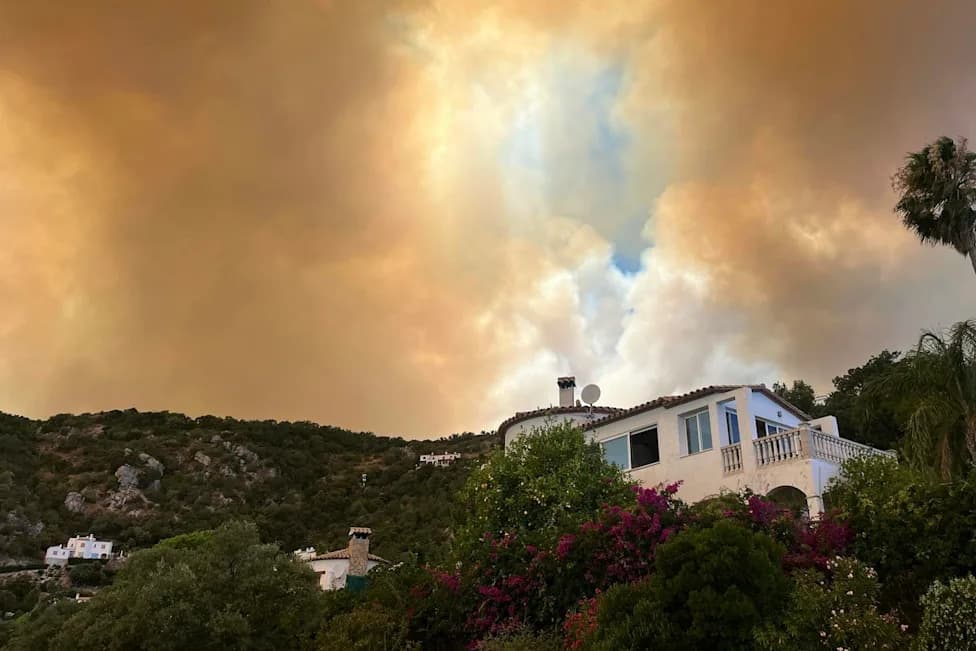
A forest fire approaches homes near Calonge, in Catalonia.Davv67/Shutterstock
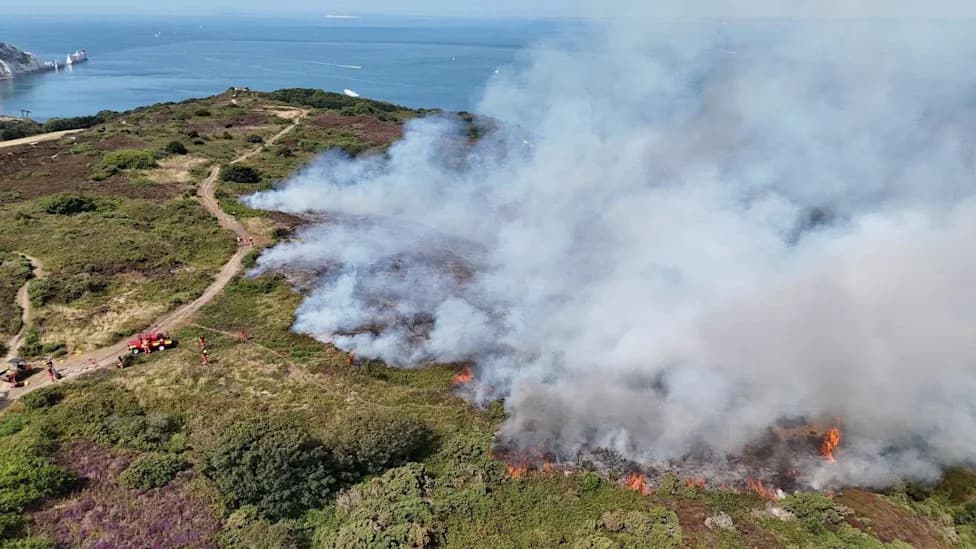
On 24 July 2026 an intense heatwave sparked multiple forest fires that forced mass evacuations in the Community of Madrid and the province of Ávila and prompted a national emergency declaration. The deployment of Spain’s Military Emergency Unit (UME) and large-scale evacuations underlined a warning researchers have given for years: when fire spreads from wildland into built-up areas it behaves differently and requires different laws, planning and responses.
What Is The Wildland‑Urban Interface?
The zone where natural landscape meets housing — the wildland‑urban interface (WUI) — concentrates the greatest fire risk. Globally, WUI area grew by 35.6% between 2000 and 2020. These areas are harder to evacuate, allow fires to jump quickly from one structure to another, and divert firefighting resources from larger, more remote blazes.
International Models Spain Can Use
Greece
Greece updated its regulatory framework after deadly and extensive fires, including the 2018 Attica disaster and the very large 2023 blazes. In May 2023 a joint decision by three ministries introduced rules for buildings located inside forest land or within 300 metres of forest. Key requirements include:
- Classification of buildings into four risk levels.
- Mandatory passive measures: non‑combustible roofing and cladding, metal mesh over openings, and solid fencing.
- Mandatory active systems where required: sprinklers, dedicated water supply points and fire detection.
- A 10‑metre perimeter buffer divided into three bands with decreasing vegetation density.
Research on Greek fires shows that ember attack — sparks entering through open windows, pergolas or wooden roofs — often causes homes to ignite long before the main fire front arrives, so both building resilience and vegetation control matter.
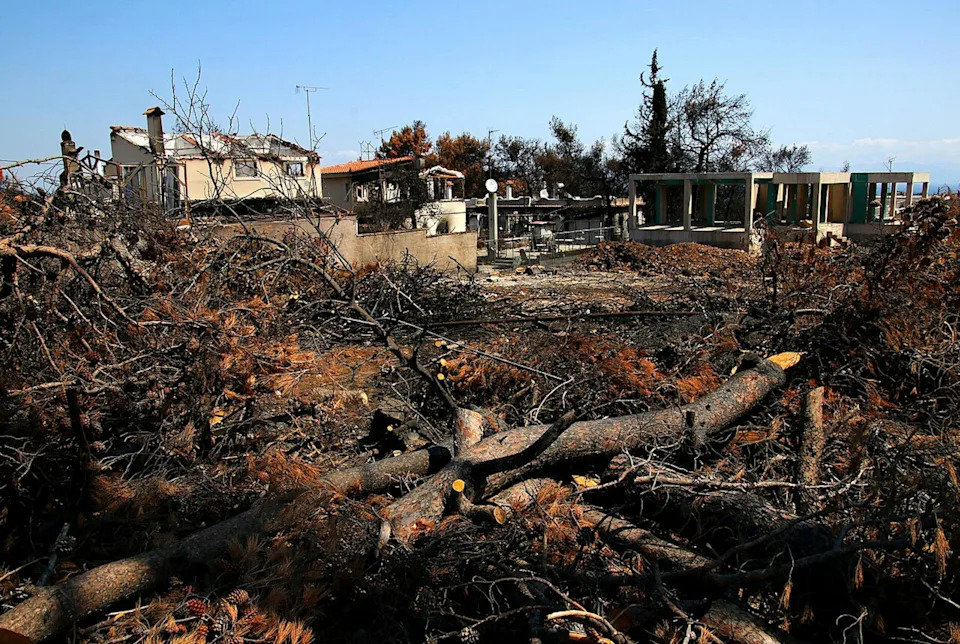
Burnt-out homes in Mati, Greece, after the 2018 forest fire.Guillaume Baviere/Flickr,CC BY-SA
Australia
Australia’s National Construction Code is a global benchmark for bushfire-prone areas. It assigns parcels to one of six risk categories according to the fire danger index, vegetation type, distance from vegetation and slope. Each category has tailored requirements governing materials (for example, non‑combustible walls, toughened glass with mesh, and fire‑resistant shutters), clearances and protection systems. Some high‑risk categories require a minimum vegetation clearance (commonly around 10 metres) and other fireproof construction elements.
Complementary Principles
The Greek and Australian approaches work together: strengthen buildings so they resist embers and radiant heat, and manage surrounding vegetation so fires arrive with lower intensity. But stronger construction rules alone are insufficient.
Why Preventive Landscape Management Matters
There is broad consensus that preventive forest management — selective clearing, firebreaks, prescribed burning and removing accumulated biomass — most effectively reduces risk in the WUI. In Spain, decades of rural decline, reduced grazing and abandoned forestry have produced dense, continuous fuels that drive larger, more intense fires.
Sustainable management must be ongoing, not one‑off. That requires creating continuous economic value from the landscape through extensive livestock, forestry, mixed farming, rural tourism, timber and non‑timber forest products. In short: a forest that helps local livelihoods is a forest that will be actively managed.

A Credible, Multi‑Stakeholder Reform Process
Regulatory reform should not be improvised in the middle of an emergency. It requires a pluralistic, technical and sustained process that includes:
- Fire brigades and civil protection services
- Professional architecture and engineering bodies
- Homeowners' and residents' associations in peri‑urban developments
- Agricultural and forestry organisations
- Autonomous community governments (town and land‑use planning)
- The national legislature (forestry regime and Technical Building Code)
- The insurance sector (financial incentives for resilience)
- Environmental organisations (to avoid indiscriminate logging)
First Steps
The reform should begin with a diagnostic assessment: up‑to‑date maps of interface areas, an inventory of the existing building stock and a review of municipal emergency plans. Technical tools already exist — for example, Navarre’s emergency services geographic information system, which supports risk mapping and real‑time coordination.
Conclusion
Spain has a clear opportunity to learn from recent fires and from international experience. By combining fire‑resilient building regulations, sustained preventive landscape management and a structured, multi‑stakeholder reform process grounded in modern risk mapping, Spain can reduce losses and protect communities long before the next fire season arrives.
This article adapts analysis originally published in The Conversation. Authors: César Martín‑Gómez and José Manuel Cabrero. Funding and affiliations: see original publication for full disclosures.
Help us improve.