Widespread blackouts during a 48°C heatwave have triggered mass protests across Tripoli and other Libyan cities, with demonstrators blocking roads and government buildings. A storming of the Mellitah oil and gas complex briefly halted production at El Feel and Wafa, cutting gas to power plants and worsening outages. Experts blame decades of neglect — unfinished pre-2011 power projects, ageing plants, weak transmission infrastructure and rising demand — while international envoys press for political unity and urgent reforms.
Libya’s Power Grid Collapses Amid 48°C Heatwave, Sparking Nationwide Protests

Protesters demonstrating against daily electricity outages place rubble at the entrances of company buildings as protests over prolonged power cuts continue outside companies affiliated with Libya's National Oil Corporation (NOC) in Tripoli, Libya, on July 28, 2026 [Hamza Al Ahmar/Anadolu Agency]
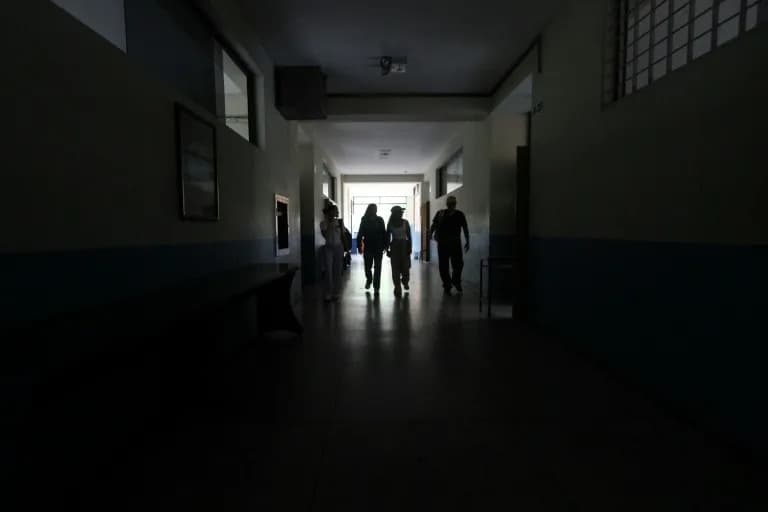
Nightfall in many Libyan neighbourhoods is now defined by the drone of private generators rather than reliable grid electricity. A blistering heatwave pushing temperatures above 48°C (118°F) has coincided with prolonged daily outages — often around 10 hours — igniting fresh waves of protests across Tripoli and other cities.
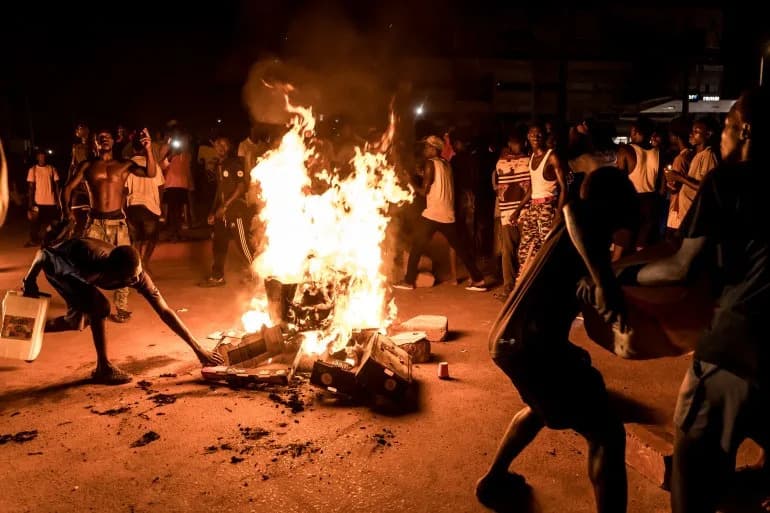
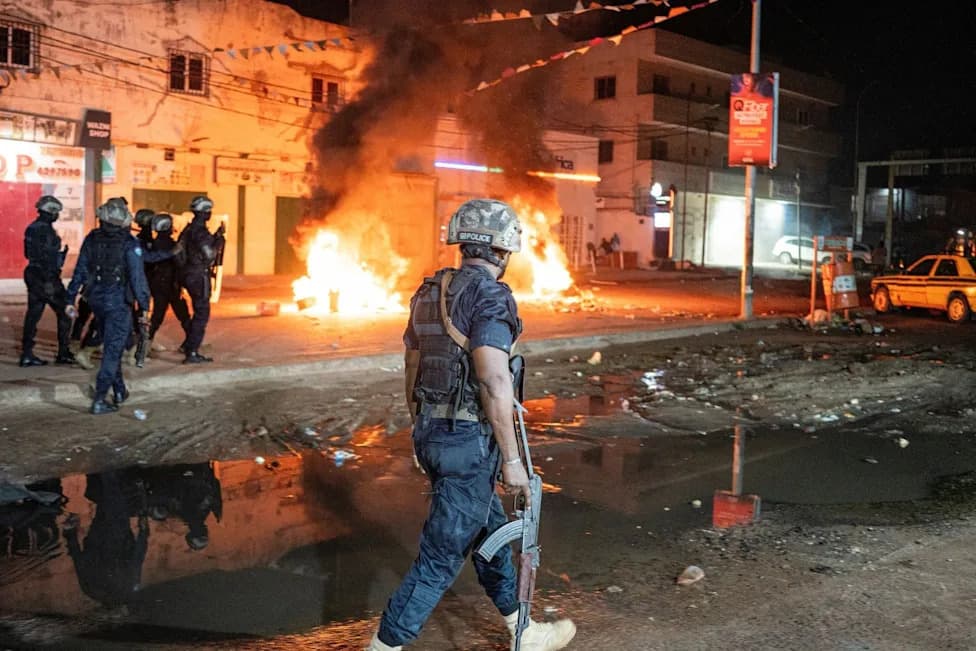
Young demonstrators, organised in part by the Souq Al-Jumaa Movement and joined by activists from Tajoura and Janzour, have blocked major roads, burned tyres and sealed off public buildings. In Tripoli, protesters dumped a truckload of earth outside the Ministry of Foreign Affairs to demand accountability for alleged corruption and call for the dissolution of Libya’s fractured political institutions.
Storming of Mellitah and the Energy Shock
The crisis escalated when a group of protesters stormed the Mellitah oil and gas complex, forcing the National Oil Corporation (NOC) to halt operations at the El Feel oilfield and partially suspend output at the Wafa field. The disruption sharply reduced gas supplies to power stations, taking multiple generation units offline. Although authorities later said the GNU re-secured the facility and resumed gas pumping, the incident highlighted the fragility of Libya’s energy system.
Human Impact
Ordinary Libyans are bearing the brunt. Roa Nasef, an energy systems engineer who recently returned after seven years abroad, told Al Jazeera that people are "fed up with repeated promises" and short-term fixes that fail to address structural problems. Areej Badr, speaking from Benghazi, called the situation "tragic," noting that many households now rely on expensive generators. She warned that outages disrupt water supplies, spoil food and exacerbate suffering for the sick and elderly.
"Stabilising the grid requires modernising transmission networks and committing to a long-term plan that includes renewables," said Nasef.
Root Causes: Decades of Neglect
Energy experts and former officials point to long-standing neglect. A former official at the General Electricity Company of Libya (GECOL), speaking on condition of anonymity, blamed unfinished strategic projects launched before 2011 — notably the Gulf steam power station near Sirte and the West Tripoli steam power station. Both were planned as four-unit plants with roughly 1,400 megawatts of capacity each; West Tripoli remains incomplete, and only two of Sirte’s four 350MW units are connected to the grid.
Those delays left Libya reliant on aging plants that require extensive maintenance. Improvements in 2023–24 were driven largely by gas-fired plants contracted years earlier rather than a comprehensive sector overhaul. Annual demand growth has outpaced additions, estimated by one insider at up to 600 megawatts a year.
Analysts also point to weak transmission infrastructure. Rabie Khalifa, a spokesperson for the Ministry of Electricity aligned with the eastern administration, told Al Jazeera that a 400-kilovolt transmission line failed under peak summer demand, triggering cascading shutdowns and a sharp drop in grid frequency that precipitated widespread collapse.
Limited External Relief And Political Fractures
Temporary relief from neighbouring Egypt — about 70 megawatts resumed in July — is small compared with Libya’s needs. Meanwhile, international envoys have urged Libyan political cohesion. Massad Boulos, the US adviser for African affairs, met GNU Prime Minister Abdul Hamid Dbeibah to press for unity and security cooperation to prevent further fragmentation.
What Needs To Be Done
Energy experts recommend immediate and medium-term measures: restore and maintain critical transmission lines, complete stalled pre-2011 projects, prioritise routine maintenance of ageing plants, and commit to a diversified energy strategy that accelerates renewables and decentralised generation. Without coordinated political will and sustained investment, outages and social unrest are likely to recur.
Key facts: daily outages of roughly 10 hours; heatwave over 48°C; Mellitah complex disruption; unfinished pre-2011 plants; estimated demand growth up to 600MW; Egypt’s 70MW export offers limited relief; 400kV transmission failure triggered cascading shutdowns.
Help us improve.