Kaunas University of Technology researchers created a fully waste-derived geopolymer mortar that retains compressive strengths of 34.7 MPa and 53.0 MPa after exposure to 800°C (1,472°F). The binder combines milled ceramic brick waste and metakaolin from a glass factory, eliminating the need for Portland cement and its high CO₂ footprint. Remarkably, the mortar strengthened after repeated high-temperature cycles, likely due to continued alkali-activation and densification. The work points to lower-carbon, fire- and heat-resistant construction alternatives.
Waste-Derived Geopolymer Mortar Withstands 1,472°F — and Gets Stronger After Reheating
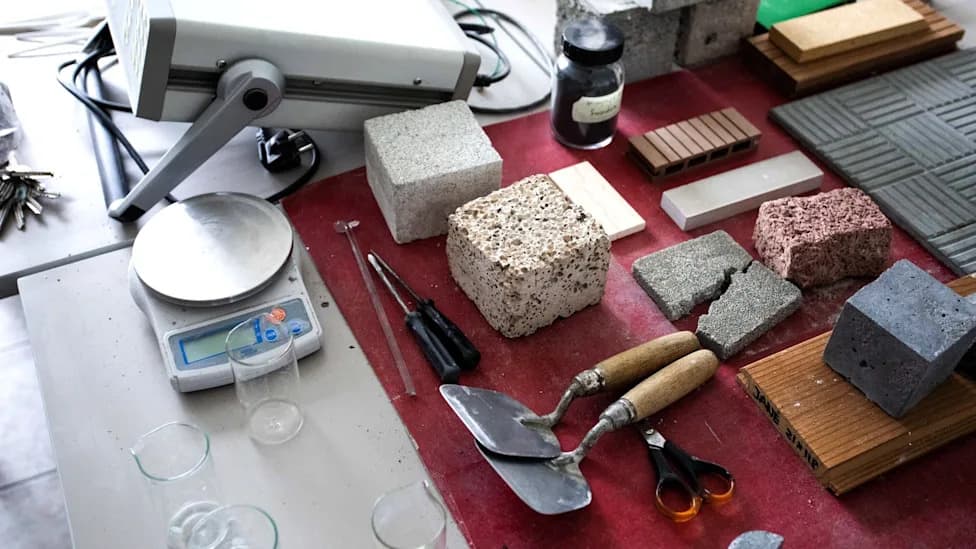
Waste-based geopolymer mortar stays strong at 1,472°F and gets stronger when reheated
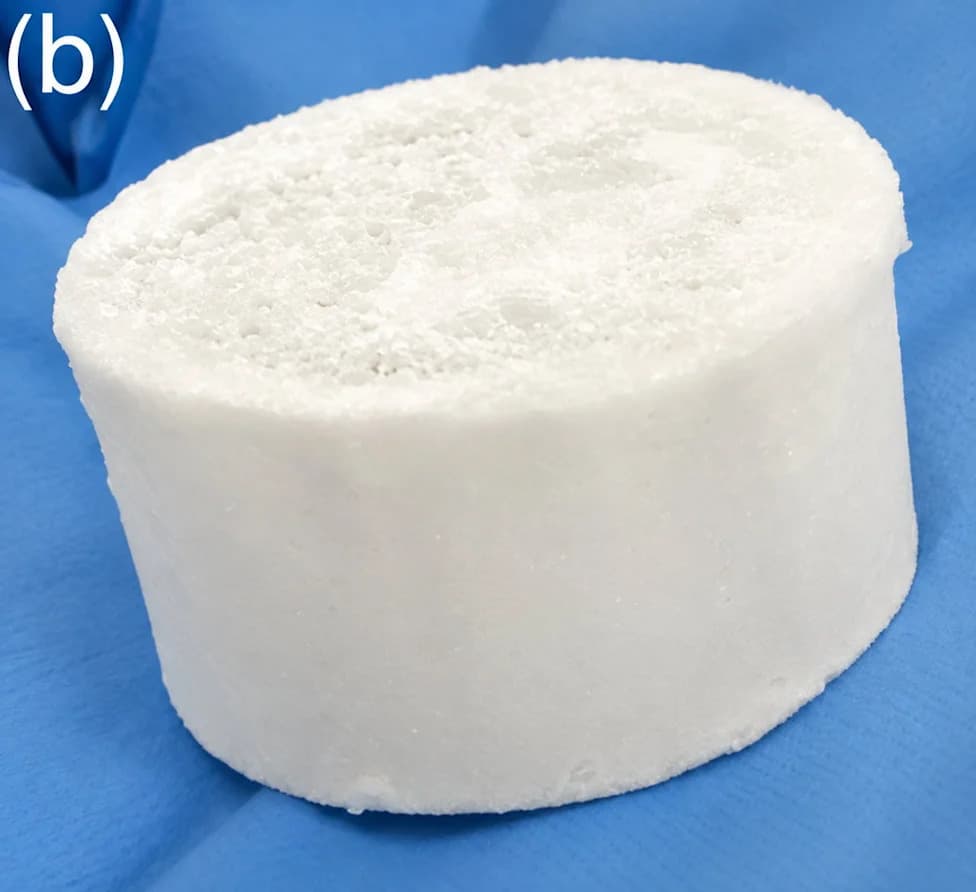
Researchers at Kaunas University of Technology (KTU) in Lithuania have developed a fully waste-derived geopolymer mortar that retains high compressive strength after exposure to extreme heat and — unexpectedly — strengthens after repeated reheating. The most successful mixes kept compressive strengths of 34.7 MPa and 53.0 MPa after being heated to 800°C (1,472°F) with only limited microcracking, outperforming conventional Portland cement concrete at those temperatures.
How the Mortar Is Made
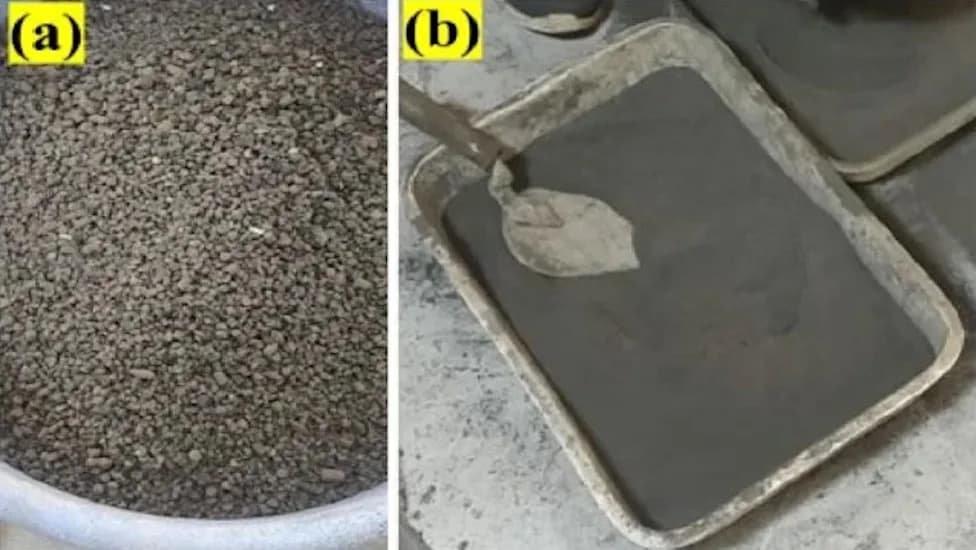
The binder replaces Portland cement entirely and is produced at much lower temperatures. It combines two waste materials: milled ceramic brick recovered from demolition sites and metakaolin derived from kaolin residues at a glass factory. When chemically alkali-activated, these components form a geopolymer matrix that binds fine aggregates into a durable mortar.
Materials Tested and Key Results
The team evaluated five fine aggregates with the geopolymer binder: sand, granite, basalt, ceramic waste and corundum. Mixes containing ceramic waste and corundum showed superior performance at elevated temperatures and produced the reported 34.7 MPa and 53.0 MPa compressive strengths at 800°C — values comparable to typical room-temperature strengths of conventional concrete.
Unexpected Strength Gain With Thermal Cycling
Contrary to the usual behavior of construction materials, which weaken under repeated thermal cycling, the KTU mortar became stronger after successive exposures to high temperature. Lead researcher Danutė Vaičiukynienė said: 'We can already see that repeated exposure to high temperatures does not make our mortar weaker. It actually becomes stronger.'
The researchers attribute this effect to ongoing alkali-activation reactions and microstructural densification at elevated temperatures, although the precise mechanism remains under investigation.
Why This Matters
Portland cement production is energy-intensive and responsible for roughly 7–8% of global CO₂ emissions. Substituting even a portion of cement-based concrete with waste-derived geopolymer mortars could reduce that footprint while diverting demolition and industrial waste from landfills. High-temperature resistance and strength gain after heating make this material attractive for wildfire-resilient construction, industrial facilities, tunnels, refractory linings and other heat-exposed applications where both safety and sustainability are priorities.
The geopolymer construction market is growing rapidly: estimated at about $9.75 billion in 2024 and projected to exceed $21 billion by 2029, driven by demand for low-carbon building materials. The KTU team's findings were published in the journal Scientific Reports.
Help us improve.