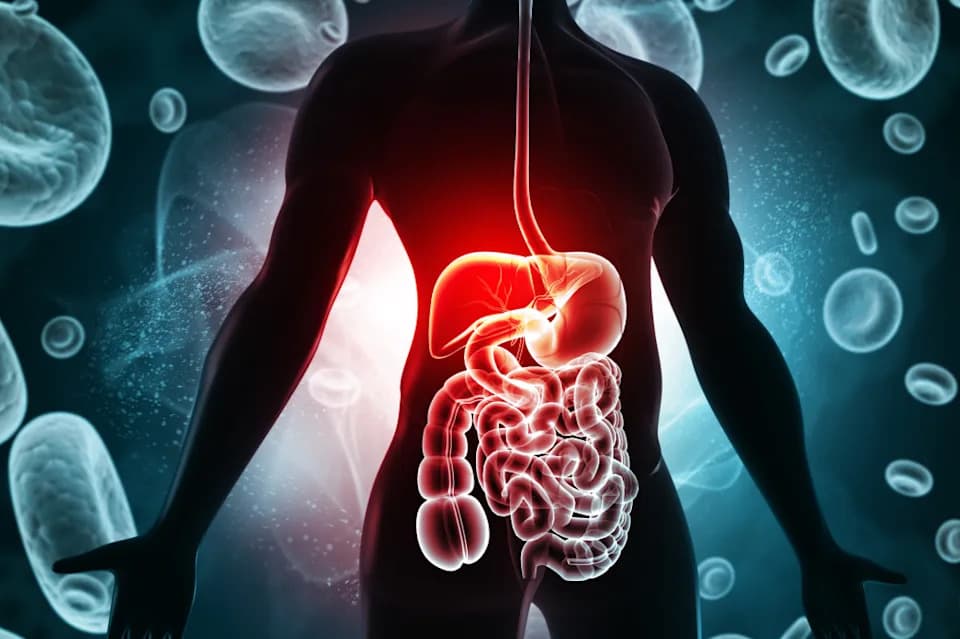
Researchers led by Scott Kanoski report that in male rats, calories from fat and sugar trigger a vagus nerve signal from the gut to the medial septum that increases acetylcholine release and boosts hippocampal memory activity. Using fiber photometry, the team showed that caloric content—not taste—drives this gut–brain pathway. Early-life exposure to a Western-style high-fat, high-sugar diet weakened the system and produced lasting memory deficits. Findings point to vagus nerve–based interventions as a potential research direction, but human relevance remains unproven.
Calories to Memory: Rat Study Reveals Vagus Nerve Pathway That Boosts Memory Signals
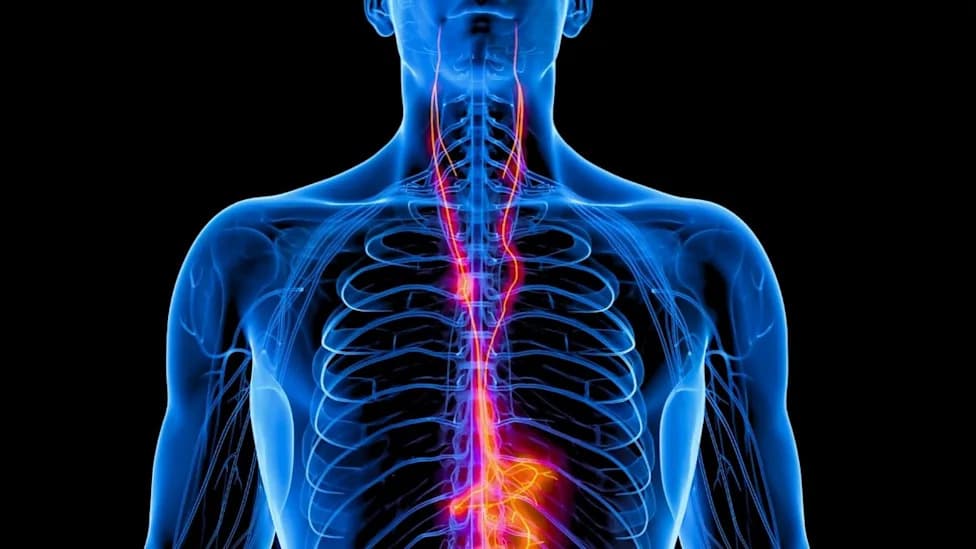
(Sebastian Kaulitzki/Science Photo Library/Getty Images)
A new study led by biologist Scott Kanoski at the University of Southern California, published in Nature Communications (Tierno Lauer et al., 2026), shows that in male rats the caloric content of a meal can trigger a gut-to-brain signal that enhances memory-related brain activity.

YouTube Thumbnail
Using fiber photometry to monitor neural activity during feeding, the researchers compared responses to calorie-rich solutions (fat or sugar) with responses to sweet-tasting but low- or zero-calorie alternatives. Rats that consumed fats or sugars showed a sustained increase in hippocampal memory-related activity after eating.
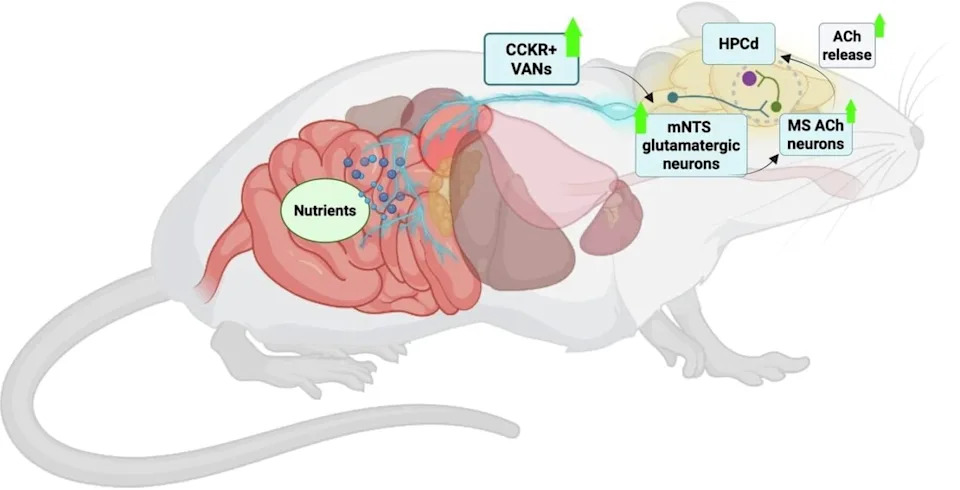
Based on their experiments, the researchers propose a model for nutrient-induced modulation of hippocampal function. (Tierno Lauer et al.,Nat. Commun.,2026)
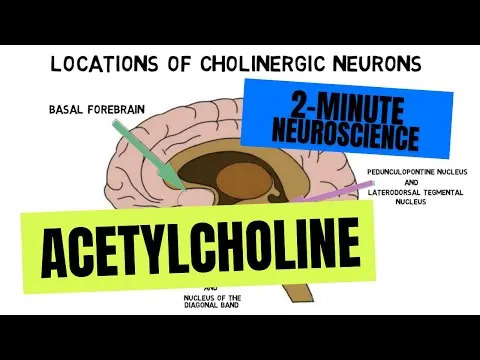
The team traced the signal from the gut up the vagus nerve to neurons in the medial septum, a region that modulates hippocampal function. Those medial septum neurons release the neurotransmitter acetylcholine, a chemical known to support memory encoding in the hippocampus.

Subscribe to ScienceAlert's free fact-checked newsletter
"Eating behavior dynamically increases hippocampus acetylcholine release, and these levels remain elevated after a meal," the authors write. "These effects are eliminated by either vagal afferent neuron ablation or medial septum acetylcholine neuron deletion."
In other words, when the researchers disrupted vagal sensory input or removed acetylcholine-producing neurons in the medial septum, the meal-linked increase in hippocampal acetylcholine and associated memory activity disappeared.
Food plays an important role in many significant moments in our lives. (PBNJ Productions/Tetra images/Getty Images)
Importantly, the study also found that early-life exposure to a Western-style, high-fat/high-sugar diet (supplemented with snacks and sugary additives) weakened this vagus–medial septum–hippocampus signaling. Rats fed that junk-food pattern during development showed reduced acetylcholine responses and poorer memory performance later in life, even after switching to healthier food.
YouTube Thumbnail
Limitations and Implications
Key limitations include that experiments were conducted only in male rats, so sex differences and direct translation to humans are uncertain. While the pathway is biologically plausible in mammals, human studies are needed to confirm whether the same gut-derived signals influence memory in people.
The authors note clinical relevance: disruptions in hippocampal acetylcholine are an early neurochemical feature of Alzheimer's disease. By showing that vagal input can boost this acetylcholine system, the findings suggest potential avenues for therapeutic exploration—such as vagus nerve stimulation—but emphasize that further research and clinical trials are required.
Bottom line: In male rats, calories from fats and sugars trigger a vagus nerve signal that increases medial septum acetylcholine and enhances hippocampal memory activity; early-life junk-food diets can blunt this system, with possible long-term cognitive consequences.
Help us improve.