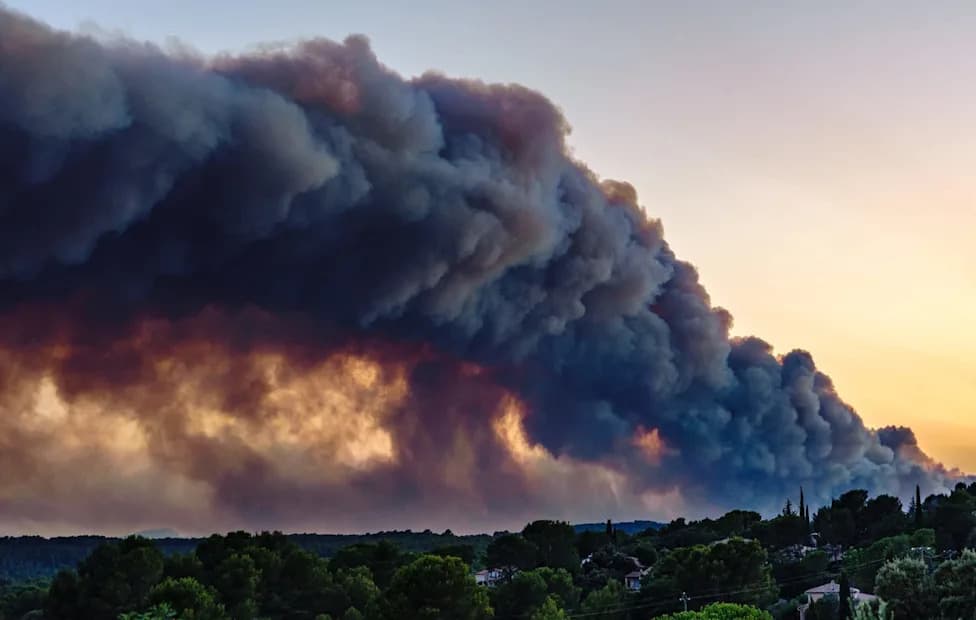
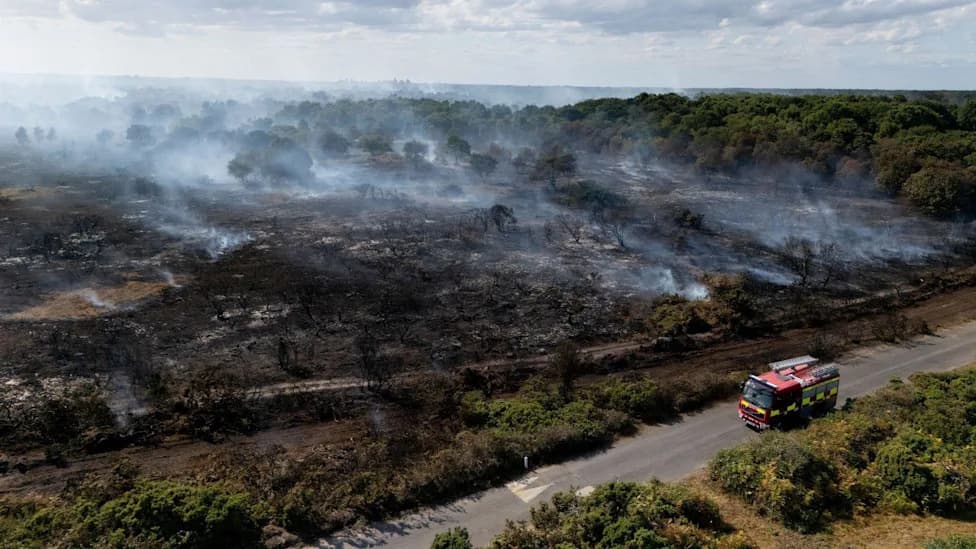
France is fighting unprecedented wildfires with just 12 aerial water bombers while new Canadair-style aircraft are being produced slowly in Calgary. De Havilland restarted assembly in 2024 after Bombardier stopped in 2015, but supply-chain rebuilding — including reintroducing over 50,000 parts — means the first deliveries to France are not expected until at least 2028. The factory’s largely manual production limits output to about 10 planes per year, and the order backlog now stands at 40 aircraft.
France Faces Wildfires With Just 12 Canadairs as New Water Bombers Roll Out Slowly
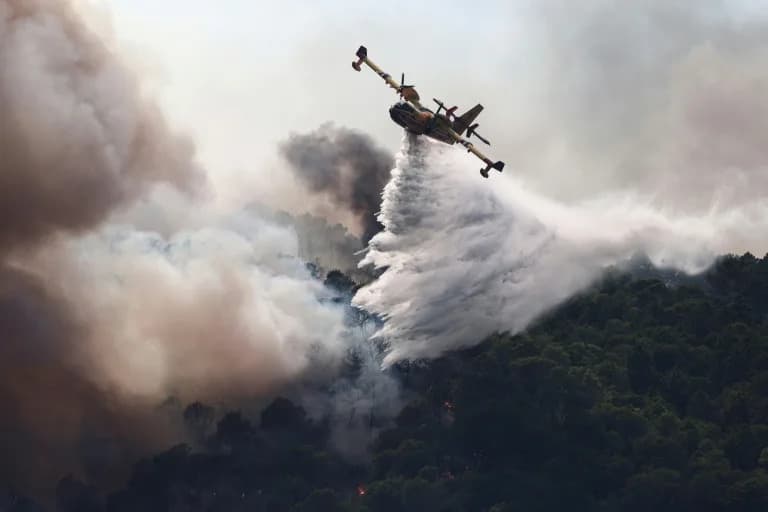
The French fleet only has 12 water bombing aircraft and the soonest it can get more is 2028 (Thibaud MORITZ)
French firefighters are battling record wildfires with only 12 aerial water bombers while production of new Canadair-style water scooping aircraft is restarting slowly at a Calgary factory. The supply-chain disruption from a nine-year production hiatus has left many countries waiting years for reinforcements.
Rivet-By-Rivet: A Slow, Hands-On Return To Production
At De Havilland’s plant in Calgary, workers are drilling and riveting fuselages by hand. The aircraft are capable of scooping nearly 6,000 liters of water in about 12 seconds by skimming across a lake, but the factory’s relatively low level of automation limits output to roughly 10 aircraft per year.
“On the fuselage, everything is done manually, so every hole, every rivet you see on the fuselage is being done manually,” said Operations Director Victor Ocadiz.
A Decade-Long Gap And Its Consequences
Bombardier halted production in 2015. De Havilland restarted assembly in 2024 after an initial European order, but rebuilding the supplier network has been time-consuming. The company says it had to bring back production of more than 50,000 parts and select new vendors because many previous suppliers no longer existed.
That rebuilding effort matters not only for new deliveries but also for maintaining the roughly 160 older-generation Canadairs still in service worldwide — about half in Europe and half in North America, some in service for more than 30 years.
Delivery Timetable And Orders
De Havilland says the order book has grown to 40 aircraft. France ordered two next-generation DHC-515s in 2024 as part of a wider European procurement and added two more in June. De Havilland’s head of strategy, Jean-Philippe Cote, said the company expects to deliver two aircraft to France in the 2028–2029 window and two additional aircraft in the 2032–2033 window. The very first DHC-515 is slated to go to Greece in early 2028.
A De Havilland spokesperson declined to give exact months beyond saying deliveries are "in line with forecasts." French Interior Minister Laurent Nunez has said the 2028 deliveries are planned for April and November, and he urged the timetable be respected.
Political Fallout
The shortage of aircraft and the long wait for reinforcements have sparked political debate in France. Opposition parties blame government budget choices for weakening firefighting capacity, while others point to the structural effects of the production gap in Canada as the root cause.
What This Means For Firefighting
While restarting production is slow, restoring the supply chain and ongoing assembly will improve access to spare parts and repairs for existing aircraft. De Havilland says the resumption of manufacturing should make it easier to ship replacement components quickly to nations that rely on those water bombers.
Key facts: France is operating with only 12 aerial water bombers amid record wildfires; De Havilland restarted Canadair-type production in 2024 after a 2015 halt; the Calgary plant produces about 10 aircraft a year and rebuilt production required more than 50,000 parts and new suppliers.
Help us improve.