Short Summary: Social media posts that linked three asset moves to a Marcos-era privatisation drive are misleading. The CBK hydroelectric complex was sold to a private consortium for ~36 billion pesos; the 61‑hectare NAIA Terminal 3 land was transferred from BCDA to MIAA for 48 billion pesos but remains government‑owned; and roughly 25 metric tons of gold were sold by the independent central bank as part of reserve management, not as a government privatisation policy.
Viral Claims Misrepresent Philippines Asset Sales — NAIA Terminal Land Remains State-Owned
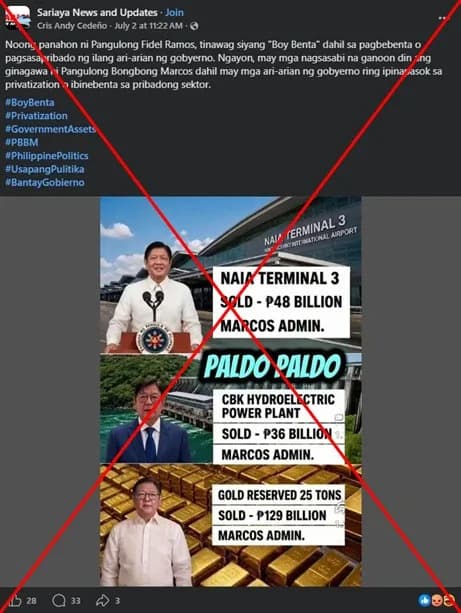
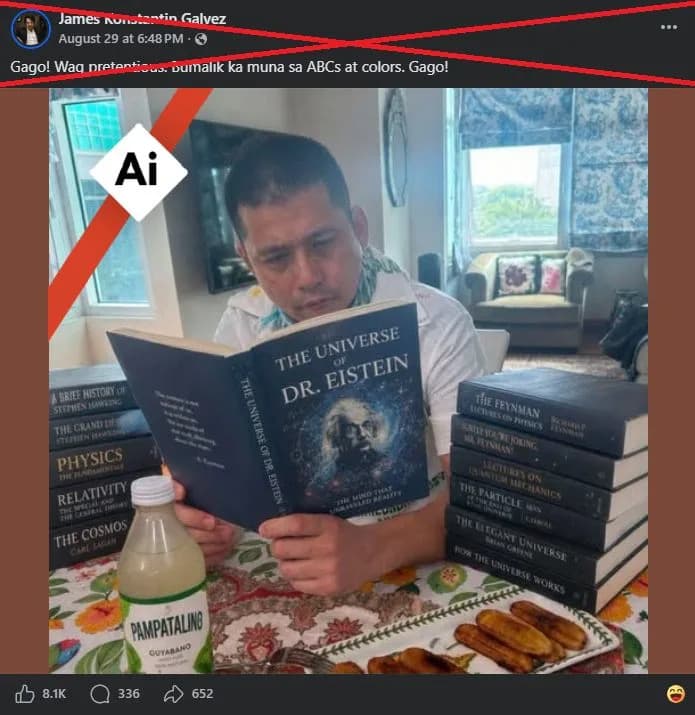
Screenshot of the misleading post captured on July 27, 2026, with a red X added by AFP
Social media posts have circulated alleging that several high‑value Philippine assets — including land under Terminal 3 of Ninoy Aquino International Airport (NAIA), a hydroelectric complex and tons of gold reserves — were privatised under President Ferdinand Marcos. These claims are misleading: only one of the three cited transactions involved a sale to a private buyer. The other transactions were either internal transfers between government entities or independent reserve management by the central bank.
What Happened With NAIA Terminal 3 Land?
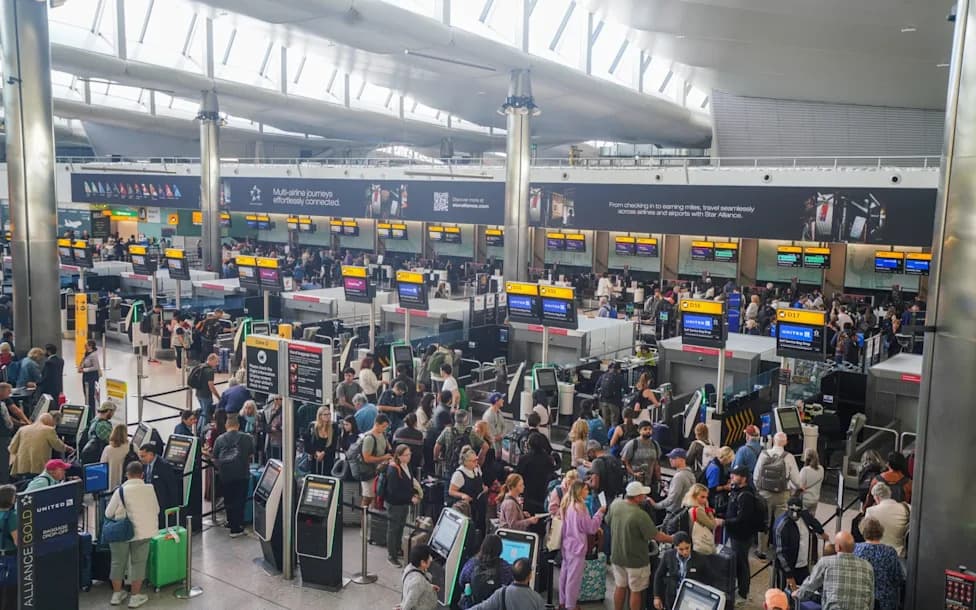
Ownership of a 61‑hectare property that houses NAIA Terminal 3 was transferred from the Bases Conversion and Development Authority (BCDA) to the Manila International Airport Authority (MIAA) for 48 billion pesos. This was a transfer between two government bodies, so the land remained a government asset rather than being privatised.
Terminal 3's operations and rehabilitation are handled by the private New NAIA Infra Corporation under a management and rehabilitation agreement signed in May 2024, but that contract relates to operation and investment, not transfer of title. Before the transfer, BCDA had been leasing the property to MIAA.
The BCDA is a government‑owned and controlled corporation mandated to convert former military bases into public infrastructure and to generate revenue for state programs through joint ventures, concessions and land dispositions. The BCDA and MIAA said the transfer would enable the MIAA to pursue long‑term development as passenger traffic grows; MIAA General Manager Eric Jose C. Ines said securing the property strengthens the agency's stewardship of a strategic government asset.
Which Asset Was Privatised?
Of the three items in the viral graphic, only the Caliraya‑Botocan‑Kalayaan (CBK) hydroelectric complex was sold to a private party. That complex was sold in February 2026 for roughly 36 billion pesos to a consortium led by AboitizPower, which constitutes an example of privatisation.
What About The Gold Sales?
The posts also claimed the sale of about 25 metric tons of gold — valued in the graphic at roughly 129 billion pesos — represented government privatisation. In fact, the country’s gold reserves are part of the Bangko Sentral ng Pilipinas's (BSP) gross international reserves (GIR). The BSP operates with fiscal and administrative autonomy under the Constitution and relevant laws and manages reserves independently from direct government policy.
Beginning in 2020, the BSP pursued an active strategy of buying and selling gold as part of GIR management. In 2024 the BSP sold around 25 metric tons of gold to take advantage of market prices and to rebalance reserve composition; proceeds from such sales remain within the GIR. Those transactions were central bank reserve management actions, not a government privatisation program.
Bottom Line
Only the CBK hydroelectric complex was sold to private investors. The NAIA Terminal 3 land transfer was an intra‑government transfer that kept the property in state hands, and the gold sales were conducted by the autonomous central bank as part of reserve management, not as a government privatisation drive.
If you see social posts claiming widespread privatisation, check whether transactions were between government entities or involved independent central bank reserve operations before accepting those claims as fact.
Help us improve.