Lord Sewell reflects on how two-way integration — where migrants influence the host culture and also join its institutions — has made Britain relatively successful at ethnic integration. Drawing on a personal memory of Desmond Dekker in a Streatham supermarket, he contrasts British pragmatism with French assimilation and warns about regional "soft segregation" in post-industrial towns. Sewell urges policies and mutual effort to sustain a "mature pluralism" that balances cultural difference with shared expectations.
Britain's Two-Way Integration: How Long Can It Last? — Lord Sewell Explains
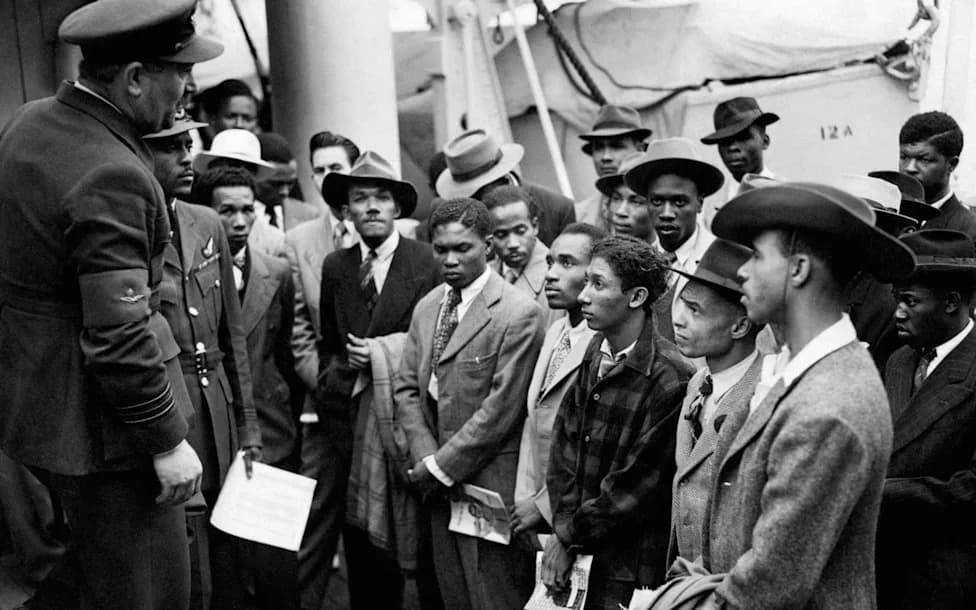
Jamaican immigrants being welcomed by officials from the Colonial Office after the HMT Empire Windrush landed them at Tilbury - PA Wire
In the winter of 2005 I was choosing broccoli in a Sainsbury's in Streatham, south London, when I noticed a familiar face: Jamaican music star Desmond Dekker, calmly selecting carrots. I told him how much his music had influenced British culture and mentioned that his 1969 hit "The Israelites" had topped the charts. On a whim I asked if he would sing; he agreed, and within moments shoppers were joining in, dancing and asking for autographs.
What stayed with me was the composition of the impromptu crowd: many were white men in their fifties who knew every word. That spontaneous scene captures a central truth about British integration. Dekker — and the Caribbean generation who arrived in the 1950s and 1960s — brought culture that did not merely survive in Britain but reshaped it. Early ska and related sounds were taken up by working-class white youth, becoming an enduring thread in British popular music.
Two-Way Integration
This is the essence of two-way integration: not minorities simply assimilating into a static host culture, nor a passive majority absorbing change, but a reciprocal exchange in which both sides influence one another. Two decades on from that Streatham moment, public debate about integration often feels bleak. The political Right warns of cultural erosion and fragmentation, while parts of the Left sometimes depict the white majority as uniformly racist. Both narratives miss the more nuanced reality.
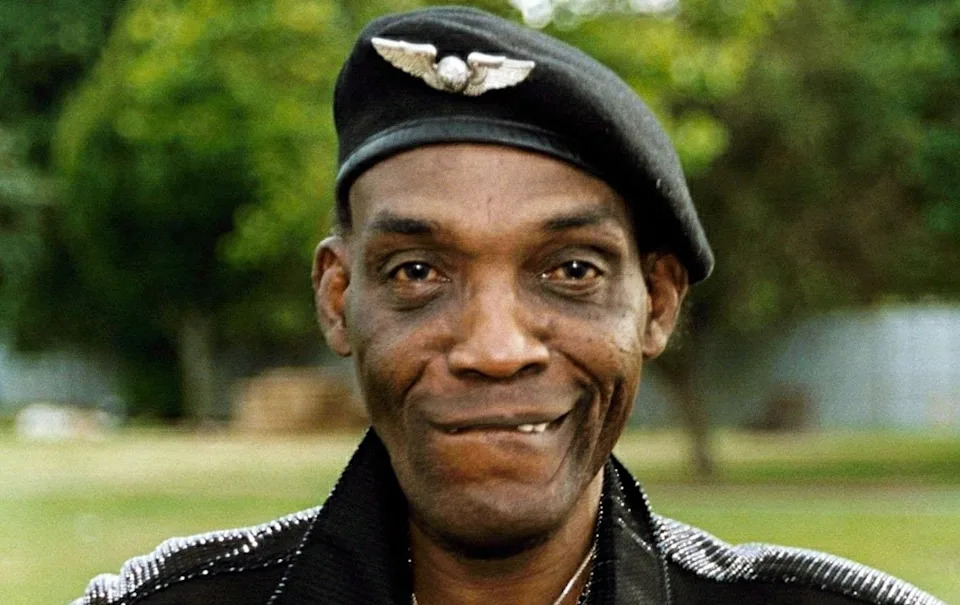
Desmond Dekker, a Jamaican-born musician who united people from different backgrounds in Britain - PA
Why Britain Has Performed Relatively Well
Measured against many European countries and the United States, Britain has by several metrics achieved more successful racial and ethnic integration. The Windrush story — hardship and discrimination — is real and must be acknowledged. But it is not the whole story. Migrant communities also adapted, engaged, and contributed culturally and institutionally.
Many who arrived in the mid-20th century brought with them Christian faith, English language skills and familiarity with British institutions. They often respected the monarchy and Parliament even while challenging racism and inequality. They resisted injustice without wholly rejecting engagement with broader society.
British Indians provide another example. Researchers such as Ornicha Daorueng of the International Centre for Sustainability point to high outcomes in education, employment and home ownership among British Indians — reflecting cultural norms around family responsibility and economic self-reliance that support participation and upward mobility while allowing retention of language and religion.
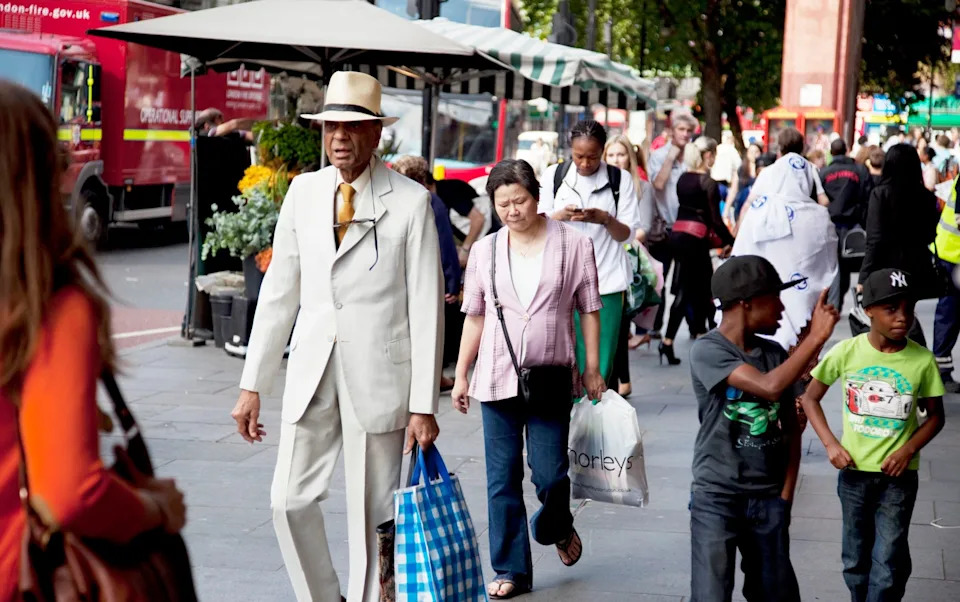
Brixton is a famously multiethnic part of Britain - Mike Kemp/In Pictures Ltd./Corbis via Getty Images
Regional Variation and Soft Segregation
That success is uneven. Britain remains, in many respects, a tale of two countries. Minority populations are heavily concentrated in cities: by 2011 almost half of non-white British residents lived in majority-minority neighbourhoods, while roughly 80% of wards remained overwhelmingly white.
Extreme segregation like some parts of the United States is still relatively rare in Britain. Where deep division exists, it is often in post-industrial towns such as Oldham, Burnley and Blackburn, where long-settled South Asian communities and economic decline have reinforced parallel lives. In London and the South East, more mixing occurs — yet that mixing does not always translate into shared lives or shared institutions.
In some London neighbourhoods, diverse communities live side by side but rarely mingle; in other places, poor white British communities can feel marginalised by a cosmopolitan, globalised urban elite. These patterns matter because they shape everyday experience and the kinds of policies that might encourage deeper integration.
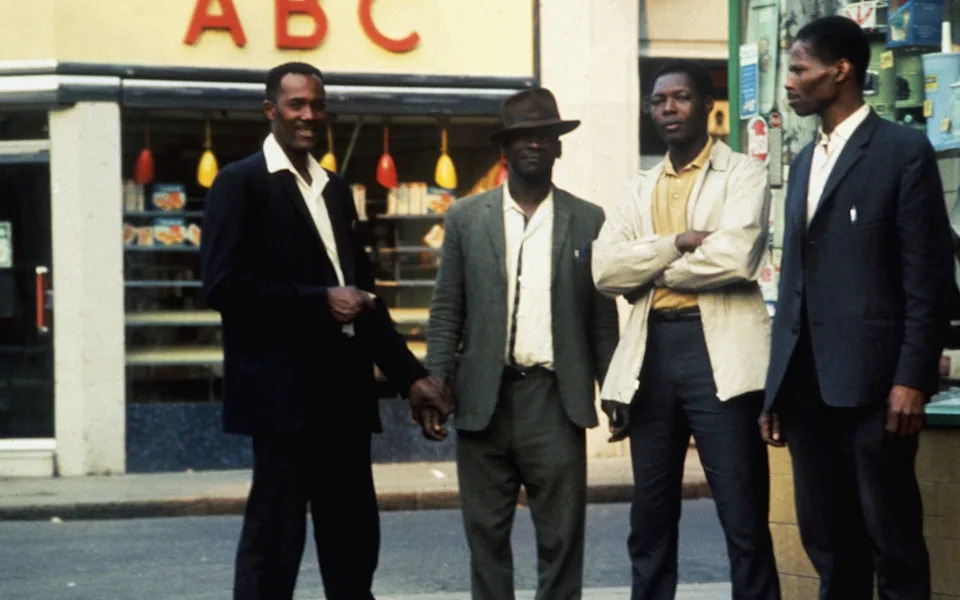
Black Caribbean men in a street corner in Notting Hill - Keystone/Getty Images/Hulton Archive
Policy Options to Strengthen Integration
Over the past two decades a range of practical ideas has been proposed to encourage mixing and build shared expectations: creating deliberately mixed schools, incentivising local authorities to reflect broader demographic patterns in public institutions, and asking public bodies to promote integration rather than only social cohesion. Other suggestions include publishing clear local demographic data to create accountability, discouraging single-ethnicity funding where it encourages isolation, and considering how the placement of places of worship affects settlement patterns.
Housing and design also matter. New-build homes often attract different buyers than older period housing; better information for prospective homeowners about neighbourhood diversity could counteract misperceptions amplified by social media and some press coverage.
"A plural society can't dispense with the norms that make common life possible," as economist Glenn Loury argues. The task is to balance the preservation of difference with the cultivation of shared expectations.
Shared Responsibility
Integration is not a one-way demand. The host society must remain open, fair and confident in its values; minority communities must be willing to engage and contribute to the national story. Reciprocity — mutual respect and shared obligations — is the foundation of a functioning, diverse society. That does not mean minorities must "earn" their place in a demeaning fashion. It means building common norms while protecting legitimate cultural differences.
Britain's relative success has stemmed from pragmatism: the willingness to compromise, adapt and find a middle ground. That balance is fragile. Excessive accommodation risks eroding a coherent civic culture; rigid assimilation risks cultural erasure. The challenge is to sustain a "mature pluralism" that combines respect for diversity with a sense of shared identity and purpose.
Integration is an ongoing experiment — imperfect and sometimes messy, but often quietly successful. Perhaps the best symbol of what is possible remains that Streatham supermarket: a moment when people from different backgrounds found common life in song.
Lord Sewell of Sanderstead chaired the Commission on Race and Ethnic Disparities.
Help us improve.