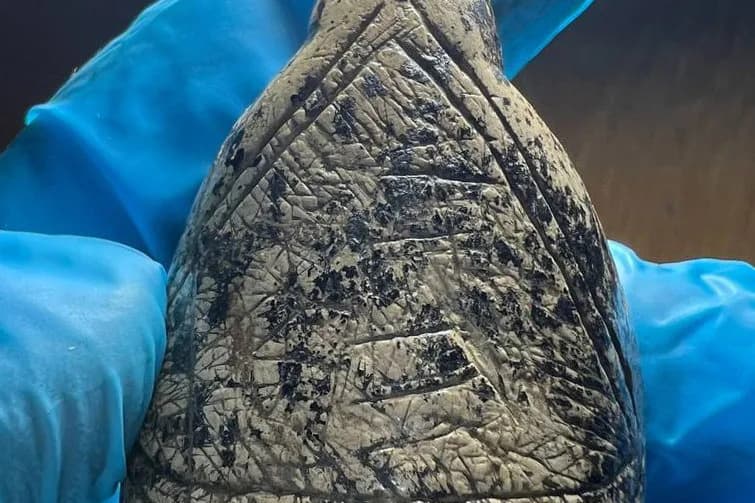
The Israel Antiquities Authority announced the discovery of the first-known mold for producing Judean Pillar Figurines from the First Temple period, unearthed during digs at the Tower of David Museum’s Kishle excavation. Conservation work revealed a finely detailed female face and an elaborate curly hairstyle, allowing a full facial reconstruction. This is the first production mold found in Jerusalem and supports the view that some figurines were manufactured locally rather than imported. Researchers hope the find will shed light on whether the statuettes were religious icons, toys, or household amulets.
Breakthrough in Jerusalem: First-Ever First Temple–Era Mold for Judean Pillar Figurines Discovered
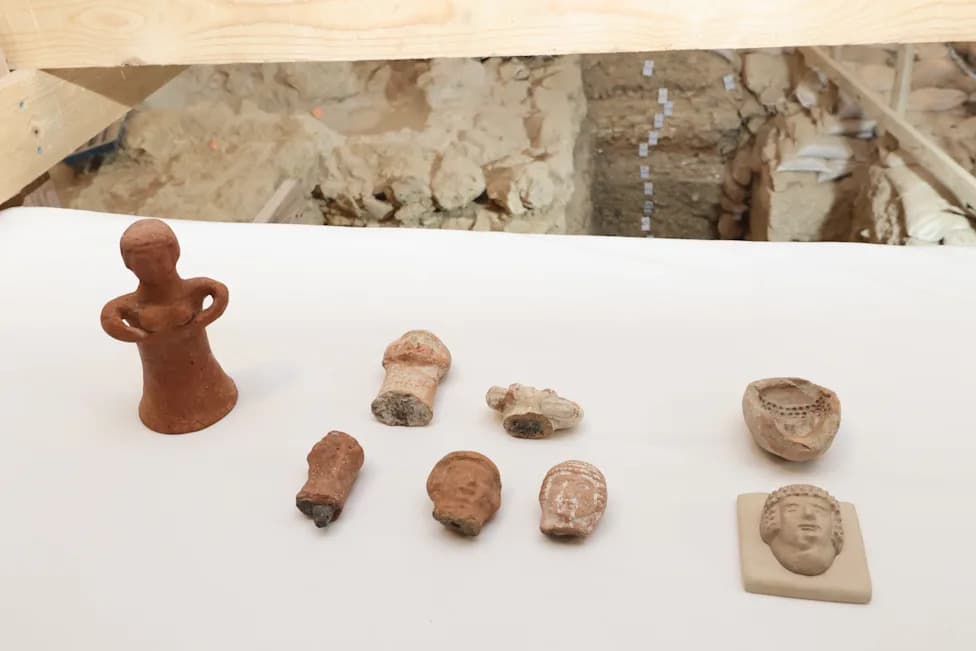
A rare Judean Pillar Figurine mold dating to the First Temple period found in the Tower of David, July 27, 2026. (photo credit: MARC ISRAEL SELLEM)
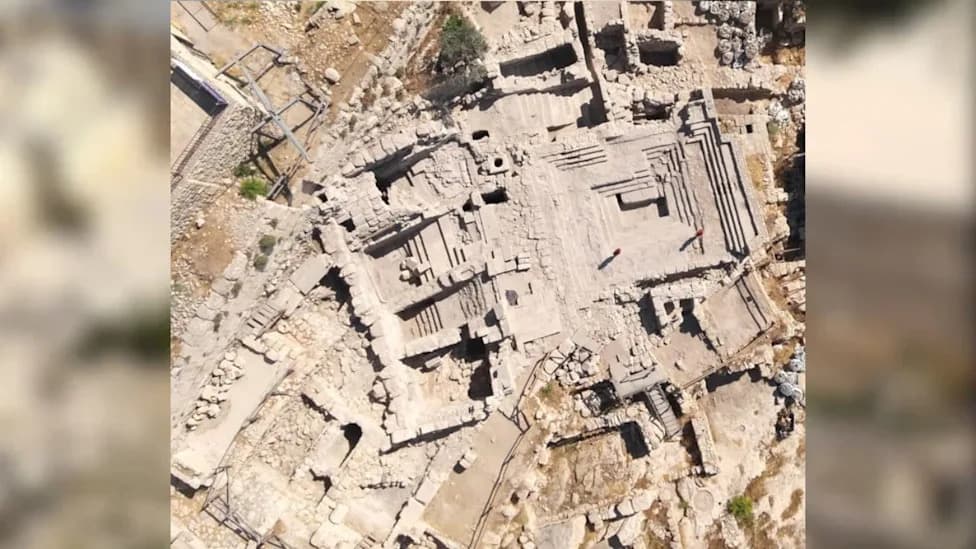
Archaeologists working at the Tower of David Museum in Jerusalem have uncovered what the Israel Antiquities Authority (IAA) describes as the first known mold used to produce Judean Pillar Figurines from the First Temple period. The rare fired-clay mold was recovered during the ongoing Kishle excavation as part of preparatory work for a new Schulich Wing devoted to archaeology, art and innovation.
Conservation and Reconstruction
Immediately after its discovery the mold was transferred to IAA conservation specialists. Tamar Gonen, an expert in ceramics conservation and restoration, carefully cleaned the piece and exposed finely modeled facial details. Conservator Sviatoslav Klindukhov then made a cast from an appropriate material, enabling a full reconstruction of the figurine’s face. The reconstructed visage shows clearly defined features and an elaborate curly hairstyle consistent with known Judean Pillar Figurines.
What the Find Means
Until now, production molds for these figurines had not been found in Jerusalem, leading archaeologists to debate whether the statuettes were manufactured locally or imported. IAA excavation directors Dr. Amit Re’em and Dr. Ayala Zilberstein say the Kishle discovery provides direct evidence that at least some figurines were made within the city itself. The directors described the Kishle excavation as one of the most significant archaeological projects in Jerusalem in recent decades, documenting the city’s history from the era of the kings of Judah through later periods including the British Mandate.
About Judean Pillar Figurines
Judean Pillar Figurines are small clay statuettes, typically 10–20 cm high, often coated with a white slip. Surviving traces of pigment show they were commonly painted in yellow, red and black. Archaeologists categorize First Temple–period figurines into three main types: female forms known as Judean Pillar Figurines, depictions of a horse and rider, and zoomorphic (animal) figures, mainly horses. Because the head and body were often made separately while the face was formed in a mold, many of the statuettes are found broken at the neck.
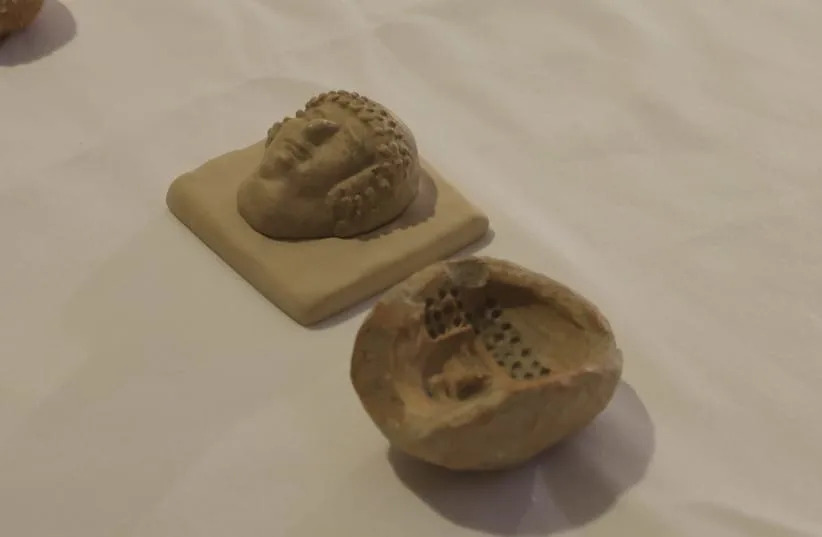
A rare Judean Pillar Figurine mold dating to the First Temple period found in the Tower of David, July 27, 2026. (credit: MARC ISRAEL SELLEM)
Debate Over Function
IAA Iron Age curator Debbi Ben-Ami emphasized that the exact role of Judean Pillar Figurines remains unresolved. "Their widespread presence—in homes, streets and tombs—suggests they were part of everyday life," she said. Scholars have suggested several interpretations: representations of a fertility goddess such as Asherah; simple toys used by children; or household amulets or "blessing figures" intended to bring protection and good fortune. The newly discovered mold may help researchers refine or revise these theories.
Eilat Lieber, Director and Chief Curator of the Tower of David Museum, said: "The discovery of the first mold for producing figurines dating to the First Temple period has generated tremendous excitement among all of us."
Heritage Minister Amichai Eliyahu placed the find in a broader cultural and religious context, noting that such artifacts offer tangible insight into the spiritual and social world confronted by ancient prophets and residents of Jerusalem.
Public Participation and Support
The IAA and Tower of David Museum will offer visitors opportunities to participate in archaeological work this summer by sifting soil from the Kishle excavations. The museum project and excavations are supported by the Schulich Foundation.
What’s next: Conservators and researchers will continue detailed analysis of the mold, its materials and context within the Kishle fills, seeking to date it precisely and better understand the production techniques and distribution of Judean Pillar Figurines in ancient Jerusalem.
Help us improve.