PRIMA, a batteryless 2 mm photovoltaic retinal implant from Science Corporation, has earned CE mark approval in Europe and will begin procedures in Germany. The implant works with camera-equipped glasses that project near-infrared light to convert scenes into electrical pulses the retina can send to the brain. Early trials show some patients regained the ability to read letters, books and signs, but the device requires surgery, rehabilitation and external hardware and is an assistive prosthesis rather than a cure.
Europe Approves PRIMA: 2 mm Photovoltaic Retinal Chip Restores Limited Central Vision in Advanced AMD
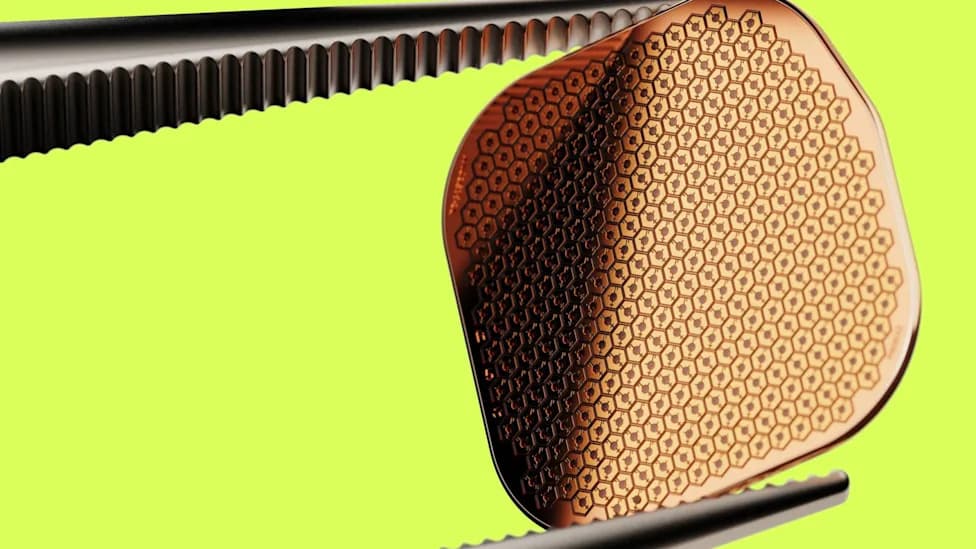
Image: Science Corp
Science Corporation's PRIMA retinal implant has received CE mark approval for commercial use in Europe, with initial procedures expected to begin in Germany. The system pairs a batteryless, 2 mm-by-2 mm photovoltaic chip implanted beneath the retina with camera-equipped glasses that project patterned near-infrared light to recreate usable central vision for some people with advanced age-related macular degeneration (AMD) and geographic atrophy.
How It Works
The implant is a thin (roughly 30 micrometres) photovoltaic chip placed under the retina during surgery. Glasses containing a camera and external processor capture the scene and project near-infrared light onto the chip. The implant converts those light patterns into electrical pulses that surviving retinal cells transmit to the brain, which interprets them as shapes, letters and simple patterns.
What Patients Can Expect
- Assistive, Not Curative: Science Corporation CEO Max Hodak describes PRIMA as a "cochlear implant for vision." It is a prosthesis that restores limited central vision rather than curing AMD.
- Functional Gains: Early clinical results show some recipients regained the ability to read letters, books and signs and to better identify faces or objects within a narrow central window.
- Limitations: The restored view is narrow and not sufficient for tasks like driving. The implant cannot function without the external glasses and processor.
Practical Considerations
The procedure requires surgery, postoperative recovery and structured rehabilitation training to help users interpret the new visual input. Reported expected costs are in the hundreds of thousands of dollars, and the company is pursuing insurance and coverage options. Long-term durability and very-long-term outcomes are not yet established.
Context and Competition
PRIMA’s wireless photovoltaic approach represents a newer generation of retinal prosthetics compared with older electrode-array systems. While other high-profile concepts such as Neuralink's Blindsight have received attention, they have not entered human trials—PRIMA is already moving from trials to commercial availability in Europe.
Bottom Line: For people living with central vision loss from advanced AMD, PRIMA is a meaningful step: it can restore a narrow but functional central window of vision that, for many, is a substantial improvement over total central darkness.
Help us improve.