The discovery of a transmissible melanoma in brown bullhead catfish in Lake Memphremagog reveals tumor cells that spread between animals rather than arising independently. Whole-genome sequencing showed tumor cells from different fish are genetically closer to each other than to their hosts, confirming transmission. Researchers suspect spread during spawning and note a correlation between elevated arsenic in tumor cells and soils around the lake. This is the fourth known naturally transmissible cancer in animals and could provide insights into how metastasis evolves.
Rare Transmissible Melanoma Found in Catfish Could Offer Clues to Human Metastasis
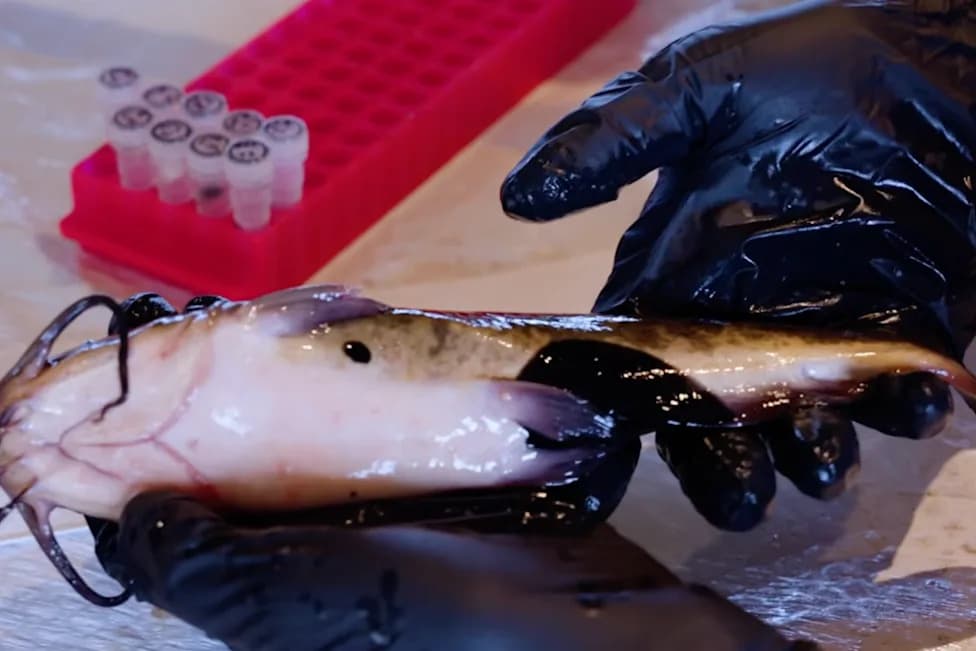
Scientists have discovered a rare transmissible cancer between fish — and it could ultimately help humans
Researchers have identified a rare transmissible cancer — a melanoma — spreading among brown bullhead catfish in Lake Memphremagog, a 42-square-mile lake that spans the U.S.–Canada border. The finding, published July 22 in Nature, shows cancer cells acting more like infectious agents than independent tumors and may offer a new way to study how cancer cells migrate and colonize new tissues.
What the Study Found
Scientists first observed mysterious dark, tar-like lesions on catfish in the lake as early as 2012. Between 2014 and 2017, malignant melanomas were recorded in roughly 23–37% of sampled brown bullhead catfish. Whole-genome sequencing revealed that tumor cells from different infected fish were far more genetically similar to one another than to their individual hosts, indicating the cancer is transmitted between fish rather than arising independently in each animal.
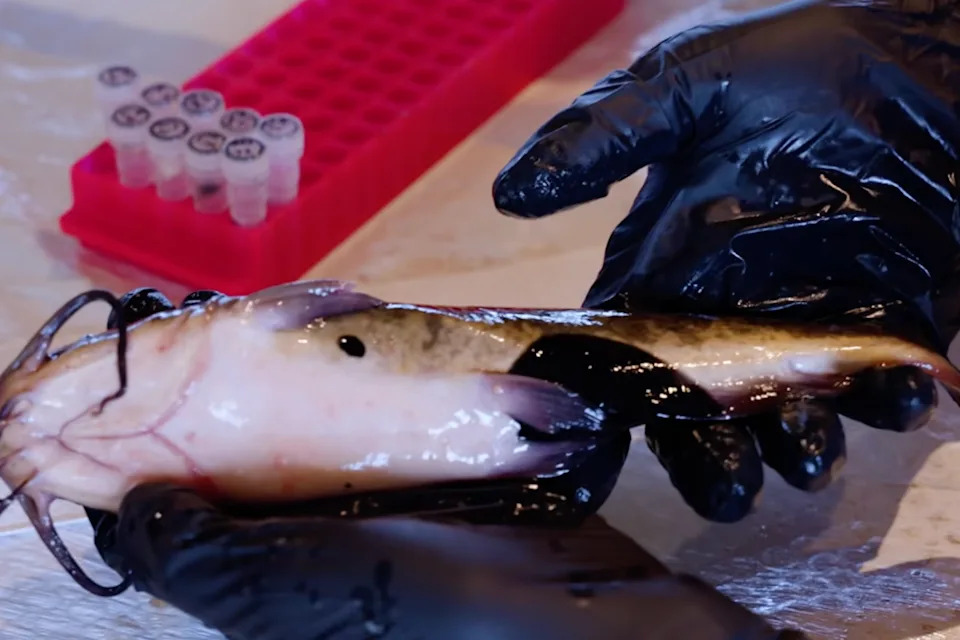
Scientists have discovered a form of transmissible cancer (visible as black lesions) in catfish swimming in a huge lake that stretches between Canada and the US (University of Vermont)
How Transmission May Occur
The research team, including Julie Dragon of the University of Vermont and Peter Emerson of the Vermont Fish and Wildlife Department, hypothesizes that transmission likely happens during spawning, when fish aggregate and make frequent physical contact. Young fish showed no lesions, and investigators suggest that abrasions from pectoral-fin spines as fish brush together could provide an entry point for cancer cells.
“By studying how cancers survive and spread outside their original host, we can learn a great deal about what keeps cancers contained — and what happens when those boundaries break down,” said Dr. Julie Dragon.
Environmental Clues
The team also detected elevated arsenic concentrations in the cancer cells, and arsenic levels in soils around the lake correlated with the geographic distribution of the disease. While this does not prove causation, it suggests environmental factors may influence where the transmissible cancer is most prevalent.

The transmissible cancer has been detected in brown bullhead catfish swimming in Lake Memphremagog (University of Vermont)
Significance
This discovery is the fourth naturally occurring transmissible cancer described in animals — after cases in dogs, Tasmanian devils and certain mollusks — and appears to be limited to brown bullhead catfish in Lake Memphremagog. Evolutionary biologists, including Vincent Lynch of the University at Buffalo, told NPR that studying this system could improve our understanding of how metastases evolve and how cancer cells survive outside their original host.
Next steps include continued monitoring of the catfish population, deeper genomic analyses to trace the cancer’s origin and spread, and investigation of environmental contributors such as arsenic exposure.
Help us improve.