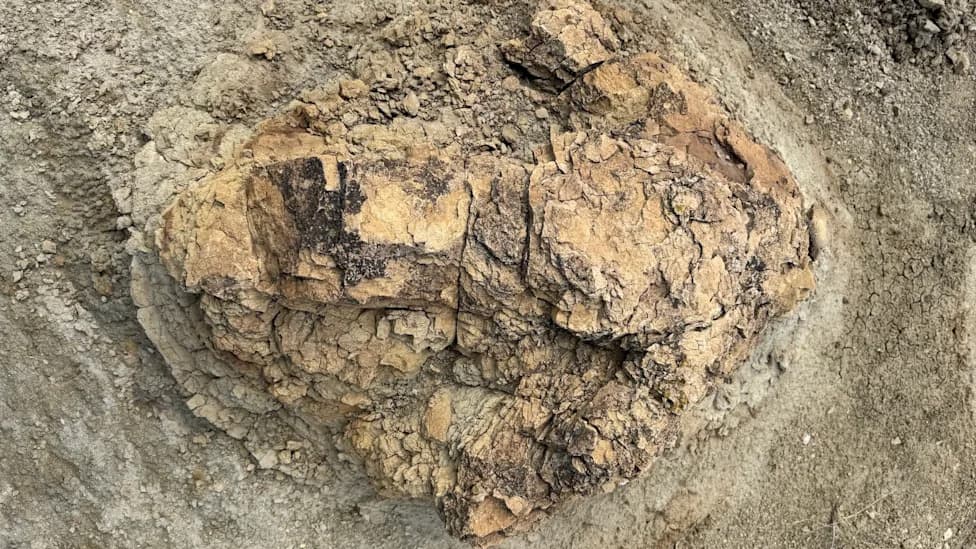
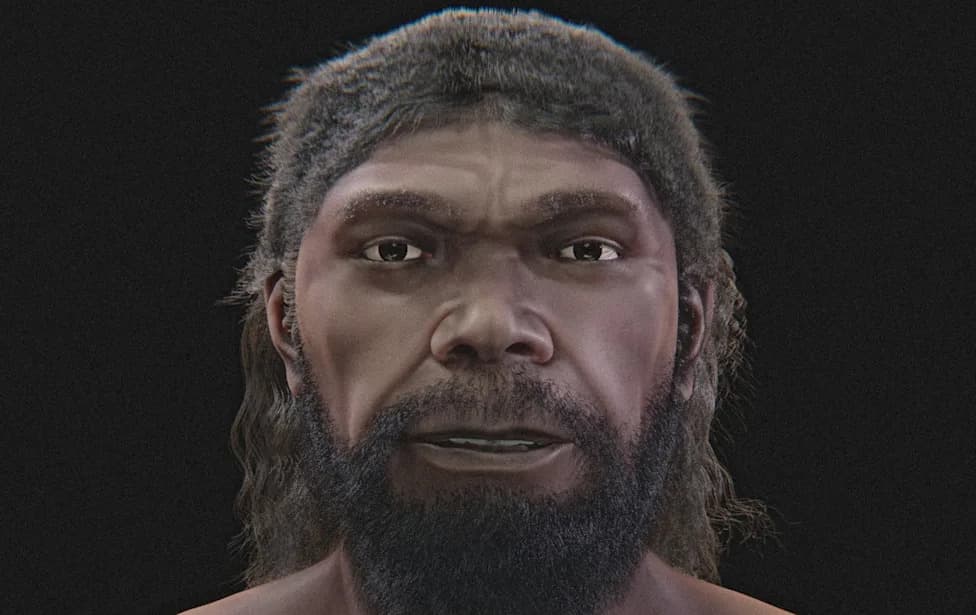
The GaJi10 trackway at Lake Turkana preserves 21 footprints from eight individuals dated to about 1.43 million years ago. Detailed analysis attributes the prints to Paranthropus boisei, suggesting body sizes up to ~6 feet and ~165 pounds and indicating that adult males sometimes travelled together. The site — first found in 1978 and re-exposed in 2016 and 2023 — adds behavioural and ecological context to Early Pleistocene hominins and complements nearby evidence showing coexistence with Homo erectus.
Fossil Footprints Reveal Tall, Social Paranthropus at Lake Turkana — A 1.43 Million-Year-Old Snapshot
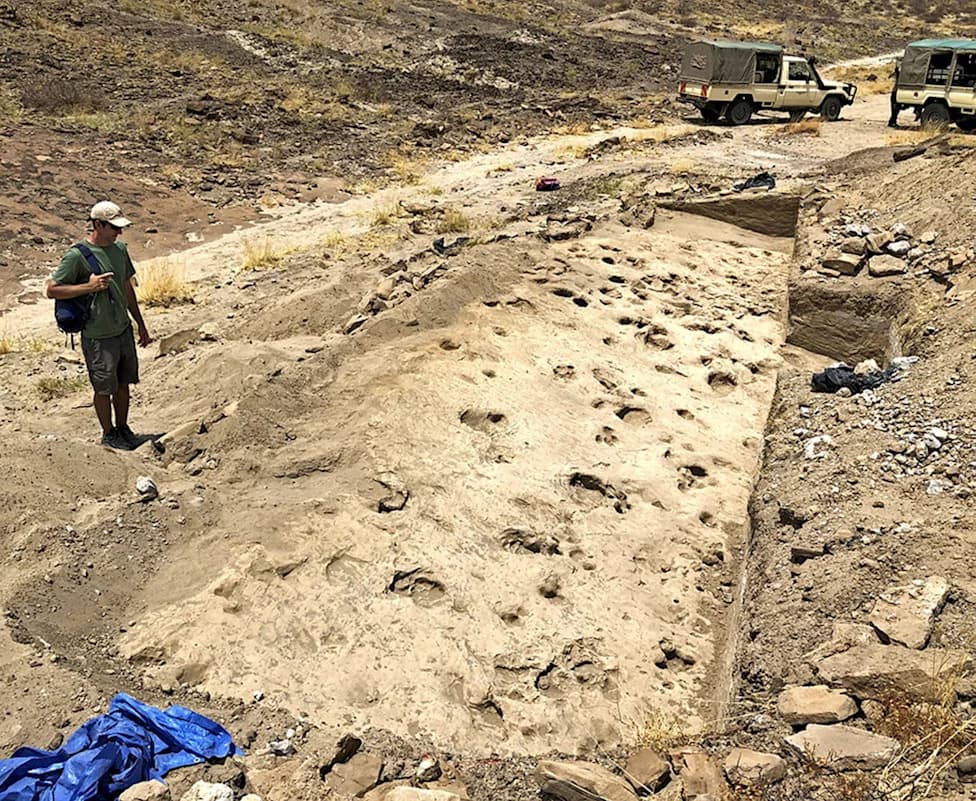
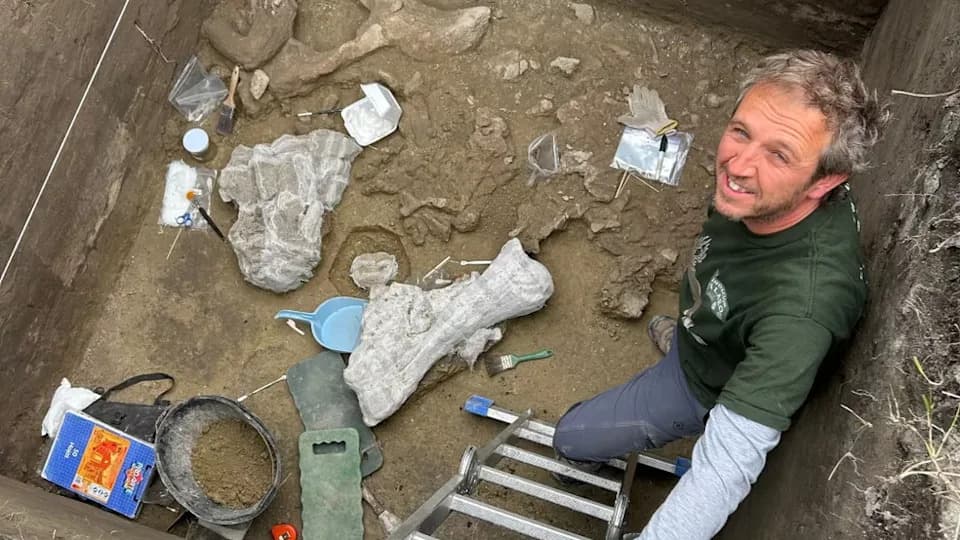
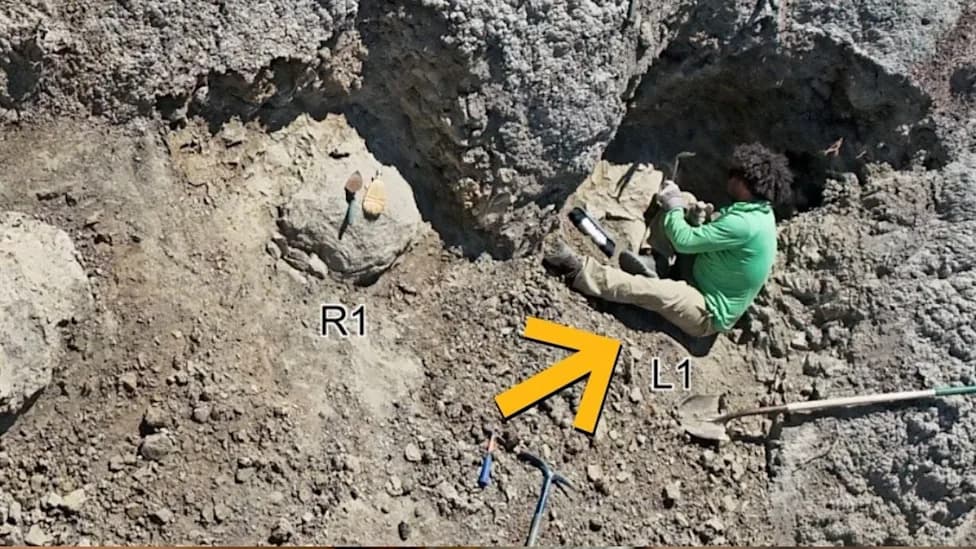
Overview of the excavated track surface with a mix of deeper hippopotamus and antelope footprints and shallower hominin tracks visible. (Kay Behrensmeyer / Smithsonian via SWNS)
Newly analysed fossil footprints from the GaJi10 trackway on the shores of Lake Turkana in northern Kenya suggest that the robust hominin Paranthropus boisei reached human-like sizes and sometimes travelled in groups about 1.43 million years ago.
A Moment Frozen in Mud
The GaJi10 layer preserves 21 hominin footprints made by eight individuals, alongside many tracks from hippos, antelope and other animals. Volcanic ash in the surrounding sediments dates the surface to the Early Pleistocene — roughly 1.43 million years ago — providing a precise timescale for this exceptional snapshot of past life.
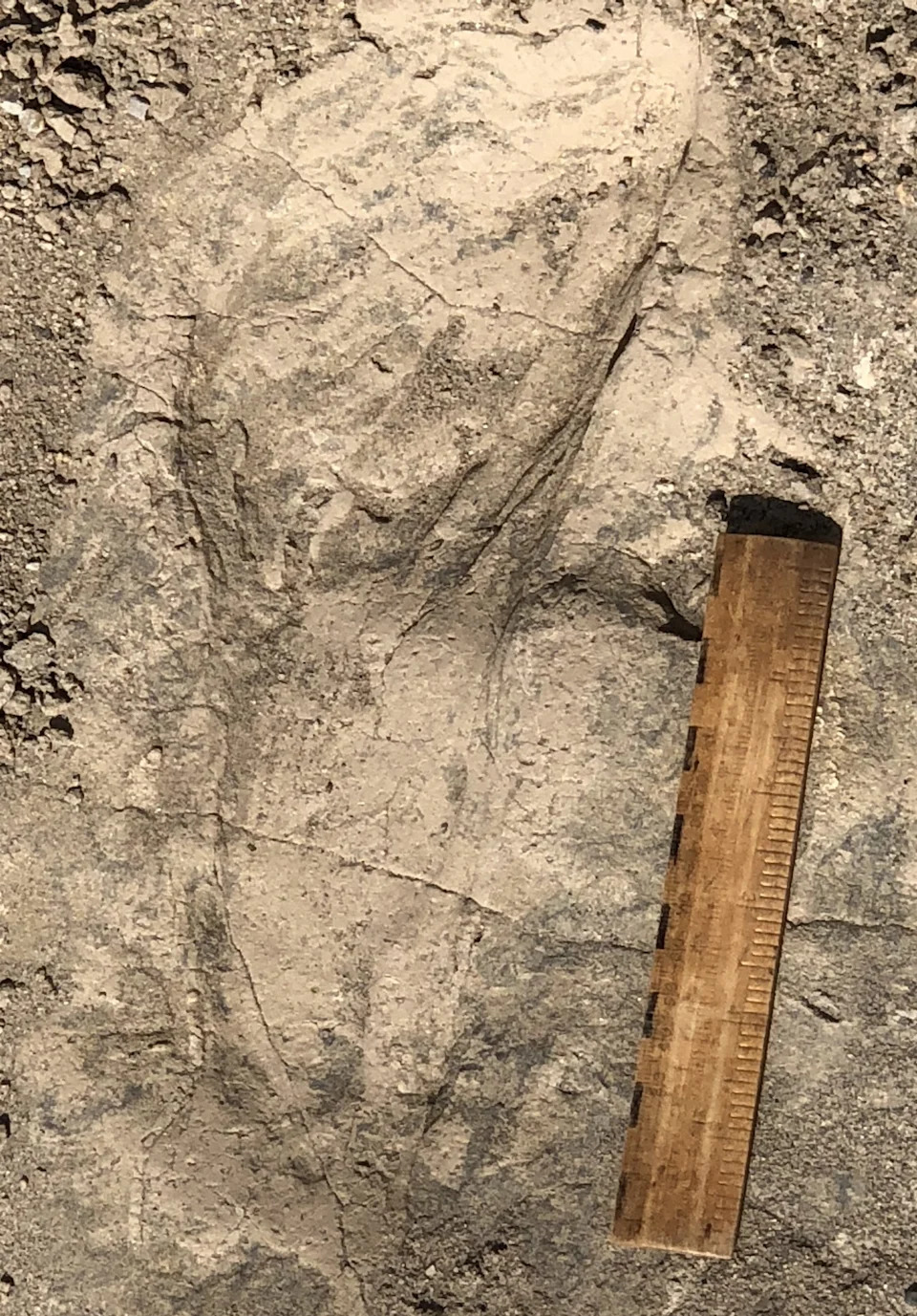
One of the larger hominin footprints with a 6-ruler for scale. The tracks were made in soft mud and then filled in with sand by gentle shoreline currents, preserving the impressions. (Kay Behrensmeyer / Smithsonian via SWNS)
Discovery and Field Work
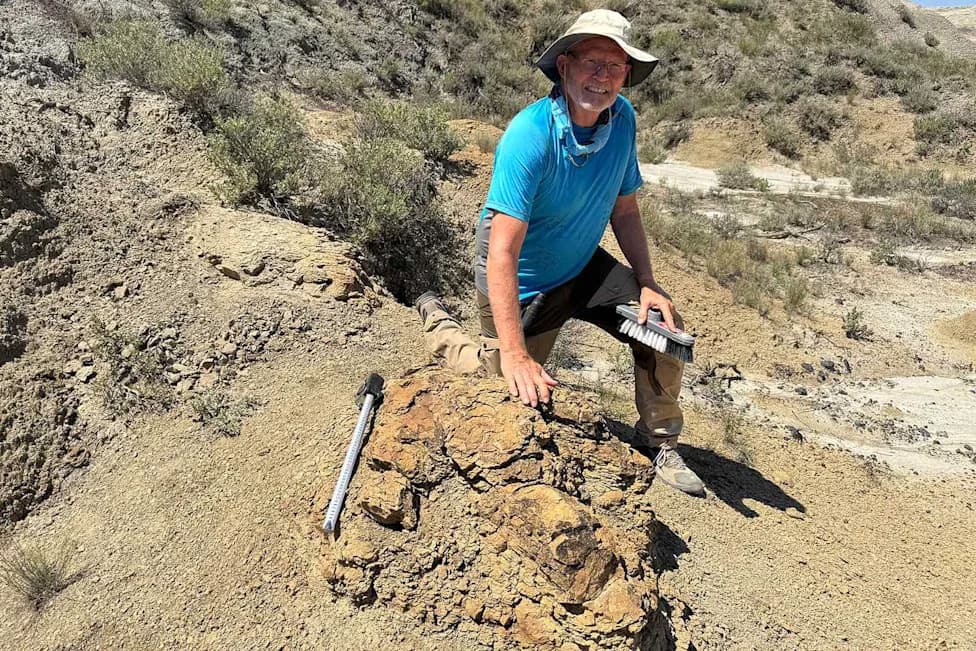
The site was first recognised in 1978 by Kay Behrensmeyer, senior research geologist and curator of vertebrate paleontology at the Smithsonian's National Museum of Natural History, during long-term fieldwork in the region. The layer was protected under sand after the initial excavation and then re-exposed by teams in 2016 and 2023, revealing many more prints preserved on the same stratigraphic surface.
Who Made the Prints?
An international research team led by Professor Kevin Hatala (Chatham University; Max Planck Institute for Evolutionary Anthropology) analysed foot anatomy and gait evidence preserved in the impressions and attributed the GaJi10 prints to Paranthropus boisei. The footprint dimensions are unexpectedly large — comparable to those attributed to Homo erectus — implying body heights up to about 6 feet (≈1.8 m) and masses near 165 pounds (≈75 kg).
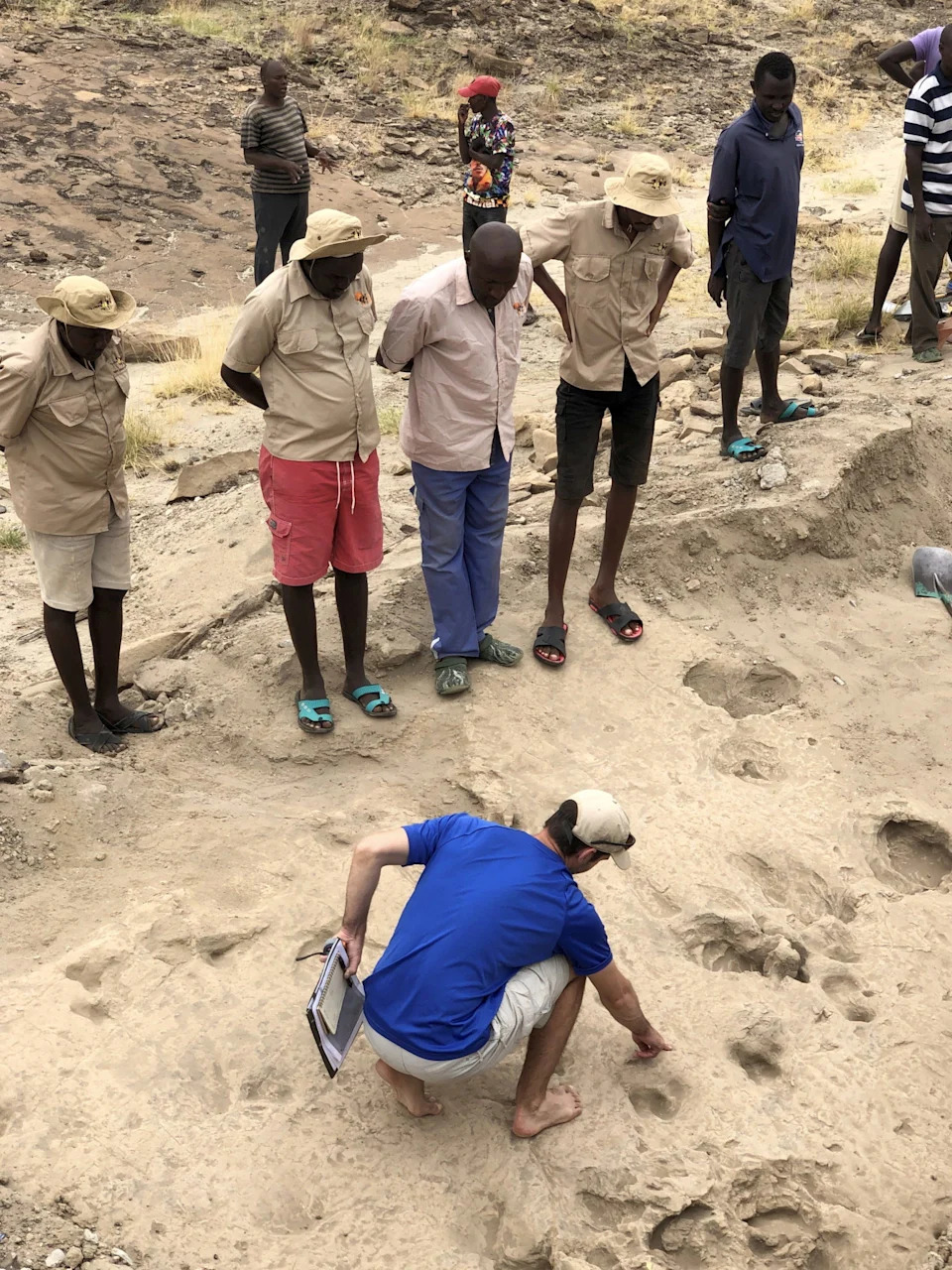
Study lead Kevin Hatala, an associate professor of biology at Chatham University in Pittsburgh and an associate researcher at the Max Planck Institute for Evolutionary Anthropology in Leipzig, Germany, pointing out footprints of hominins among deeper hippopotamus tracks. (Kay Behrensmeyer / Smithsonian via SWNS)
"Each site represents a snapshot of our past, and we are quickly building a photo album with several different windows to hominin anatomy, locomotion, behaviour and environments during the Early Pleistocene," said Professor Kevin Hatala.
Behavioural Insights
The spatial pattern of the footprints suggests that the eight individuals were moving together. Co-author Neil Roach (Harvard University) notes that the group appears to be composed mostly of adult males, which hints at a more complex social organization for P. boisei than previously appreciated — perhaps involving male groups that sometimes tolerated one another for safety or mating competition.
Wider Context and Significance
Lake Turkana was home to a diverse Early Pleistocene fauna, and previous work in 2024 described a nearby, slightly older trackway containing prints attributable to both P. boisei and Homo erectus. That finding, together with GaJi10, indicates that two similarly sized hominins occupied the same habitats for hundreds of thousands of years, complicating assumptions about body size and niche separation in the past.

(Photo by Nothing Ahead via Pexels)
For Kay Behrensmeyer, footprints are uniquely informative because they preserve behaviour at a single instant in time: "They also allow people to relate to these fossils much more easily than an isolated piece of bone or jaw." The research team plans further fieldwork in Kenya to expand documentation of the footprint assemblages and to better understand the geological processes that repeatedly preserved these lakeshore surfaces.
Implications: GaJi10 reshapes ideas about Paranthropus anatomy and social life and strengthens Lake Turkana's role as a globally important paleoanthropological landscape.
Help us improve.