China has launched a five-year "Smart Port" initiative to deploy AI, big data and automated inspection equipment across 43 designated ports to speed customs clearance and expand cargo capacity. The plan targets intelligent inspection coverage of more than 90% of ports by 2030, with most upgrades expected to be largely finished by 2035. The blueprint also includes infrastructure work at 57 additional ports, faster development of key rail border hubs, and greater multimodal and equipment standardization. Recent congestion after Typhoon Bavi — with doubled or tripled berth waits at some hubs — highlights the urgency of the upgrades.
China Unveils Five-Year AI Blueprint to Modernize 43 Ports and Speed Customs
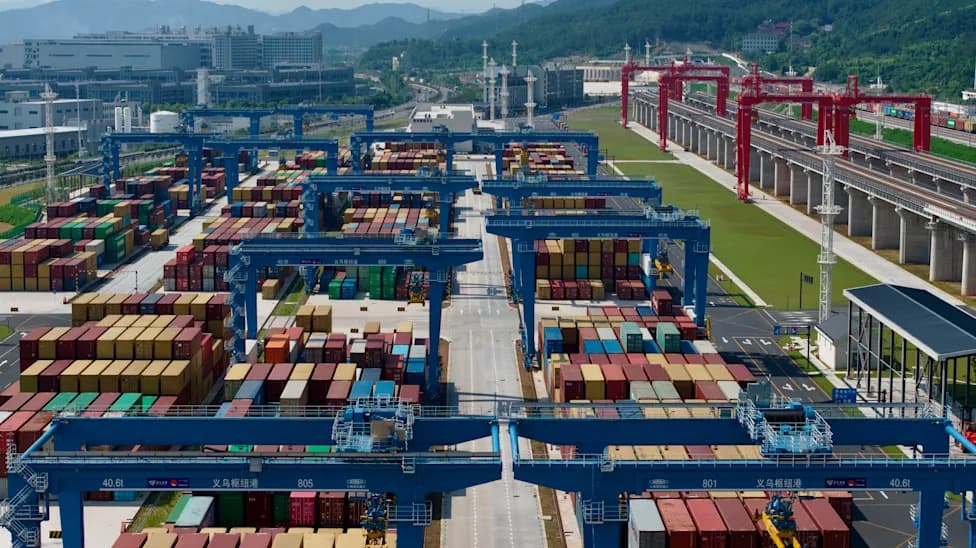
China Lays Out Five-Year AI Blueprint for Smarter Ports
China has launched a five-year initiative to deploy artificial intelligence, big-data services and automated equipment across dozens of seaports, airports, rail and land border gateways to accelerate customs clearance, expand capacity and modernize logistics operations.
Smart Port Construction Project
At a press briefing last Wednesday, officials from the General Administration of Customs (GAC) said 43 key ports of entry have been selected for the "Smart Port Construction Project." The program will accelerate deployment of intelligent scanning systems, inspection robots and other automation to shorten inspection times, reduce manual unpacking and improve throughput.
Customs personnel at several ports already use AI-enabled smart glasses and large CT scanners. Under the plan, aggregated AI models will form a centralized "smart brain" to flag high-risk consignments automatically and enable better data sharing between customs authorities and companies' production, warehousing and logistics platforms.
"The future smart port scenario is promising: modern unmanned terminals will operate busily and orderly; at passenger inspection channels, inbound and outbound passengers will pass through customs conveniently and smoothly under the guidance of intelligent robots," said Zhang Baofeng, deputy director-general of the GAC. "Land ports will achieve unmanned driving, intelligent inspection, and efficient passage."
Infrastructure, Multimodal Links and Standards
The plan, jointly issued by the GAC and the National Development and Reform Commission, also includes infrastructure upgrades at 57 additional ports and accelerated construction at border railway hubs such as Torugart and Ganqimaodu to strengthen southbound, westbound and northbound corridors. Authorities will promote separate passenger and freight operations at airports, expand unloading and storage areas, build dedicated customs supervision sites for specialized cargo, and standardize cargo handling equipment so cranes, containers and other machinery are more interoperable across transport modes.
Officials expect more than 90% of ports to be equipped with intelligent inspection equipment by 2030, with "significant progress" across the five-year period and most upgrades largely completed by 2035.
Context: Congestion After Typhoon Bavi
The program comes amid elevated congestion following Typhoon Bavi, which temporarily closed terminals at major hubs including Shanghai, Ningbo and Qingdao. Shipping research firm Linerlytica said two weeks after the storm that congestion in East Asia remained elevated as ports cleared delayed vessels and faced a new wave of arrivals.
Hapag-Lloyd's operational updates show berth wait times remain above normal at major Chinese hubs: at Shanghai's Yangshan Deepwater Port the average time to berth is 72 hours for Gemini-shared services and 144 hours for non-Gemini services (compared with roughly 48 hours and 96–120 hours respectively on July 9). Ningbo's average wait is 48 hours for both Gemini and non-Gemini services (up from 24–48 hours earlier), and Qingdao's average wait is about 72 hours (previously 24–36 hours).
Sun Meijun, director of the GAC, said China's port system handles roughly 400,000 containers, 15 million tons of cargo, 22 million express parcels and about 2 million people on an average day—underscoring the scale and urgency of modernization.
Outlook
By tying AI-driven inspection and data sharing to physical upgrades and multimodal standardization, China aims to shorten clearance times, reduce manual labor at checkpoints, and improve resilience against future disruptions. The initiative is presented as part of routine national planning, aligning with China’s 15th five-year framework for economic and social development for 2026–2030.
Help us improve.