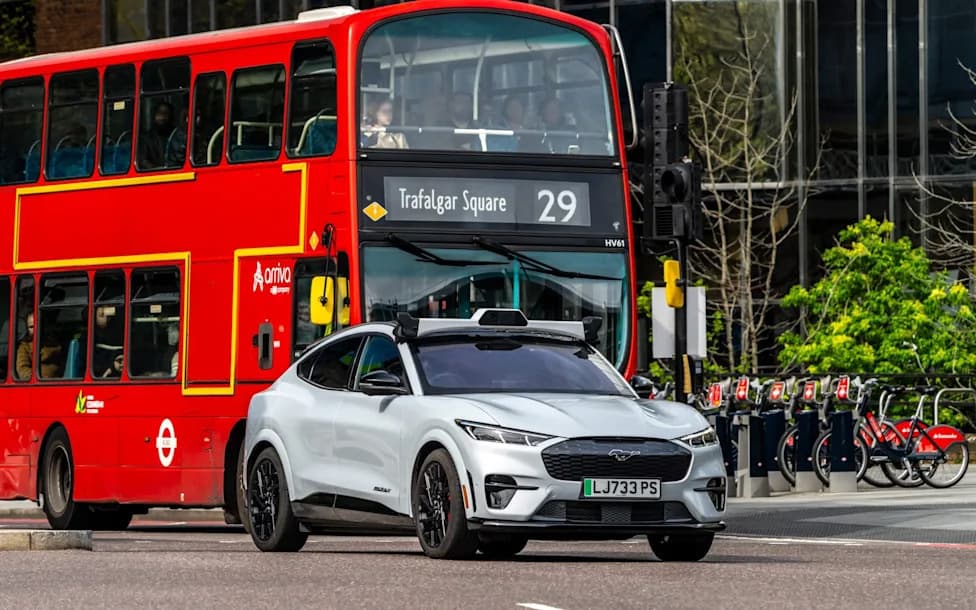
Deutsche Bahn is testing AI-assisted trains and autonomous shuttles, highlighted by a driverless demo unit that can run at 40 km/h using LiDAR and cameras. The federal government has committed €42 million for pilots within a €100 billion modernisation plan through 2030. Progress is constrained by limited ETCS coverage (<2% in 2025), regulatory hurdles and union scepticism, even as private firms push ahead with faster timelines.
Deutsche Bahn Eyes AI-Driven Trains and Autonomous Shuttles — But Old Tracks and Red Tape Pose Big Hurdles
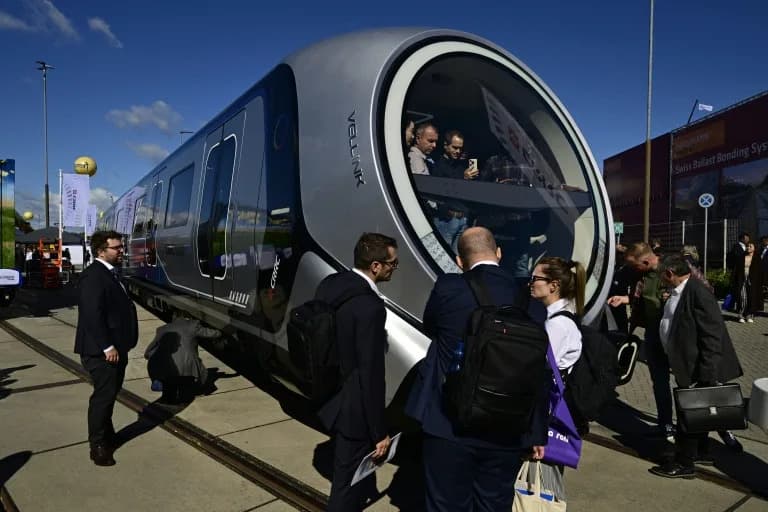
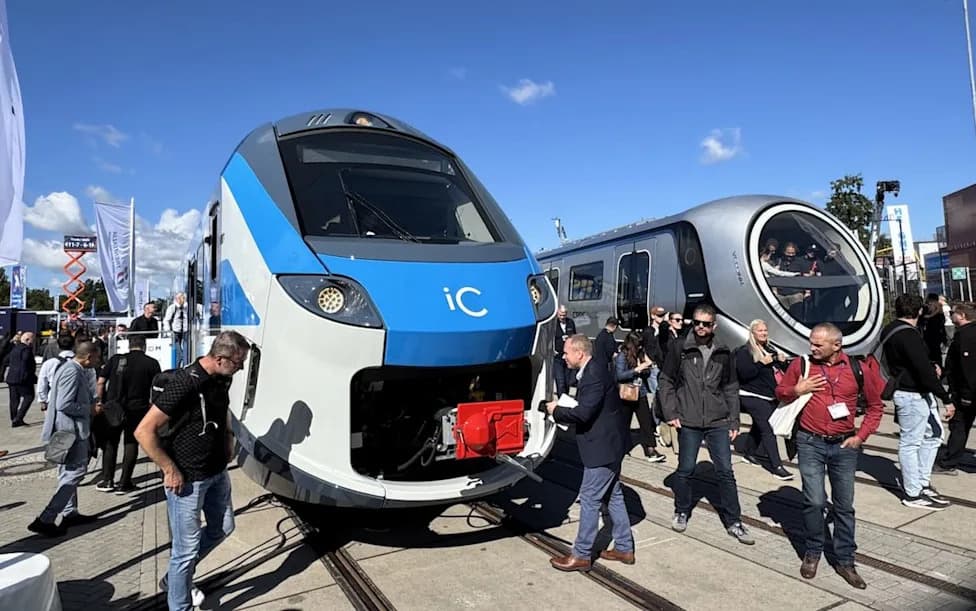
A Vellink driverless train from China's CRRC at the InnoTrans transport show in Berlin (John MACDOUGALL)
Germany's state rail operator, Deutsche Bahn, long criticised for chronic delays, is piloting AI-assisted trains and autonomous road shuttles as part of a broader effort to modernise mobility. The push — showcased at the InnoTrans trade fair in Berlin — promises better safety, efficiency and passenger service, but faces major obstacles including regulatory complexity, limited digital infrastructure and the high cost of upgrades.
Demo: The "Automated Train"
At InnoTrans, a brightly painted demonstration unit dubbed the "Automated Train" was on display. Capable of operating without a driver between a depot and a station at speeds up to 40 km/h, the vehicle uses LiDAR, ultrasonic sensors and infrared cameras to detect hazards and perform automatic braking.
Funding And The Bigger Modernisation Plan
The federal economy ministry has granted €42 million for the pilot programme, part of a wider government commitment to invest €100 billion through 2030 to renew Deutsche Bahn's ageing infrastructure after decades of underinvestment. "Rail transport must get back to delivering high performance," Transport Minister Steffen Bilger told delegates at the fair.
Digital Backbone And International Comparisons
Despite high-profile pilots, Germany's digital foundations for AI deployment remain limited. Advocacy group Allianz Pro Schiene reported that by 2025 less than 2% of the national network was equipped with the European Train Control System (ETCS), well below the European average of 9%. By contrast, China has run autonomous high-speed services since 2019 at up to 350 kph (220 mph), and several French cities operate driverless metro lines. Germany currently has a single automated metro line in Nuremberg.
Potential Gains — And The Reality Check
A Boston Consulting Group study estimates that AI applications across railways worldwide could cut costs by $36 billion to $79 billion and add $20 billion to $50 billion in annual revenue. BCG cautions, however, that many pilots have not yet translated into measurable, scalable outcomes.
Start-Ups, Industry And Regulation
Start-ups at InnoTrans underlined both opportunity and resistance. Spanish robotics firm Ostirion said the rail sector is conservative and must be persuaded that automation will help rather than harm operations. Ostirion's technical manager, Lidia Garcia, said its AI tools aim to relieve drivers of repetitive tasks and help improve passenger communications.
Belgian company OTIV demonstrated remote operation of a freight locomotive and is collaborating with Deutsche Bahn on safety systems and automation. OTIV's chief Sam de Smet warned that complex German authorisation procedures and regulations remain a significant barrier to rapid deployment.
Labour Concerns And Timelines
Labour organisations are wary. The train drivers' union GDL has said it will monitor developments closely to ensure automation does not become a pretext for job cuts. Industry players counter that automation is aimed at addressing staff shortages and improving service reliability. Deutsche Bahn has discussed replacing some regional bus routes with autonomous shuttles but expects widespread rollout only toward 2045, while private firms such as Waymo plan to start robotaxi services in Munich by late 2027.
Outlook: Pilots and start-up innovation are accelerating, but meaningful, network-wide transformation will require faster digital upgrades, clearer regulatory paths and significant investment to modernise signalling and tracks.
Help us improve.