Overview: Franco Malosso 'von Rosenfranz', 69, was jailed after admitting he built and promoted a fake Roman amphitheatre near Vicenza and charged tourists €40 each. Investigations from 2016 found modern materials such as fibreglass and papier-mâché and satellite images showed a hill had been levelled to create the site. He was sentenced to two years and four months, fined €3,000, and faces a €560,000 civil claim from Arcugnano council.
Fake 'Ancient' Amphitheatre Builder Jailed After 20-Year Scam Near Vicenza
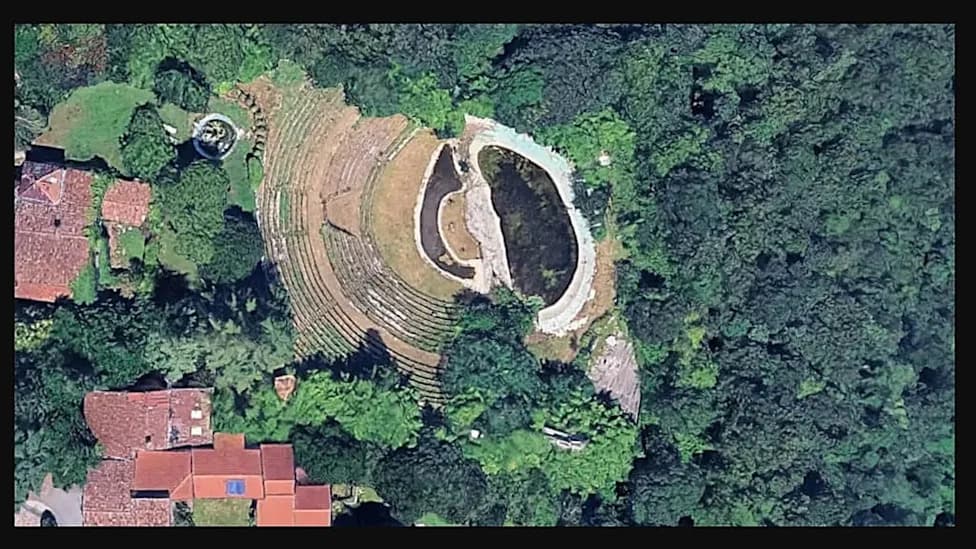
Italian con artist jailed for building 'world's oldest and largest amphitheatre' 20-years ago
A 69-year-old Italian man has been jailed after admitting a long-running fraud in which he charged tourists to visit a bogus Roman amphitheatre he built and presented as ancient. Franco Malosso 'von Rosenfranz' promoted the site as the "Berico Maritime Amphitheatre," claiming it dated to AD 393 and linking it with figures such as Julius Caesar and Shakespeare's Juliet Capulet.
Malosso persuaded local officials to list the attraction in Vicenza’s EU-funded tourism guide and to include it in the city’s tourism app, allowing him to charge visitors €40 each for about two decades. He also described himself as a "philanthropist, entrepreneur and orchestra conductor," lending the enterprise an air of credibility.
Investigation Unravels the Hoax
Suspicion first surfaced in 2016. Archaeologists called in by the Carabinieri discovered that what appeared to be ancient masonry was in fact made from modern materials: fibreglass and papier-mâché columns, rendered blocks and plaster statues manufactured in the early 2000s. Satellite imagery showed that a hillside had been levelled before the faux monument was erected, further undermining the site's purported antiquity.
Independent historical checks exposed additional inconsistencies: Julius Caesar lived roughly four centuries before AD 393, and Shakespeare’s Romeo and Juliet is set in Verona rather than Vicenza — details that cast further doubt on Malosso’s narrative.
Sentence, Fines and Civil Claim
Malosso was convicted of illegal construction, art forgery and creating works without authorisation. He received a prison sentence of two years and four months and was fined €3,000. Separately, the Arcugnano municipal council has filed a civil claim seeking €560,000 in damages to recoup the financial and reputational costs it says resulted from the deception.
The case highlights vulnerabilities in local tourism promotion and the importance of archaeological oversight. Authorities say the episode serves as a cautionary tale about verifying the provenance of attractions before they are promoted to visitors and included in official guides.
Help us improve.