Fernanda Abra founded Projeto Reconecta in 2019 to reconnect fragmented canopy habitat in the Brazilian Amazon by installing artificial canopy bridges above highways. Working closely with Indigenous communities such as the Waimiri Atroari, the project uses durable, low-maintenance designs and rapid-install techniques. Early results are promising: seven bridges near Alta Floresta recorded 15,000 primate crossings in 15 months and zero primate roadkill where bridges exist, and Reconecta’s design has been adopted as a national standard. Challenges include nearby power lines and the need to scale nationwide.
How Fernanda Abra and Projeto Reconecta Are Rebuilding Amazon Canopy Highways
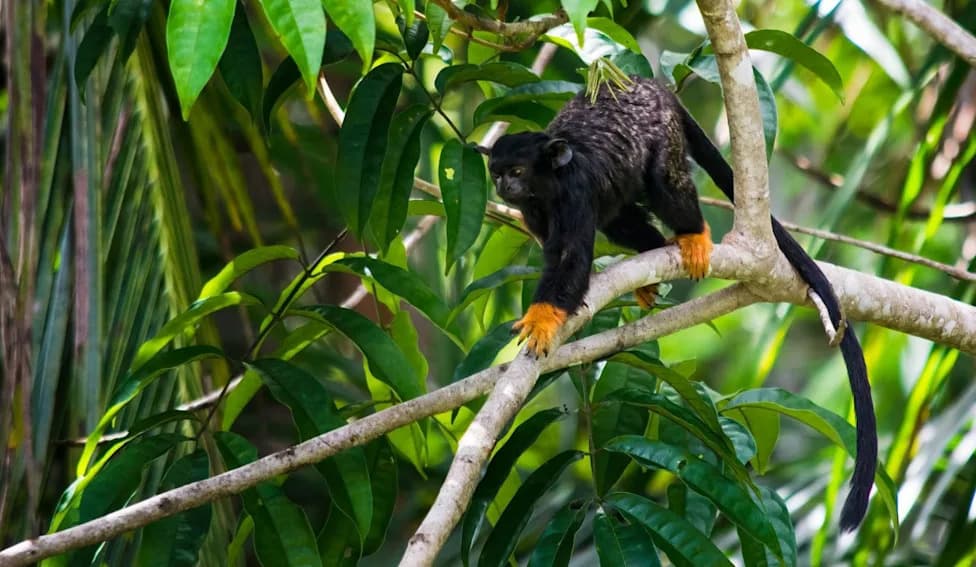
Golden hand tamarin monkey on a tree branch in the amazonian rainforest© Quentin Pelletier/Shutterstock.com
In the Brazilian Amazon, a paved highway can become a hard barrier for animals that live in the treetops. For arboreal primates, even a small gap in the forest canopy can isolate populations and force dangerous ground crossings.
Biologist, road ecologist and entrepreneur Fernanda Abra prefers a simpler label: conservationist. "If I need to pick at least one role, it would be a conservationist," she says. "Everything I do, I have the main objective to save the maximum of lives that we can on road projects." Her solution: Projeto Reconecta, founded in 2019 to reconnect fragmented canopy corridors by installing artificial canopy bridges above busy highways.
Designing Practical, Durable Canopy Bridges
Reconecta's bridges are engineered to withstand the Amazon's heat, heavy rains and long-term exposure while remaining affordable for broad deployment. The team uses concrete posts, steel cables and highly durable rope, with a focus on low maintenance. "The first one we installed in 2021, we never had to do anything with it," Abra says, aside from occasional cable tightening as the system settles.
"We are providing connectivity at the canopy level so they can cross the road safely." — Fernanda Abra
Installation has become faster with experience: a trained crew of climbers and technicians can now complete many bridge installs in about a day, where logistics once took much longer.
Community Partnerships and Cultural Importance
Local and Indigenous knowledge has been central to Reconecta’s approach. In the northern Amazon, the Waimiri Atroari community helped identify prime bridge sites, refine designs and participate in construction. In places where natural canopy links still touch across a road, residents long recognized that those spots served as primate highways.
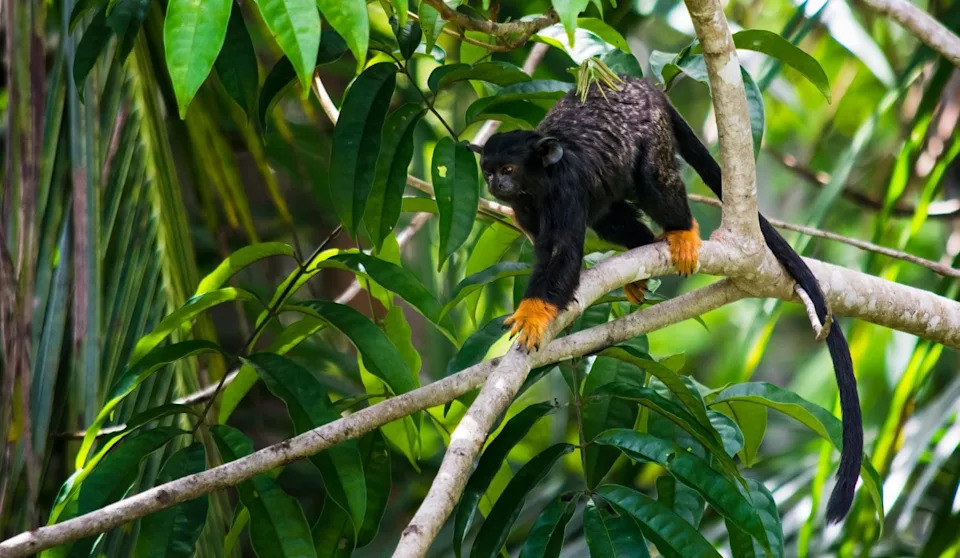
Within 30 days of the canopy installation, a golden-hand tamarin like the one pictured here was spotted crossing the bridge, an early sign of success.©Quentin Pelletier/Shutterstock.com
The work also carries cultural weight: species such as the golden-handed tamarin are important to the Waimiri Atroari, who have mourned losses when animals are killed on roads. When Reconecta installed its first artificial bridges, a golden-handed tamarin crossed within 30 days — a powerful early sign of acceptance. "We were extremely excited. We were like, 'It's working, my God,'" Abra recalls.
Measurable Results
Monitoring shows the bridges can be highly effective. Near Alta Floresta, seven Reconecta bridges recorded about 15,000 primate crossings over 15 months, with six primate species using the corridors — including howler monkeys, black-faced spider monkeys, night monkeys, capuchins and the critically endangered Alta Floresta titi monkey. Notably, researchers recorded zero primate roadkill in stretches where bridges were installed, compared with roadkill occurrences on comparable nearby roads without crossings.
Scaling Up and Remaining Challenges
Projeto Reconecta has installed dozens of bridges and plans many more. The Brazilian federal transportation agency has adopted Reconecta’s bridge design as a national standard, a move that could enable widespread deployment across different biomes.
Challenges persist: in some locations, electrical lines run beneath potential bridge sites, creating electrocution risks. Reconecta is working with power companies on solutions such as lowering and insulating wires. The organization also continues to seek new sites, funding and agency buy-in — Abra emphasizes the work is ongoing: "It's not going to finish. All the time we're looking for more places to install more bridges, convince transportation agencies to scale the project to other biomes."
To learn more, visit projetoreconecta.com. Watch the full interview online for first-hand accounts and footage of canopy crossings.
Photo Credit: Quentin Pelletier/Shutterstock.com
Help us improve.