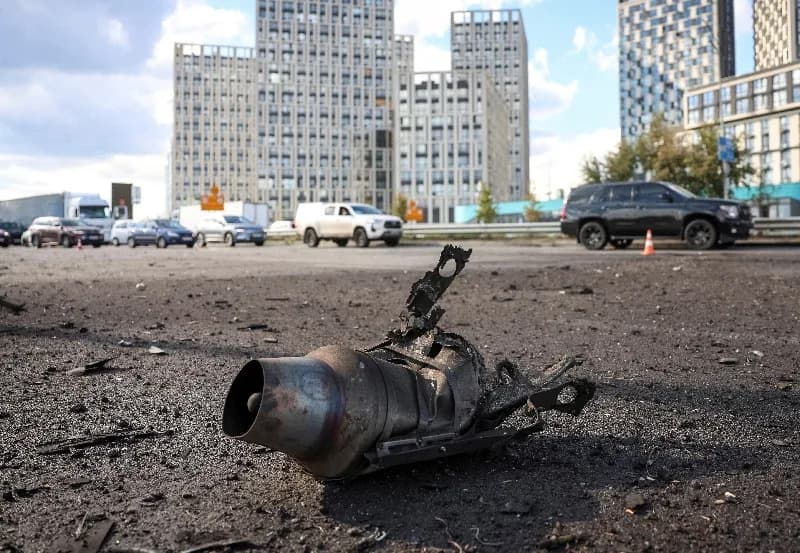
Ukraine has transformed wartime ingenuity into a $7 billion defence-technology sector with an estimated $55 billion annual production capacity. Its innovations—long-range cruise missiles, mass-produced battlefield robots, cost-effective counter-drone systems and electronic-warfare tools—are attracting buyers from the Gulf, Europe and Japan. Those exports and partnerships strengthen Kyiv’s post-war economic and security prospects, creating a durable asset that survives beyond the battlefield.
Ukraine’s Secret Weapon: How Defense Tech Turned Kyiv Into a Global Exporter
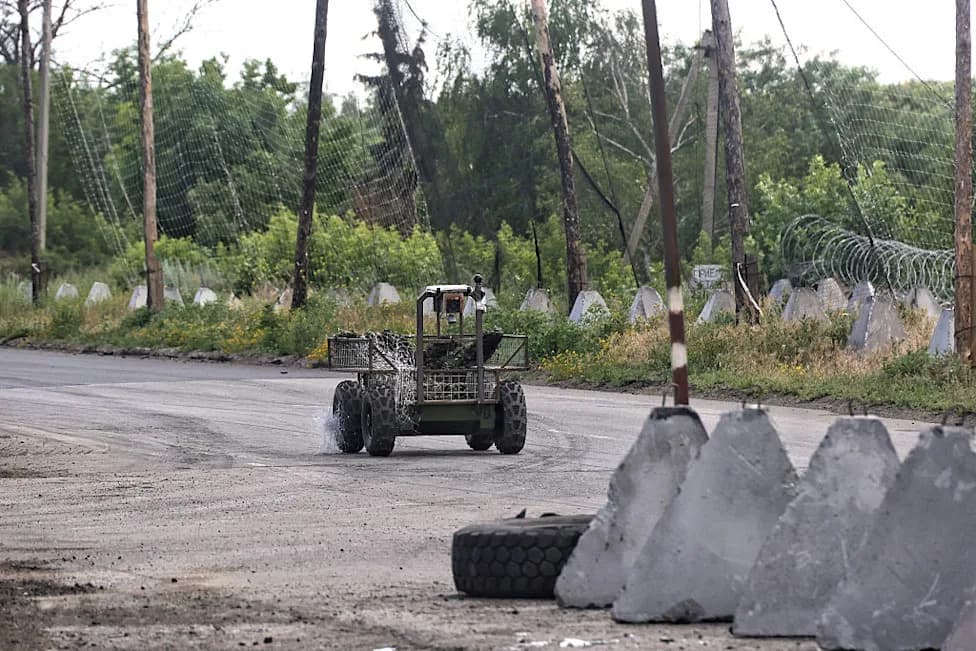
A Ukrainian military ground drone travels along a road protected by anti-drone nets in Donetsk region, Ukraine, on June 20, 2026. —Nina Liashonok-Ukrinform-NurPhoto via Getty Images
It can be hard to tell who is winning the war in Ukraine: front lines move slowly, and both sides continue costly air campaigns. Yet in one decisive area, Ukraine has already scored a strategic victory — it has turned wartime innovation into a global defence-tech industry that now serves partners around the world.
From Makeshift Arms To Market-Ready Systems
When Russia invaded, Volodymyr Zelensky appealed for foreign aid while Ukrainians improvised weapons in garages and warehouses. Four and a half years later, that improvisation has matured into an export-oriented defence sector. What began as a do-it-yourself effort now supports a reported $7 billion industry with an estimated annual production capacity of about $55 billion.
Notable Ukrainian Innovations
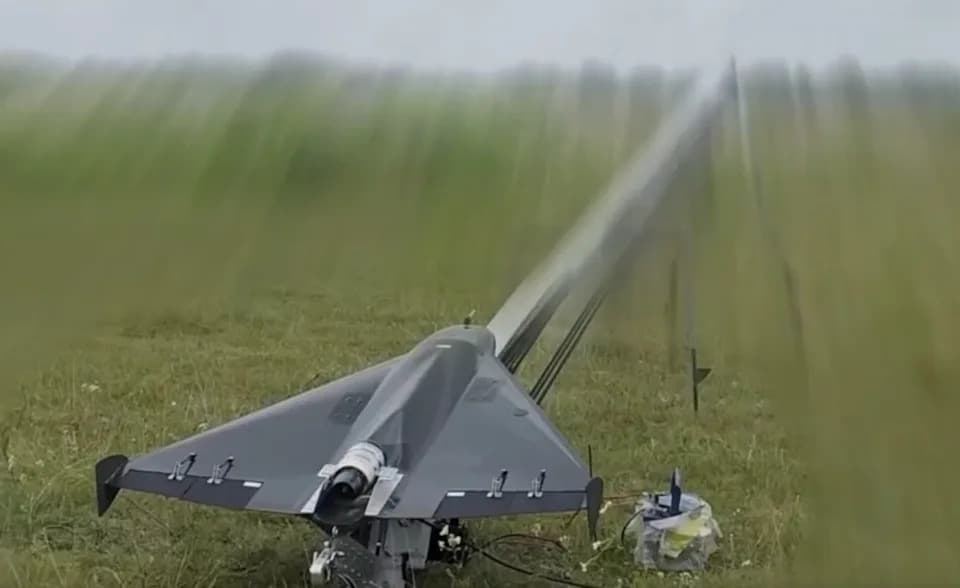
Long-Range Strike: The FP-5 "Flamingo" cruise missile—reported to have a range exceeding 1,800 miles—illustrates Ukraine’s rapid advancement in precision strike capability.
Robotics: Tens of thousands of robots are in use for frontline logistics and combat tasks, reducing soldier risk and increasingly taking on roles such as holding ground, engaging enemy positions, and detaining combatants.
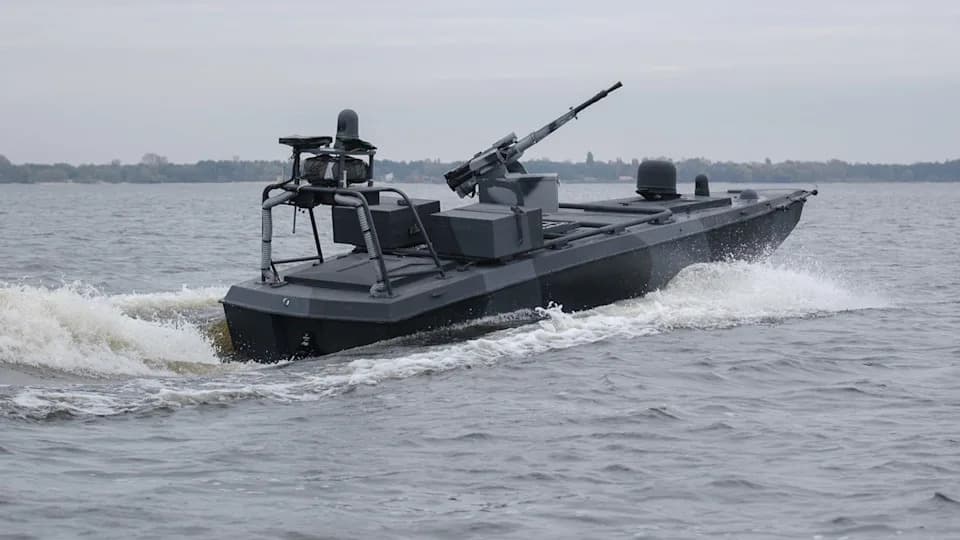
Counter-Drone & Naval Solutions: Ukraine fields low-cost, battle-tested counter-drone systems and unmanned-boat-launched drones that intercept incoming Shahed and other loitering munitions.
Electronic Warfare: Systems like the "Lima" electronic warfare suite can spoof satellite-navigation signals and divert incoming guided munitions.
Why The World Is Buying
Many Gulf states and U.S. bases discovered their defences were ill-suited to inexpensive, massed drone and cruise-missile attacks. High-end systems such as Patriot and THAAD interceptors are effective but costly—each Patriot interceptor can cost roughly $5 million, an expensive counter to $50,000 drones. Ukraine’s solutions offer a cost-effective complement: pragmatic, affordable systems that address the "Ford-versus-Ferrari" problem of matching tools to the threat.
As a result, Kyiv has signed defence-export agreements with Saudi Arabia, the United Arab Emirates and Qatar and established partnerships across Europe and Asia. Examples include installation of Ukraine’s Sky Map air-defence system at Prince Sultan Air Base in Saudi Arabia (after an attack that killed U.S. personnel in Kuwait), a drone-production partnership with the EU, and bilateral accords with Poland, Germany, Norway, Denmark, the Baltic states and Japan (Terra Drone partnering with Ukrainian developers).
A Lasting Strategic Asset
These developments don’t guarantee victory on the battlefield or at the negotiating table, but they materially improve Ukraine’s post-war outlook. Were the conflict to end tomorrow, Kyiv might cede territory but would retain new industrial capacity, international partners, revenue streams and a technology base to rebuild its economy and security posture. For Ukraine, defence-tech exports are not just short-term revenue — they are a durable strategic asset.
“Ukraine Needs NATO, But NATO Needs Ukraine As Much As The Other Way Around,” remarked President Alexander Stubb of Finland, capturing a broader shift: the country that once begged for hardware is now shaping how others defend themselves.
Bottom line: Ukraine has converted battlefield necessity into industrial capability and global partnerships. That transformation is one of the war’s most consequential and enduring outcomes.
Help us improve.