Firefighters in France and Spain used a brief weather respite to try to contain exceptionally large wildfires before another heatwave hits later this week. Authorities have evacuated about 220,000 people in France and ordered roughly 100,000 in Spain to leave or seek shelter, while around 77,000 hectares have burned in central Spain. Officials warn the situation remains critical as forecasts predict higher temperatures and international assistance is being deployed.
France and Spain Scramble to Contain Massive Wildfires Ahead of New Heatwave
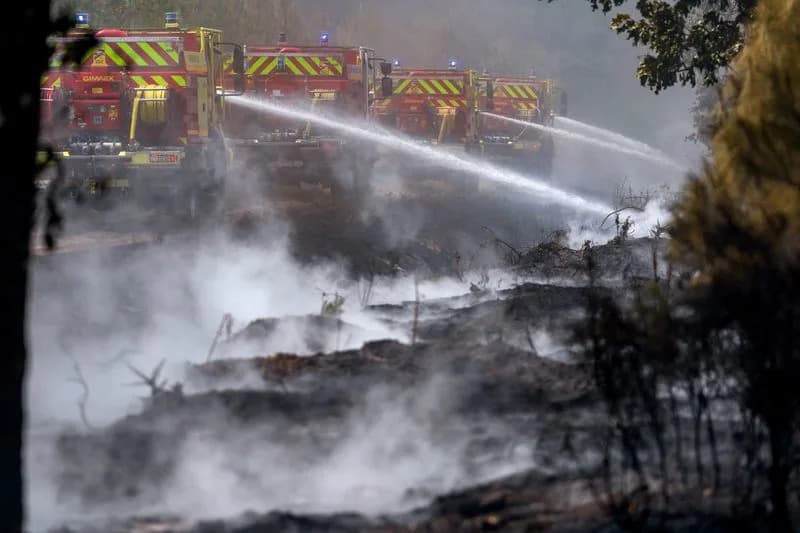
Firefighters work to battle wildfires amid drought conditions following a heatwave and water shortages across much of France, in Marcheprime, Gironde department, France, July 27, 2026. REUTERS/Florion Goga
Fire crews in southwestern France and across several Spanish regions used a brief lull in weather on Monday to try to bring exceptionally large wildfires under control before another heatwave is expected later this week.
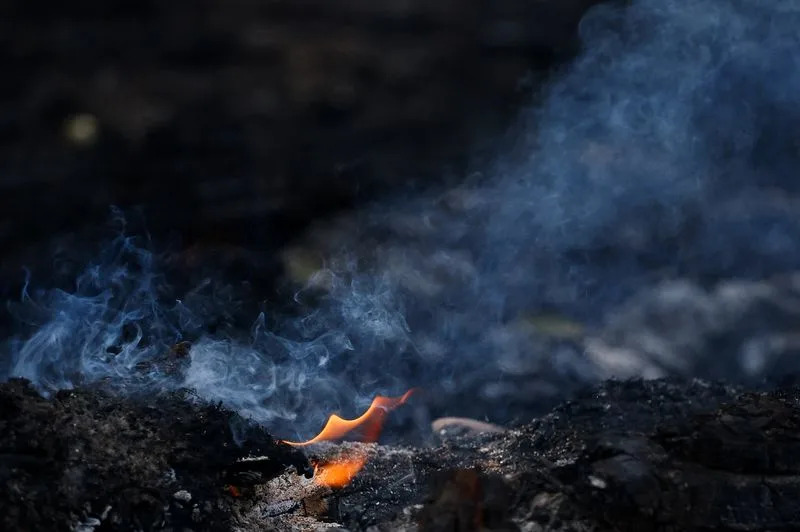
A flame reappears amid burned vegetation as efforts to battle wildfires continue amid drought conditions following a heatwave and water shortages across much of France, in Marcheprime, Gironde department, France, July 27, 2026. REUTERS/Manon Cruz
Current Situation
Authorities said roughly 220,000 people — residents and tourists — have been evacuated in France, while about 100,000 people in Spain were ordered to leave their homes or move to safe shelters. In central Spain, officials estimate approximately 77,000 hectares have burned across the provinces of Madrid, Toledo and Avila, with the Avila blaze described as the largest in recent Spanish history.
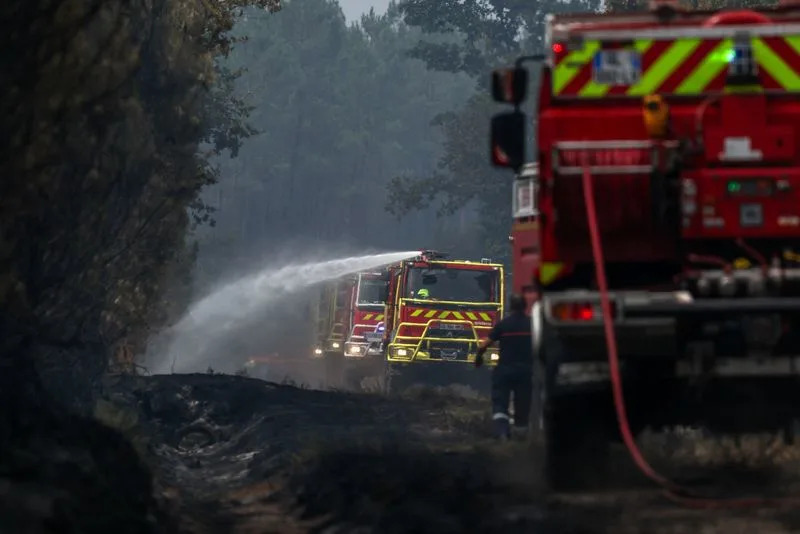
Firefighters work to battle wildfires amid drought conditions following a heatwave and water shortages across much of France, in Marcheprime, Gironde department, France, July 27, 2026. REUTERS/Florion Goga
High Risk Zones
The fires that began last week near France's Atlantic coast have advanced to within about 15 kilometres (9.3 miles) of key access routes to Bordeaux's main metropolitan area, threatening vineyards and major tourist sites. French President Emmanuel Macron was due to visit the affected region.
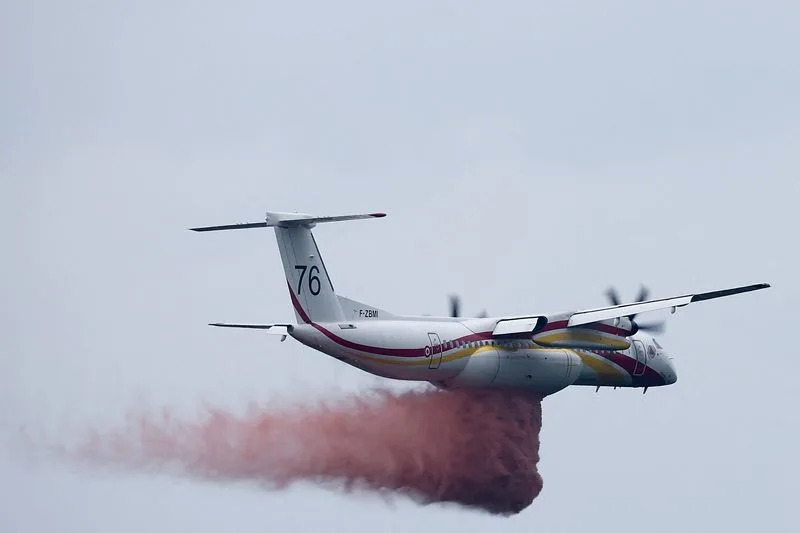
A Dash 8 Q400MR drops retardant over a wildfire as blazes rage across the Gironde region amid worsening drought conditions following a heatwave and water shortages across much of France, near Sainte-Helene, France, July 27, 2026. REUTERS/Manon Cruz
In eastern Castellon province, crews faced a uniquely hazardous front near Vall d'Uixó where flames are reaching zones still contaminated by ordnance from the Spanish Civil War. Those munitions can detonate when heated, Valencian fire chief Chevi Bolumar told public broadcaster TVE.
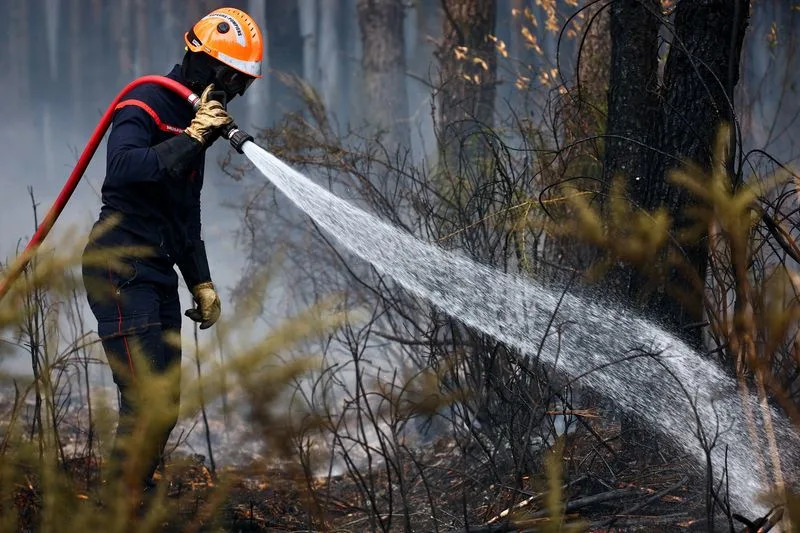
A firefighter works as part of the effort to battle wildfires, amid drought conditions following a heatwave and water shortages across much of France, in Saint-Jean d'Illac, Gironde department, France, July 27, 2026. REUTERS/Manon Cruz
Weather And Forecasts
Meteorologists warned a new heatwave could arrive later this week. Forecasts show temperatures in the Bordeaux area could climb toward 37°C (98.6°F). July highs in both Bordeaux and Avila have averaged about 32°C (90°F), roughly 6°C above the long-term (1961–1990) average for the month.
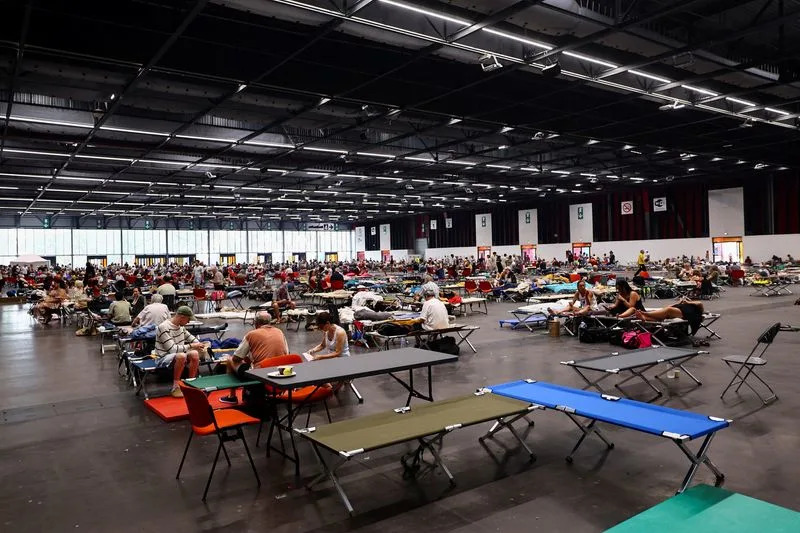
FILE PHOTO: Evacuated residents rest at the Bordeaux-Lac Exhibition Centre, which has been turned into a shelter for people displaced by a wildfire burning nearby amid worsening drought conditions following a heatwave and water shortages across much of France, in Bordeaux, France, July 25, 2026. REUTERS/Manon Cruz/File Photo
Response And International Support
Firefighting resources have been stretched. Under the EU civil protection mechanism, Greece and Italy sent Canadair water-bombers to Spain; Portugal deployed more than 100 military personnel and equipment; two additional planes were due from Turkey; and Switzerland sent two Super Puma helicopters and crews to aid France.
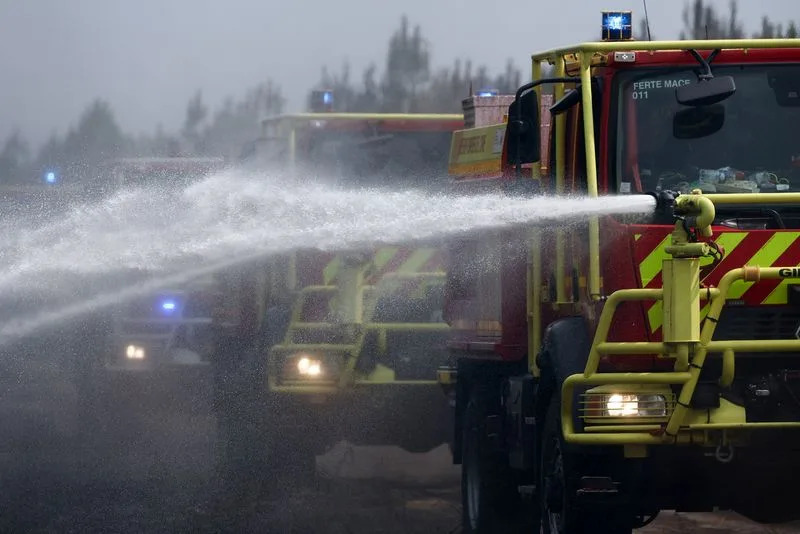
Fire engines carry out edge protection and mop-up operations on a wildfire in Marcheprime, in the Gironde region, amid worsening drought conditions following a heatwave and water shortages across much of France, July 27, 2026. REUTERS/Manon Cruz
Voices On The Ground
“What we're experiencing isn't a succession of isolated events. It's the most painful expression of a climate emergency,” said Spanish Prime Minister Pedro Sanchez, warning that so-called sixth-generation wildfires are becoming more ferocious and frequent.
Evacuee Maria Angeles Serrano described the personal toll: “Material damage is one thing, but that can be repaired. What really hurts is the emotional loss.”

Spanish Prime Minister Pedro Sanchez meets members of emergency services during his visit to an area affected by a wildfire, at the Avanza Command Post in La Vall d'Uixo, Castellon province, Spain, July 27, 2026. REUTERS/Eva Manez
Outlook
Spanish and French officials emphasized that Monday's respite was temporary. Spanish Interior Minister Fernando Grande-Marlaska said the next two days were critical and cautioned that conditions were expected to worsen midweek. French Interior Minister Laurent Nunez stressed the fires were not contained and urged continued vigilance.
Key facts: large-scale evacuations in both countries, tens of thousands of hectares burned, danger from old ordnance in Castellon, rising temperatures forecast, and international assistance mobilized under EU mechanisms.
Help us improve.