Overview: Pete Hegseth’s tone on China at consecutive Shangri‑La forums shifted from confrontational to conciliatory, notably omitting Taiwan in his latest remarks. Officials say the Trump administration has quietly reinforced alliances and approved record arms sales to Taiwan, even as Beijing intensifies grey‑zone pressure at sea. Critics worry that Trump’s deal‑making could trade away strategic ambiguity and risk a G2‑style bargain that weakens U.S. commitments. The outcome will depend on whether institutions or presidential impulses steer U.S. policy.
Trump’s Softer Rhetoric On China, Firmer Posture For Taiwan: What Asia Might Expect
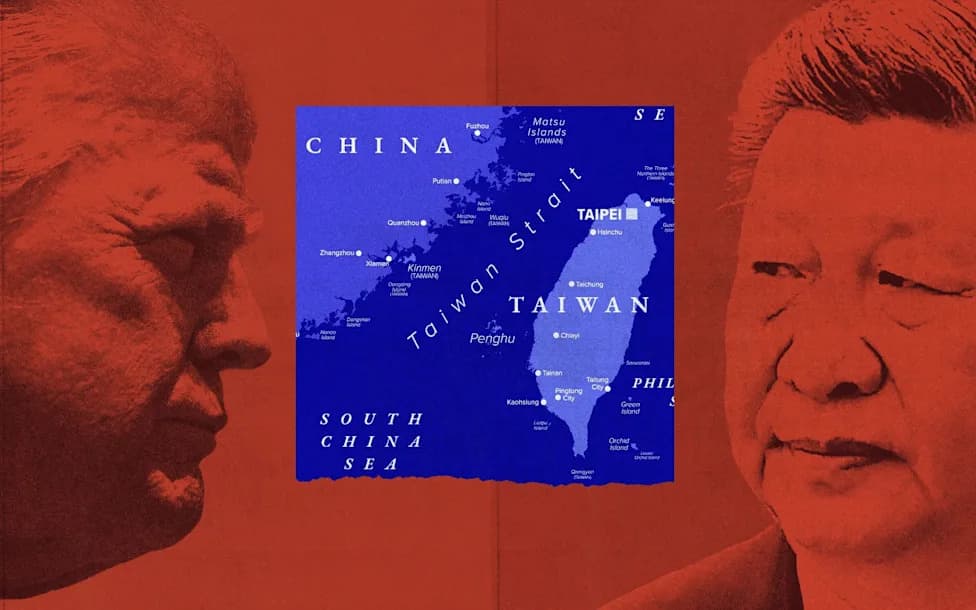
Trump vs Xi over Taiwan
When US Defence Secretary Pete Hegseth took the podium at the IISS Shangri‑La Dialogue last year, many expected a clear, long‑term blueprint for Washington’s Asia policy. Instead, his speech was a stark rebuke of Beijing. A year later, his tone at the same forum had softened markedly — references to China dropped from 32 to eight, the phrase "Communist China" disappeared and Taiwan was not mentioned at all.
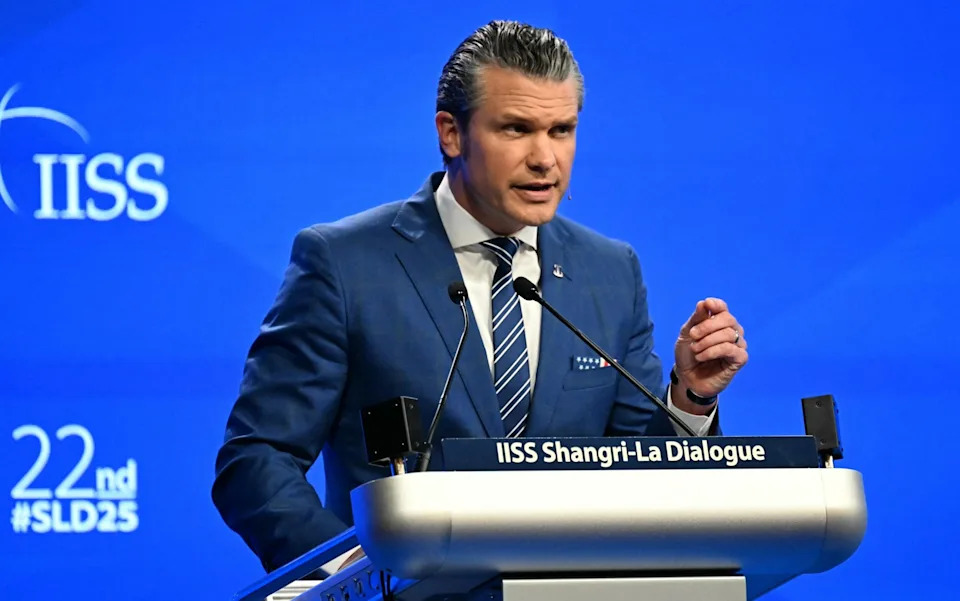
US defence secretary Pete Hegseth's 2025 speech in Singapore was harder on China than at the same event a year later - Mohd Rasfan/AFP
Quiet Strength or Quiet Compromise?
The shift in rhetoric has left allies and partners across the Indo‑Pacific uneasy. Some welcome calmer language after years of tense U.S.‑China exchanges; others fear that a reduction in public criticism could presage a transactional deal in which Washington tolerates greater Chinese influence in return for economic concessions.
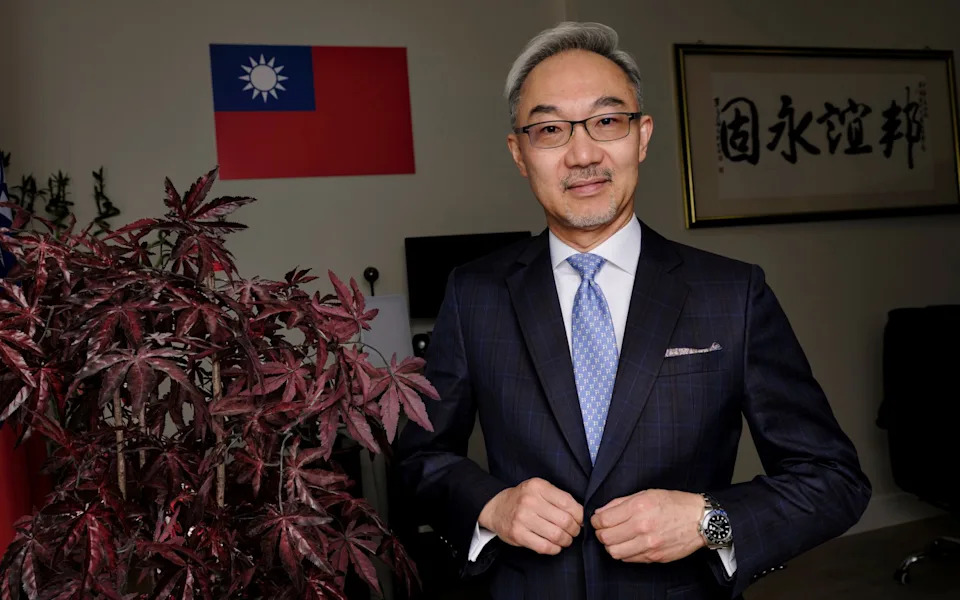
Vincent Chin-Hsiang Yao, Taiwan's de facto ambassador to London, says Donald Trump's approach to China is similar to Joe Biden's - Rii Schroer for The Telegraph
Taiwanese officials, however, have publicly expressed cautious optimism. Vincent Chin‑Hsiang Yao, Taiwan’s de facto ambassador to London, argues that the Trump administration’s China policy is broadly consistent with prior U.S. strategies — particularly the emphasis on alliances and multilateral security arrangements — but pursued more discreetly and without theatrical rhetoric.
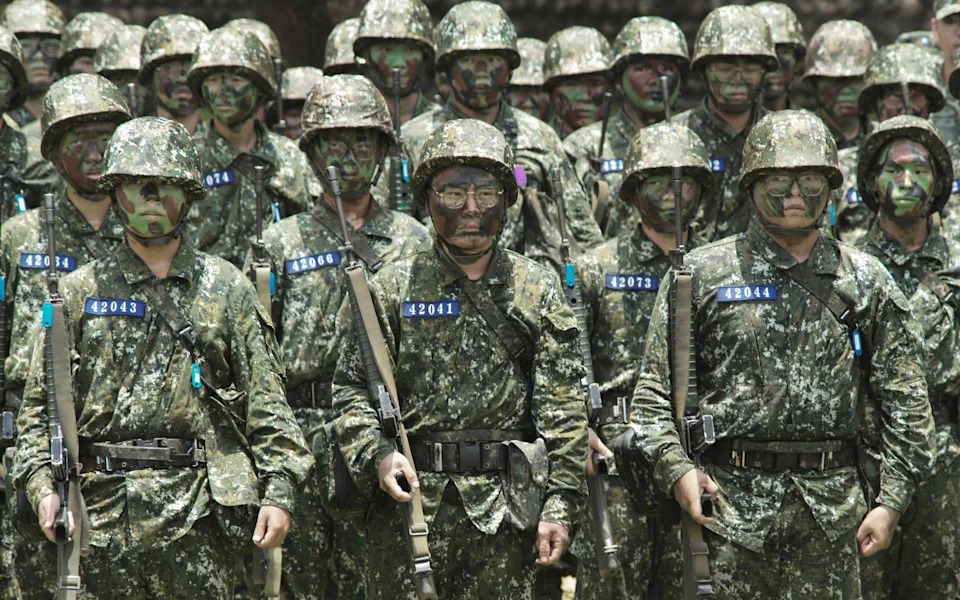
Taiwan's forces may be viewed with more respect in the light of Ukraine's defence against a bigger invader - Sam Yeh/AFP
“They have basically set up guardrails to manage risk and reduce miscalculation,” Yao told The Telegraph. “Trump and his team believe in talking less about China and criticising China less. But at the same time, they are doing things to strengthen America’s position.”
Policy Actions Behind the Words
Officials point to concrete measures: last year’s US National Security Strategy named preventing conflict over Taiwan a priority, and the National Defence Strategy commits the United States to "deter China in the Indo‑Pacific through strength, not confrontation." Washington has strengthened alliances, encouraged partners to boost defence spending, and approved record arms sales to Taiwan — a reported $11bn package already notified, with another $14bn awaiting approval.
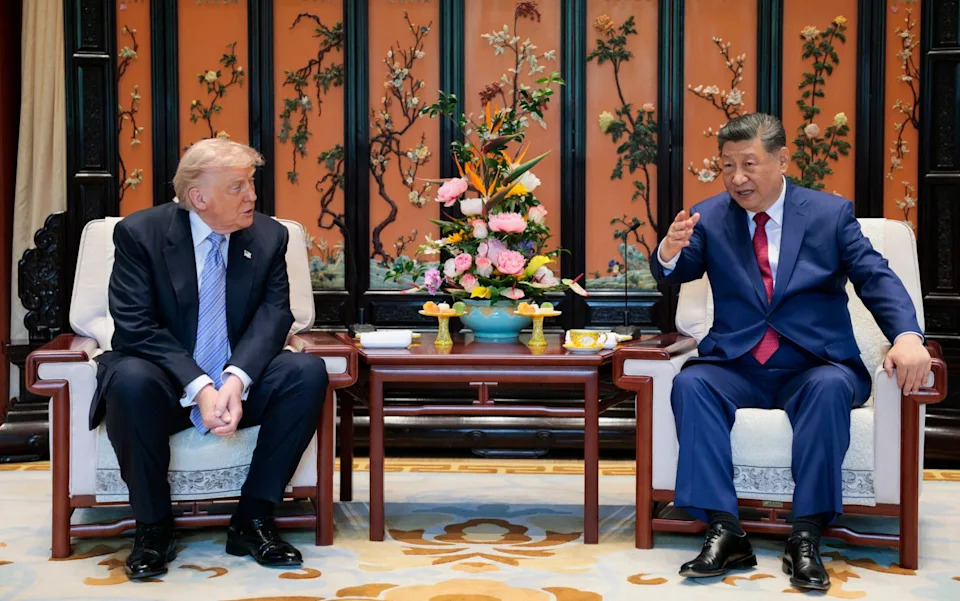
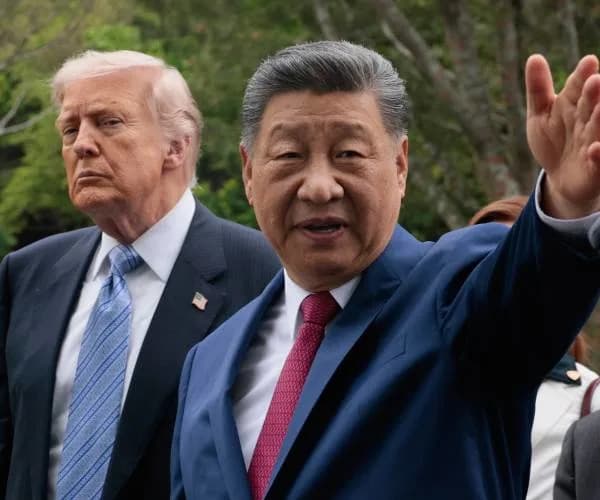
Xi Jinping had ample opportunity to make the case for Chinese sovereignty over Taiwan during Mr Trump's visit in May - Evan Vucci/AFP
Proponents argue these steps have tangible deterrent effects. U.S. intelligence assessments that an invasion of Taiwan in the near term is unlikely are cited as evidence that a combination of allied cooperation, increased Taiwanese preparedness and Chinese internal problems have given Beijing pause.
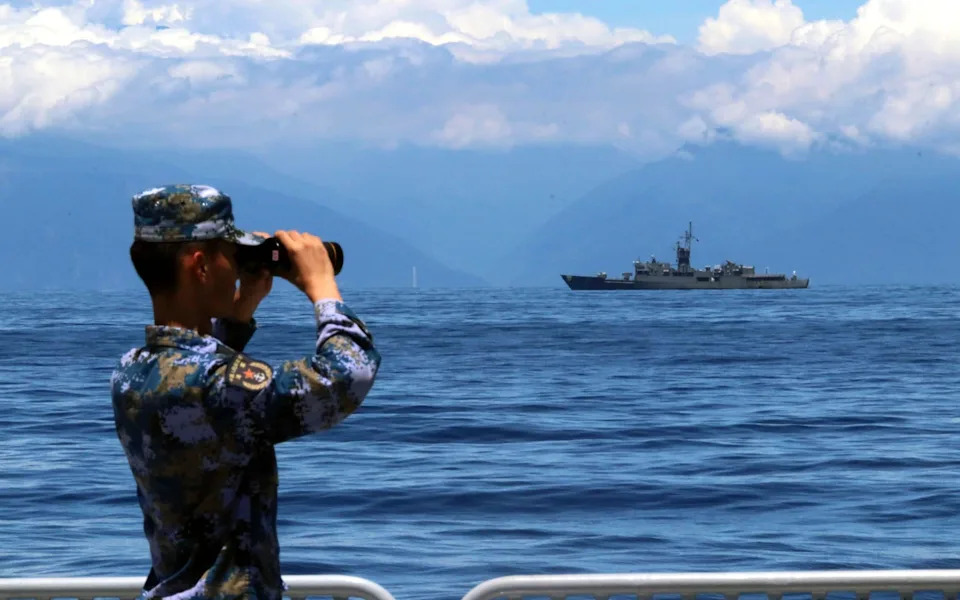
China's military posture around Taiwan has grown steadily more aggressive - Lin Jian/Xinhua
Why Beijing May Be Softer — For Now
Analysts suggest several reasons for Beijing’s quieter public tone: internal turmoil within the People’s Liberation Army after the purge of senior officers, the operational and political lessons of recent conflicts such as Ukraine and the Middle East, and the calculation that coercive pressure can achieve goals without outright invasion.
Sign up to the Cables newsletter
Yet China’s actions at sea tell a different story. Coastguard patrols near Taiwan and repeated entries by Chinese survey vessels into waters around Taiwanese‑held features in the South China Sea reflect an intensifying grey‑zone campaign designed to shift facts on the water while avoiding full‑scale war.
The Risk Of A Grand Bargain
Critics warn the bigger danger is Washington’s willingness to treat arms sales and Taiwan policy as negotiable bargaining chips. President Trump’s highly publicised meetings with Xi Jinping — including an intimate state‑style visit to Zhongnanhai — and his announcement that he had paused a Taiwan arms package and discussed it with Xi have heightened concerns that a "G2"‑style arrangement could be on the table.
“There are indications the Chinese side has made inroads encouraging the president to move in a direction more favourable to Beijing — which would increase anxiety in Taiwan,” said Kurt Campbell, an architect of the previous administration’s Asia policy.
What’s At Stake
The stakes are high: the balance of power in Asia, the integrity of a rules‑based international order, and the deterrent logic that has underpinned U.S. policy for decades. Many Indo‑Pacific states would welcome stable U.S.‑China ties, but not at the cost of formal concessions that create spheres of influence or abandon partners.
Whether U.S. policy is ultimately shaped by institutional guardrails — the Pentagon, State Department and national security apparatus — or by presidential deal‑making instincts will determine Taiwan’s future and, more broadly, the region’s strategic trajectory.
Bottom line: The recent softening in rhetoric toward China coexists with deterrent steps and rising grey‑zone pressure from Beijing. Observers must watch both words and deeds: diplomatic outreach could stabilise relations or mask a shift toward a transactional arrangement with major consequences for Taiwan and the Indo‑Pacific.
Help us improve.