Researchers filmed Gulf of California orcas using a coordinated "hold-and-ram" tactic to fragment dead sharp-tail sunfish into thousands of pieces. Two encounters (29 July 2024 off San José del Cabo and 7 September 2025 near Isla Cerralvo) showed one whale stabilizing the carcass while another struck it, scattering tissue that juveniles fed on. Scientists suggest this may aid juvenile feeding, support social learning or play, or redistribute microbes — but more records are needed to determine how common or purposeful the behavior is.
Gulf of California Orcas Use Precision 'Hold-and-Ram' to Shatter Giant Sunfish
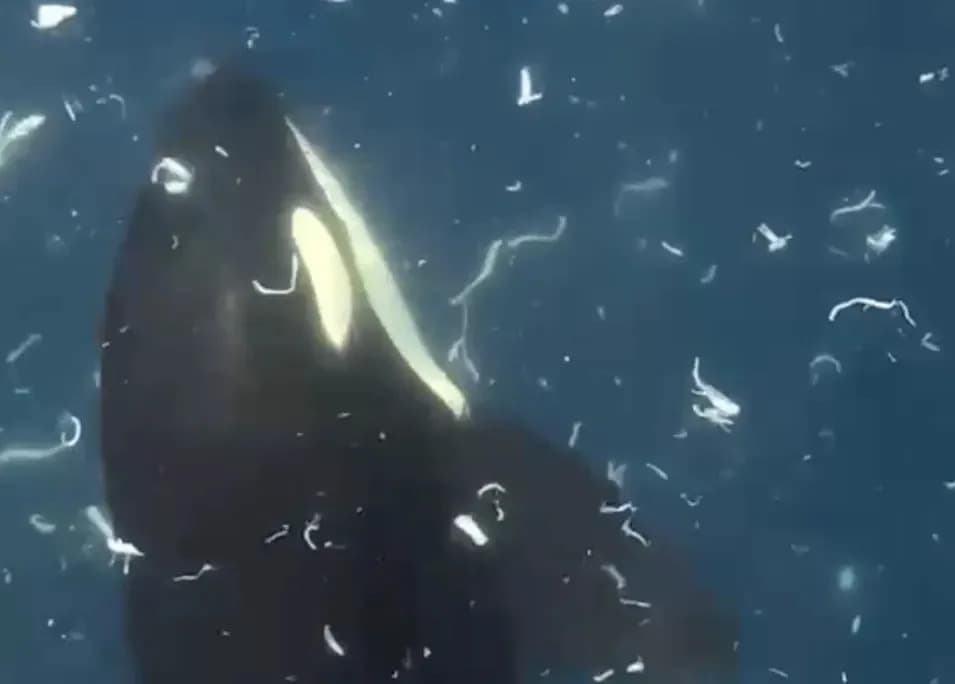
Orcas ramming sunfish in the Gulf of California may be processing prey into smaller pieces for calves or engaging in social play. (CREDIT: Héctor Franz)
Orcas in Mexico's Gulf of California have been filmed performing a precise, coordinated "hold-and-ram" technique that breaks dead sharp-tail sunfish into thousands of fragments. The behavior, documented in two separate encounters more than a year apart, appears to be a deliberate prey-processing strategy rather than a killing method.
What was observed
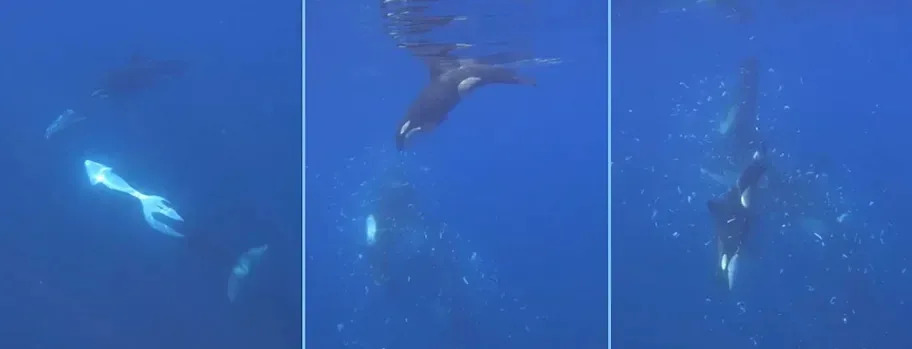
Stills from video documenting the hold-to-ram behavior observed among orcas in the Gulf of California. CREDIT: Kathryn Ayres)
In both recorded events — on 29 July 2024 near an offshore seamount off San José del Cabo and on 7 September 2025 near Isla Cerralvo — orcas interacted with already dead sharp-tail sunfish (Masturus lanceolatus) whose internal organs had been removed. One whale gripped and stabilized the carcass, often by the clavus (the sunfish's broad tail structure), while a second individual accelerated and struck the fish at high speed. The holder released the carcass just before impact, and the collision sent tissue fragments scattering through the water.
Feeding and social context
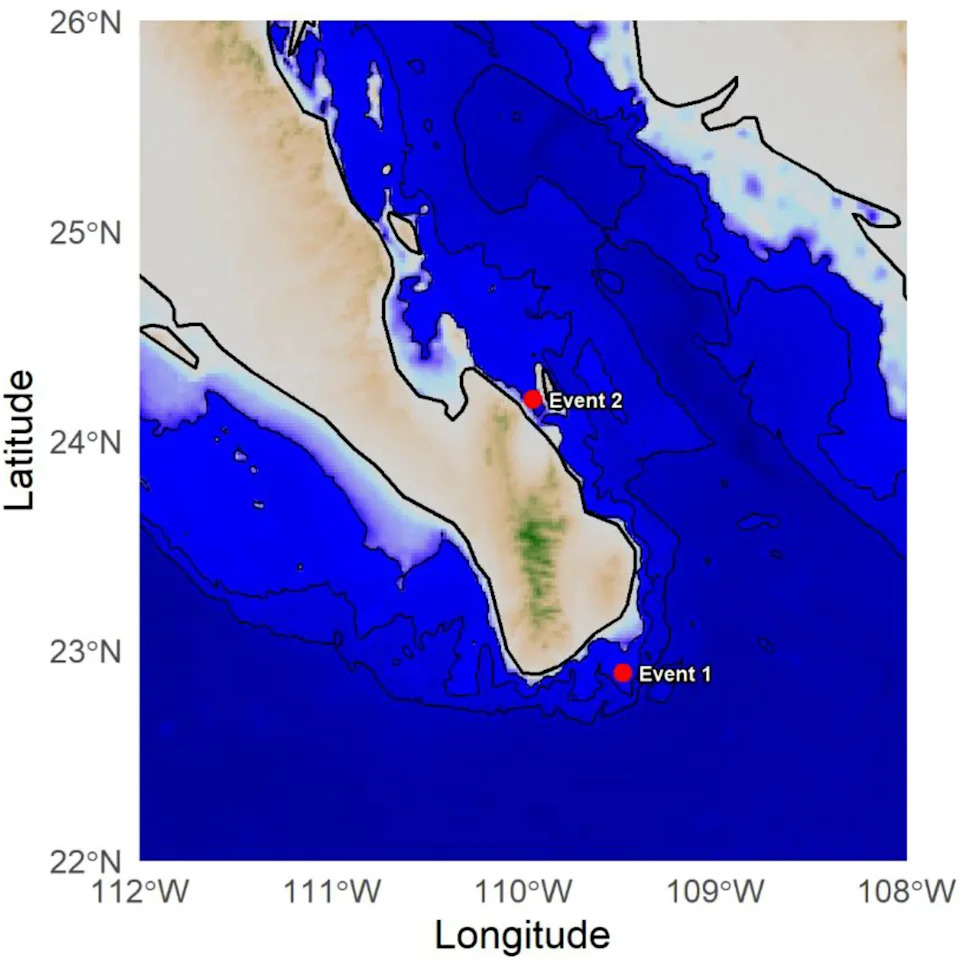
Predation event locations at the entrance of the Gulf of California in which orcas (Orcinus orca) successfully 'ram-to-fragment' a sharp-tail sunfish (Masturus lanceolatus). (CREDIT: Frontiers in Ethology)
Juveniles were observed swimming into the debris field and feeding on the small pieces, while adults ate larger sections of the opened body. This suggests the fragmentation may help younger whales access food, though researchers also consider social learning, play, or hunting practice as alternative or additional explanations.
Why sharp-tail sunfish may fragment
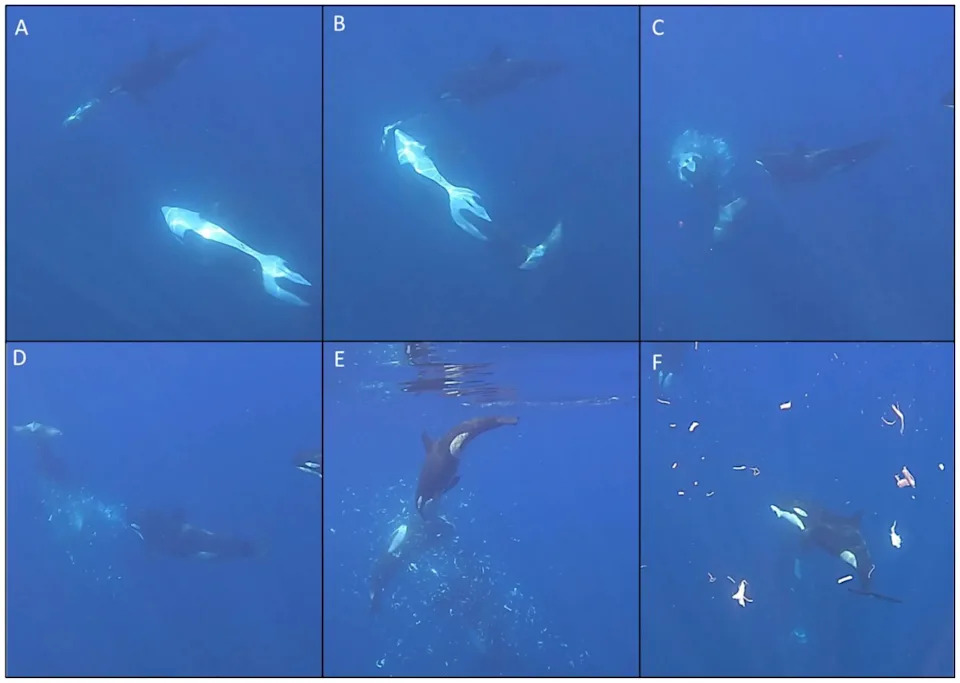
Orca 'ram-to-fragment' foraging strategy on sharp-tail sunfish (Masturus lanceolatus).(A) Female adult swims with molid in mouth. (B) Female orca releases molid as the male adult hits it with impact. (C) Part of molid fragments. (D) Juvenile orca enters frame. (E) Juvenile orca swims into the fragments. (F) Juvenile orca starts to consume the molid fragments. (CREDIT: Frontiers in Ethology)
Sharp-tail sunfish are very large teleosts — sometimes exceeding 3 meters and up to about 2,000 kg — and have a thick, gelatinous collagen layer called the "capsule" that is nearly 90% water. Researchers note this structure may respond to high-energy impacts by breaking apart into many smaller pieces, a property not reported for other sunfish species in the same way.
Ecological and microbiome implications
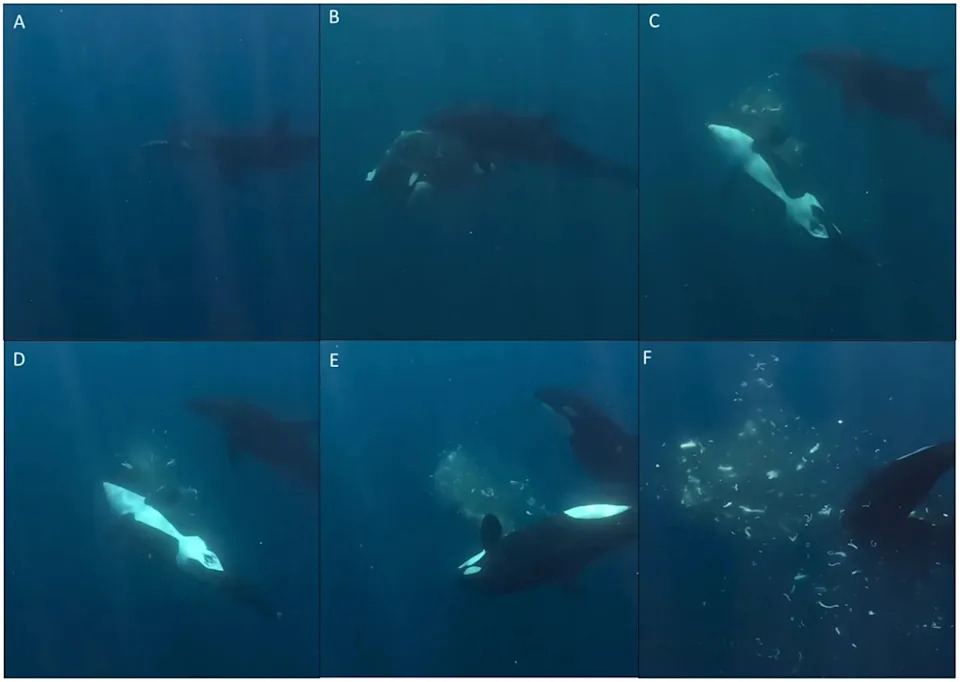
Orca 'ram-to-fragment' foraging strategy on sharp-tail sunfish (Masturus lanceolatus).(A) Orca holds molid in mouth. (B) A second orca rams the molid with impact. (C, D) Orca flips ventral side up. (E) Part of molid tissue fragments. (F) Fragments are scattered throughout the water column. (CREDIT: Héctor Franz)
The team also raised the possibility that fragmentation redistributes the sunfish's skin- and capsule-associated microbes into the water, potentially altering local nutrient dynamics or microbiome exposure for predators and surrounding seawater. This remains a hypothesis; no nutritional or immunological effects were demonstrated in the observed encounters.
Limitations and open questions
Only two opportunistic recordings (one from a GoPro and another by Héctor Franz using an action camera) document the behavior, and researchers lacked high-resolution identification photos to confirm whether the same individuals performed the tactic in both events. That makes it unclear whether the method is widespread, specific to a pod, or learned by particular whales.
Why it matters
These observations expand the known repertoire of orca prey-processing behaviors and give scientists a clear pattern to watch for in future encounters. More systematic footage, improved photo-identification, and broader sampling across pods and sunfish species will be needed to determine the behavior's frequency, function(s), and ecological consequences.
Source: Findings reported in Frontiers in Ethology; footage collected by scientists and tourism operators in the Gulf of California.
Help us improve.