Bubbles, a wild bottlenose dolphin off Lady Elliot Island, was filmed chasing bigeye trevally until the fish regurgitated, then eating the regurgitated meal. Researchers observed the behavior between 2021 and 2025 and reported 11 successful events out of 20 attempts. Scientists suggest echolocation and vocalizations may help Bubbles pick well-fed targets, but experts urge caution about assigning deliberate intent. The case is described as a novel form of kleptoparasitism and highlights dolphins' adaptive foraging.
‘Bubbles’ the Dolphin Tricks Fish Into Vomiting — Eats Their Regurgitated Meal
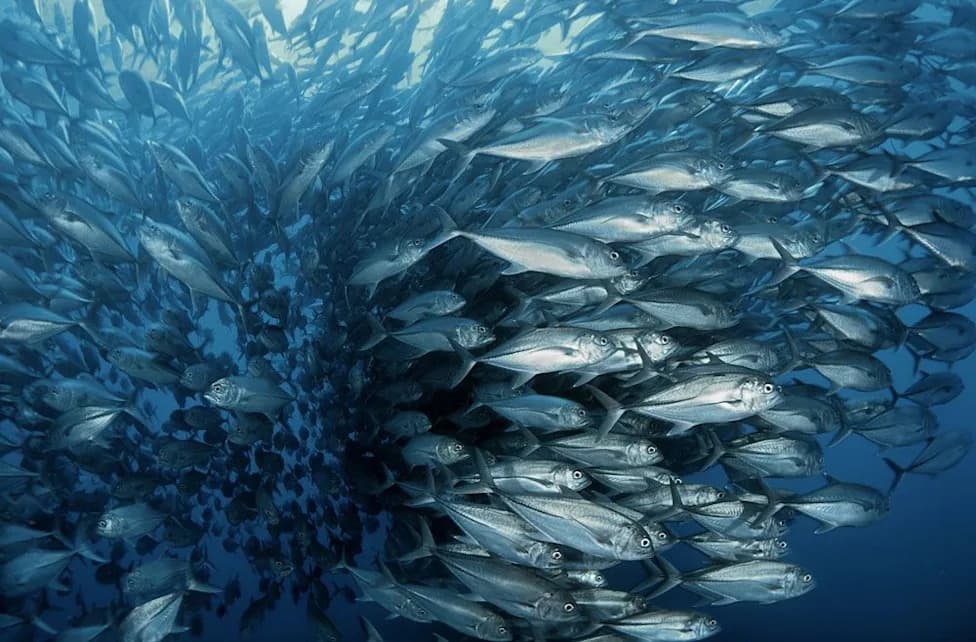
A dense school of Bigeye trevally swimming in the ocean.Credit: Photo © Disney Enterprises
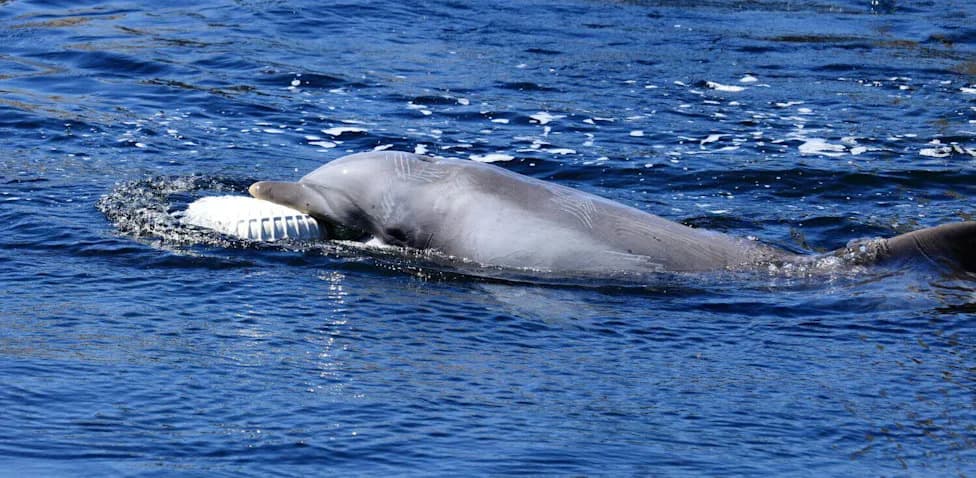
Off the southern edge of the Great Barrier Reef, researchers filmed a wild bottlenose dolphin nicknamed Bubbles using a surprising hunting tactic: he chases individual bigeye trevally until the stressed fish regurgitate recently eaten food, which Bubbles then consumes.
How the Behavior Was Observed
Scientists recorded the behavior near Lady Elliot Island between 2021 and 2025 and reported the findings in the journal Ecology and Evolution. Over four years, biologists documented 20 attempts at this tactic, with 11 successful regurgitation-and-eat events. On some days Bubbles repeated the routine many times — as many as 10 chases within 30 minutes.
What Happens During a Chase
In video footage, Bubbles uses echolocation to scan schools of bigeye trevally and appears to select fish that seem recently fed. He isolates a single fish, pursues it, and produces vocalizations while chasing. The pursuit continues until the fish vomits stomach contents, which Bubbles then quickly consumes as the fish swims away.
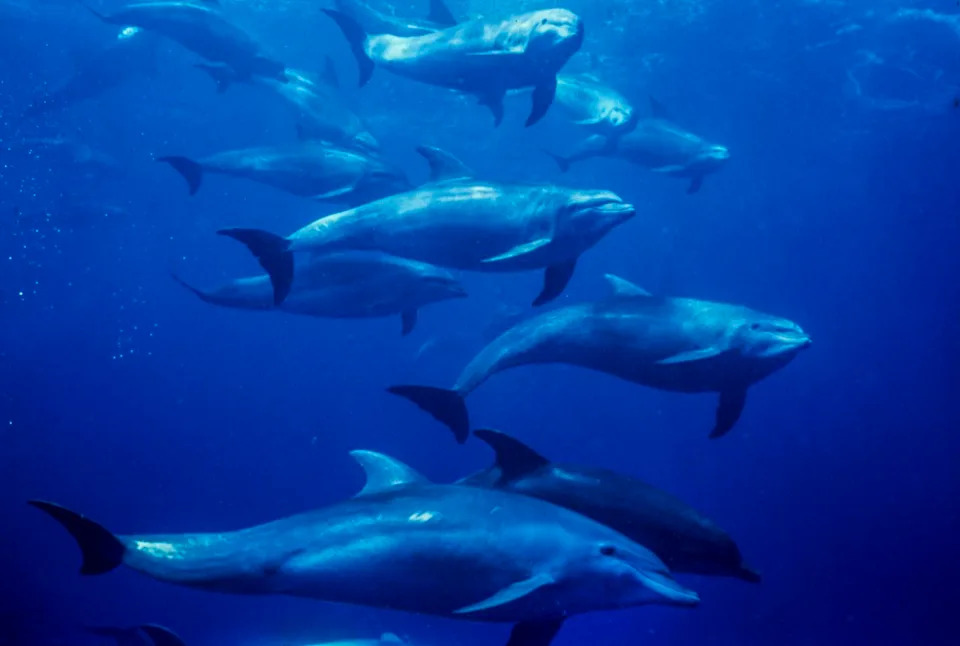
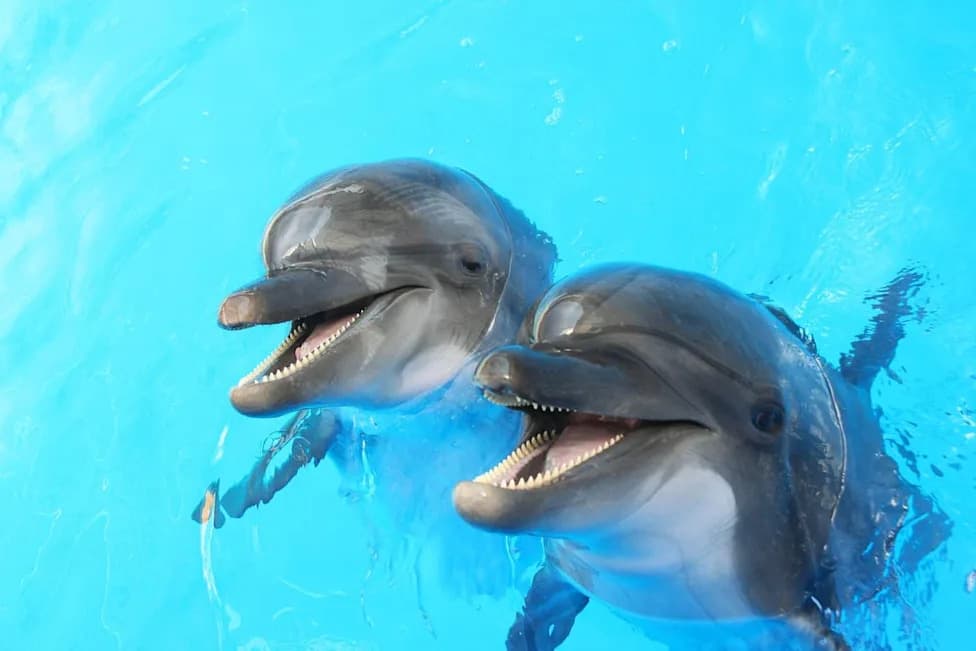
Group of bottlenosed dolphins swimming underwater.Credit: Humberto Ramirez / Getty Images
"Echolocation does allow dolphins to discriminate small differences in their targets' shape, size and structure, so the dolphin potentially uses echolocation to decide which fish to target to get the best reward," said Asia Armstrong, a marine scientist at the University of the Sunshine Coast.
Interpretation and Context
Researchers describe the behavior as a novel form of kleptoparasitism — stealing someone else’s food — but with a twist: rather than seizing prey already held by another animal, Bubbles appears to force fish to relinquish their last meal. Scientists think his vocalizations may both increase the fish's stress (triggering vomiting) and help him identify well-fed targets by subtle differences in body shape or stomach content detected with echolocation.
"I'd speculate that the trevally vomit provides an easy snack on days when Bubbles hasn't been as successful with hunting," said lead author Romney Edwards-Francis, a Ph.D. candidate at the University of the Sunshine Coast.
Independent experts caution against over-interpreting the dolphin's intent. Jason Bruck, a dolphin behavioral scientist not involved in the study, warned that the evidence does not yet prove Bubbles deliberately expects a particular fish to regurgitate.
Why This Matters
Whether unique to Bubbles or an overlooked tactic used by other dolphins, the observation highlights the flexibility and inventiveness of cetacean foraging strategies. It also underscores how field observation paired with careful analysis can reveal new behaviors in well-studied species.
Note: The footage and analysis come from documented observations and peer-reviewed reporting, but researchers emphasize that more study is needed to determine how widespread or socially transmitted this behavior might be.
Help us improve.