Construction apprentices are dropping out because a shortage of sites and jobs prevents them from completing practical training. Apprenticeship completion in the construction sector fell to about 58.3% in 2024–25, with some trades — such as craft bricklaying — as low as 30%. Industry leaders say growing housebuilding, closer links between training and employment, and measures to boost employer confidence are needed to keep trainees in the sector.
Construction Apprentices Quitting as Shortage of Homes Leaves Few Training Sites
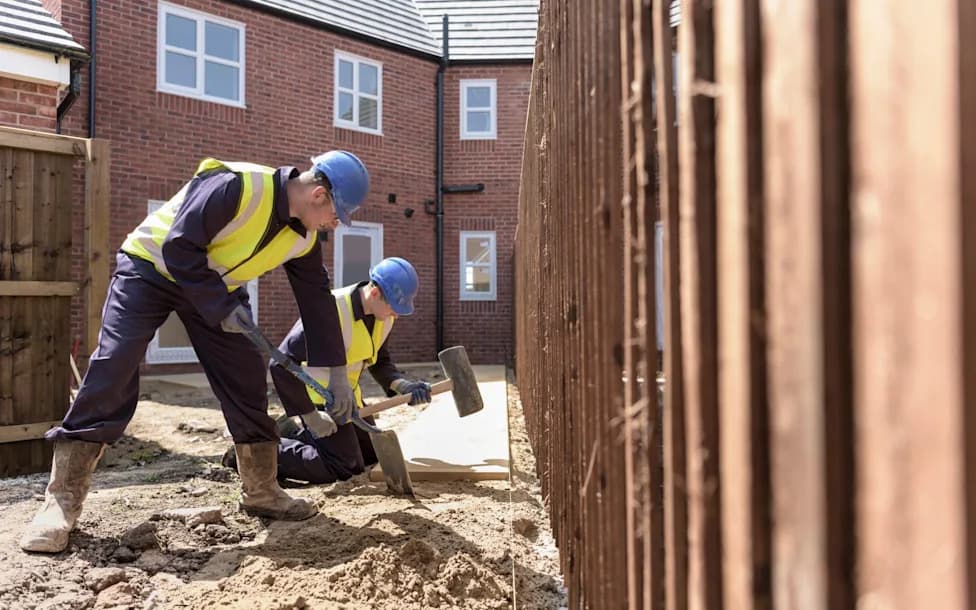
Little more than half of those starting construction apprenticeships are finishing them - Monty Rakusen/Cultura RF
Apprentices training in construction are increasingly abandoning their courses because there are too few building sites and jobs for them to gain the practical experience required to qualify, industry experts warn.
Shortfall In Housebuilding Hits Retention
The problem was highlighted after Angela Rayner, recently reappointed Housing Secretary, conceded it would be a "stretch" for the Government to meet Labour's 2024 manifesto pledge to deliver 1.5 million new homes by 2029. To hit that target would require an average of 300,000 new homes a year; in the first two years of this Parliament just 295,150 houses have been completed.
"If you've not got jobs to put them into, or sites on which to train them, they don't get their qualifications," said Steve Turner of the Home Builders Federation. "You have to increase output and then the industry will look to take on more apprenticeships and young people."
Apprenticeship Completion Rates And Industry Impact
A Telegraph analysis of official figures found apprenticeships in "construction, planning and the built environment" had a completion rate of about 58.3% in 2024–25, the lowest of any apprenticeship sector. Across all apprenticeships roughly 35% of trainees left without a qualification. Of 636 apprenticeship programmes, 44 had completion rates below 50% in 2024–25.
Some construction sub-categories were particularly weak: craft bricklayers recorded an achievement rate of just 30%, air conditioning and heat-pump technician schemes 34.5%, and plumbing and heating 44.2%. By contrast, train driver and biomedical apprenticeships reported success rates of 90.5% and 100% respectively.
Industry Calls For Greater Job-Training Alignment
Steven Mulholland, chief executive of the Construction Plant-hire Association, said ministers should have acted earlier to support housebuilding and create the pipeline of work that gives employers confidence to invest in apprentices. A recent industry survey found 43% of firms plan to take on fewer apprentices in the coming year due to rising operating and employment costs, heavier regulation and weak pipelines of work.

Angela Rayner, the Housing Secretary, admitted that meeting the Government's target of 1.5m new homes would be a 'stretch' - Tolga Akmen/EPA/Shutterstock
Construction needs more than 41,000 additional workers each year, while almost half a million current workers are expected to retire over the next 15 years — intensifying the skills challenge.
Tim Balcon, chief executive of the Construction Industry Training Board, welcomed the Government's £625m skills package but urged measures to ensure apprentices not only start training but complete it and move into sustained employment. "Part of the solution is giving employers greater confidence to hire new entrants and provide them with long-term employment," he said.
Government Response
A government spokesman rejected the notion that construction apprenticeship achievement rates are uniformly poor, noting strong results in areas such as craft carpentry and joinery (82.9% achievement). The spokesman also highlighted a broader youth-employment package that includes 300,000 new work experience and training placements across sectors as part of a £2.5bn plan to help young people into sustained work.
On housing activity, the Government pointed to an estimated 130,170 new-build starts in the year to March — a 15% increase on the previous year — as evidence that building activity is recovering and creating opportunities.
What Needs To Change
Experts say the clearest way to improve construction apprenticeship retention is to increase the supply of sites and jobs so trainees can complete practical placements. Strengthening links between training programmes and actual employment opportunities, reducing unnecessary regulatory burdens, and creating stable pipelines of work will be key if the sector is to retain trainees and meet long-term labour needs.
Help us improve.