Britain risks falling further behind unless it reforms its planning and regulatory systems. A Public Private Partnership Commission report finds the UK’s pre‑construction phase averages 65 months, and megaprojects take almost 12.5 years from announcement to completion. The report urges the creation of an independent infrastructure body reporting to Parliament and a parliamentary confirmatory vote for critical projects to attract private investment and cut delays and costs.
Britain’s ‘Can’t‑Build’ Reputation: How Red Tape Is Costing the Country Its Future
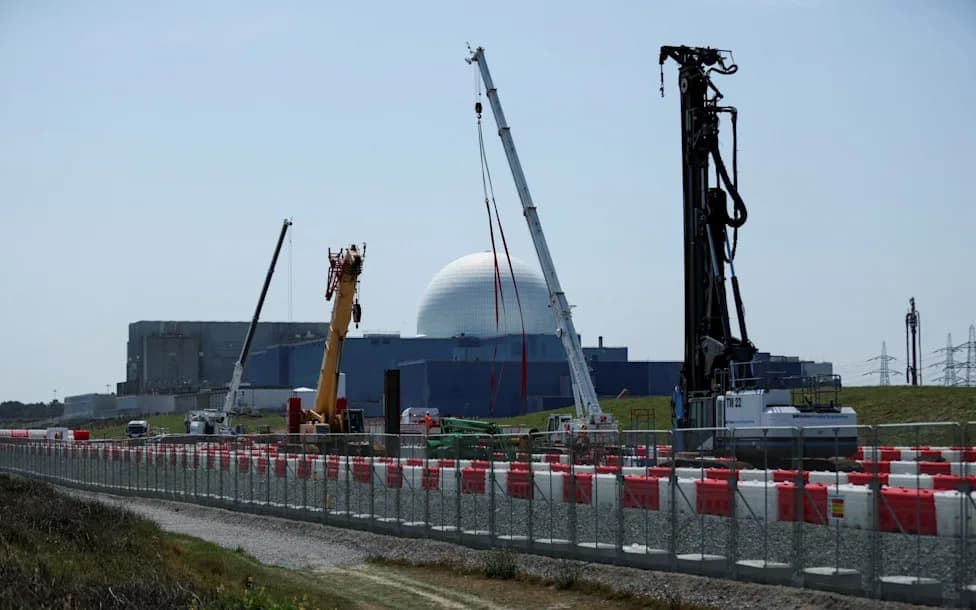
The Sizewell C nuclear power plant construction site. There hasn't been a nuclear plant constructed in the UK for three decades - Chris Radburn/Reuters
Type "Chinese mega-projects" into YouTube or TikTok and you will quickly see why commentators talk of "China speed": skyscrapers and bridges assembled in days, time-lapses that highlight extraordinary planning and execution. By contrast, Britain — once the world leader in engineering — now struggles to deliver major infrastructure on time or at a competitive cost.
Viral examples of rapid construction include a 57‑storey skyscraper in Changsha erected in 19 days and the Danyang–Kunshan Bridge, more than 102 miles long, completed in a fraction of the time Britain typically spends before breaking ground on a major project.

Sir John Armitt leads the Public Private Partnership Commission, which argues that Whitehall needs to overcome its aversion to risk - Heathcliff O'Malley for The Telegraph
Where the UK is falling behind
A recent report from the Public Private Partnership Commission, chaired by Sir John Armitt, catalogues a depressing record of delay and rising costs. Key findings include:
- The UK’s pre‑construction phase averages 65 months.
- UK megaprojects take an average of nearly 12.5 years from announcement to completion, according to Bradshaw Advisory’s analysis of projects worth more than $1bn.
- There has been no new reservoir built since 1992, and no new nuclear plant constructed in roughly three decades.
- Costs are markedly higher than international peers: roads cost at least 20% more, nuclear around 50% more, and rail projects roughly twice as costly.
Why it matters
Britain needs an estimated £258bn to modernise reservoirs, prisons, schools and other critical infrastructure by the end of the decade. Yet investment is weak: the UK records the lowest levels of investment in the G7, and public finances are constrained — borrowing more or raising taxes significantly are politically and economically fraught options.

Artist's impression of the third runway at Heathrow - Heathrow Airport/PA
There is, however, private capital available: defined‑benefit schemes hold over £1tn, defined‑contribution schemes about £1.2tn, and local government pensions nearly £400bn. The problem is deployment: UK defined‑contribution schemes allocate only about 3% to infrastructure versus roughly 14% in Australia.
Root causes: process over outcomes
The commission and other investigators argue that Britain’s planning and regulatory culture favours caution and process over delivery. Examples include repeated inquiries, judicial reviews and prolonged consent timelines that deter private investors and inflate cost estimates. The Nuclear Regulatory Taskforce found a culture that interprets rules in the most conservative way, driving up nuclear costs.
Sir John Armitt warns of a "horrible merry‑go‑round" of legal challenges and delay that prevents critical national projects from moving forward.
Practical reform proposals
To break the logjam the commission recommends decisive institutional change, including:
- Creating an independent infrastructure body with credibility comparable to the Office for Budget Responsibility that reports to Parliament rather than ministers.
- Giving Parliament a "parliamentary confirmatory vote" for nationally critical projects to reduce repeated legal challenges.
- Requiring arm's‑length bodies (for example, Natural England) to take positions that are explicitly supportive of sustainable economic growth.
- Reforming consenting, planning and regulatory practices to shorten pre‑construction timelines and make risk allocation clearer for private investors.
Conclusion
Britain is trapped in a low‑growth pattern that stems in part from its inability to deliver infrastructure efficiently. Implementing the commission’s recommendations would not be a quick fix, but it would be a necessary, structural step to unlock private capital, reduce costs and restore the country’s capacity to build.
Help us improve.