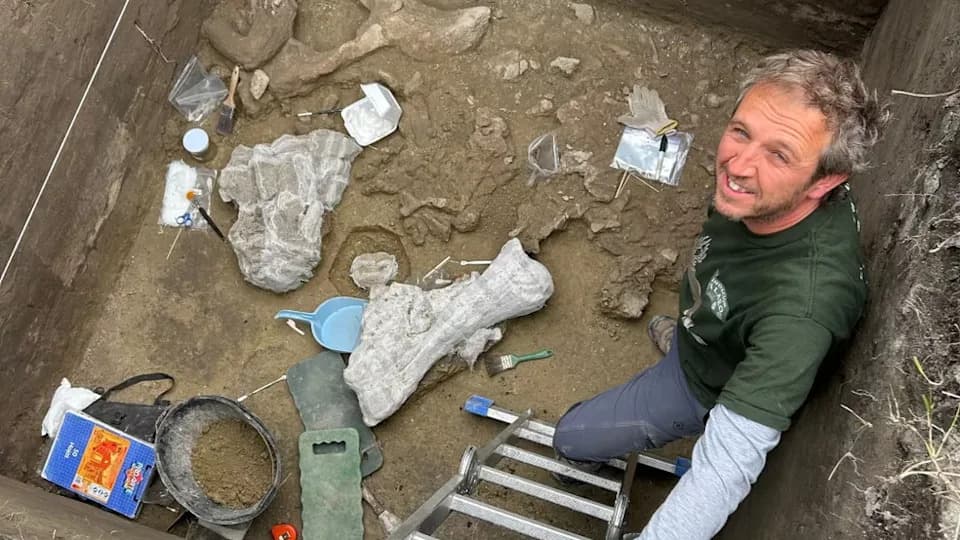
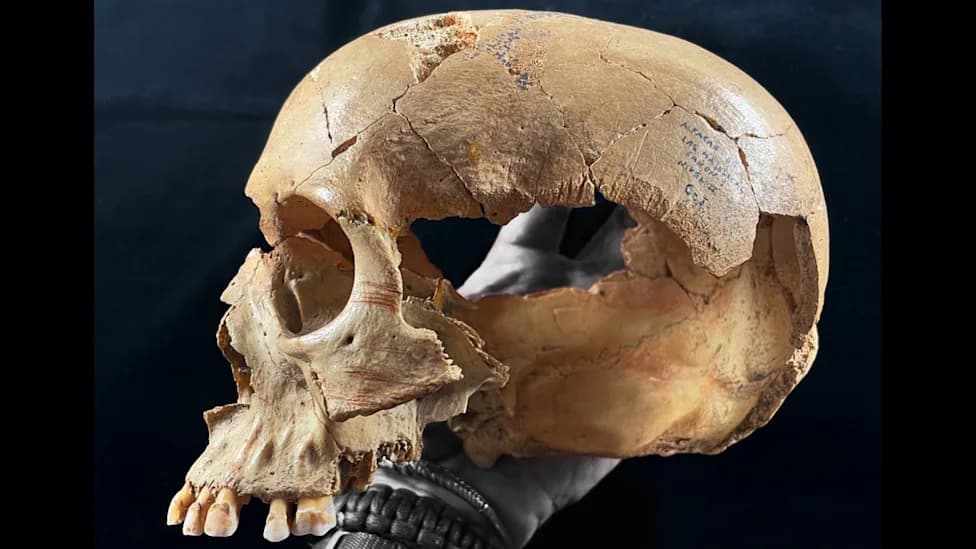
Forensic isotope data show that maggots feeding on decaying muscle can have extremely elevated δ15N values (up to 43.2‰), far exceeding typical herbivore levels. Researchers propose that regular consumption of semi-putrid, fermented, or stored animal foods — and the larvae they attract — could inflate Neanderthal δ15N signatures previously interpreted as proof of hypercarnivory. The findings emphasize cultural food processing as a factor in isotope studies and call for experimental work to quantify the dietary effect.
Neanderthals' High Nitrogen Signature May Reflect Fermented Meat — And Maggots
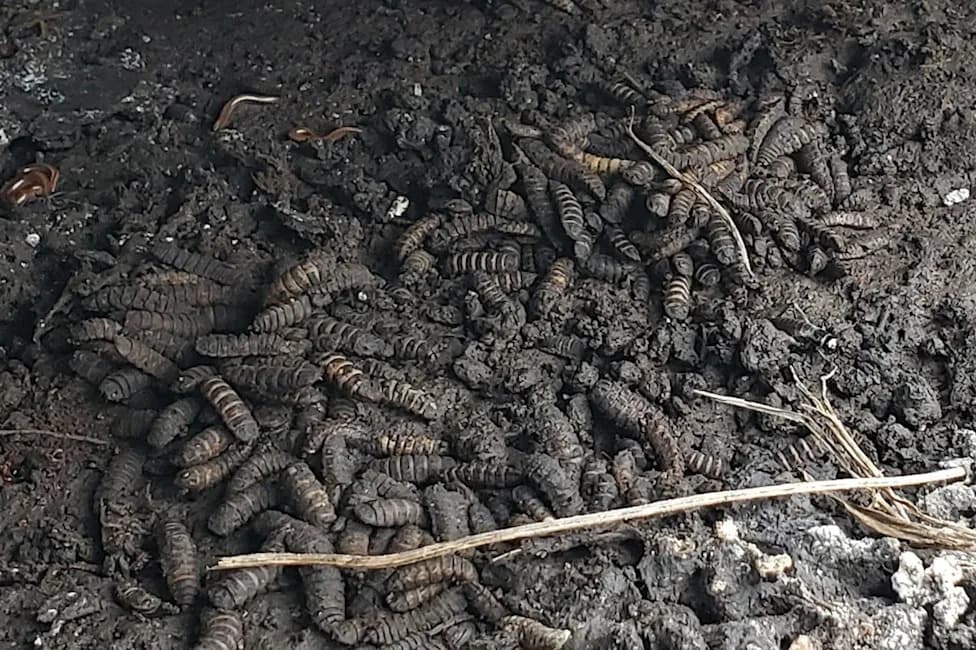
Black soldier fly maggots can feed on decomposing animals. Melanie M. Beasley
New forensic isotope data suggest a surprising contributor to the unusually high nitrogen-15 (δ15N) values found in Neanderthal bones: maggots and semi-putrid or fermented animal foods. Rather than proving Neanderthals were obligate top carnivores, the isotope signals may partly reflect cultural food practices — storing, fermenting, and consuming fatty or decomposing tissues and the larvae they attracted.
How Isotopes Help Reconstruct Diets
Stable isotope analysis compares ratios of the nitrogen isotopes 15N and 14N (reported as δ15N, in ‰ or permil) to infer trophic level. Plants have low δ15N values, herbivores higher values, and typical carnivores highest of all. Late Pleistocene human remains (roughly 129,000–11,700 years ago) often show high δ15N values similar to apex predators, which has long been interpreted as heavy meat consumption.
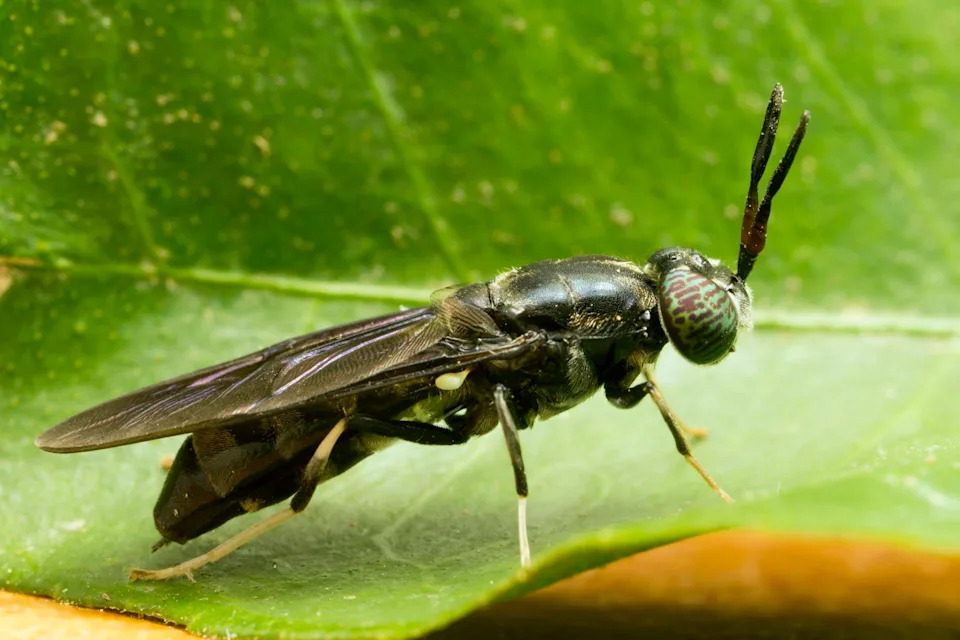
A black soldier fly adult. The larvae of this fly are one of the species of maggots studied.GordZam/iStock via Getty Images Plus
Fermentation, Decomposition And Fly Larvae
My colleagues and I (research published in 2025) investigated an alternative explanation using a forensic decomposition dataset from the Forensic Anthropology Center at the University of Tennessee, Knoxville. We measured δ15N changes in modern muscle tissues as they decomposed and in fly larvae (maggots) that fed on that tissue.
We found that decomposing muscle tissue showed modest δ15N increases (about -0.6‰ to 7.7‰). In contrast, larvae feeding on that tissue exhibited much larger δ15N enrichment, ranging from ~5.4‰ up to 43.2‰. For context, estimated δ15N values for many Pleistocene herbivores fall between ~0.9‰ and 11.2‰.
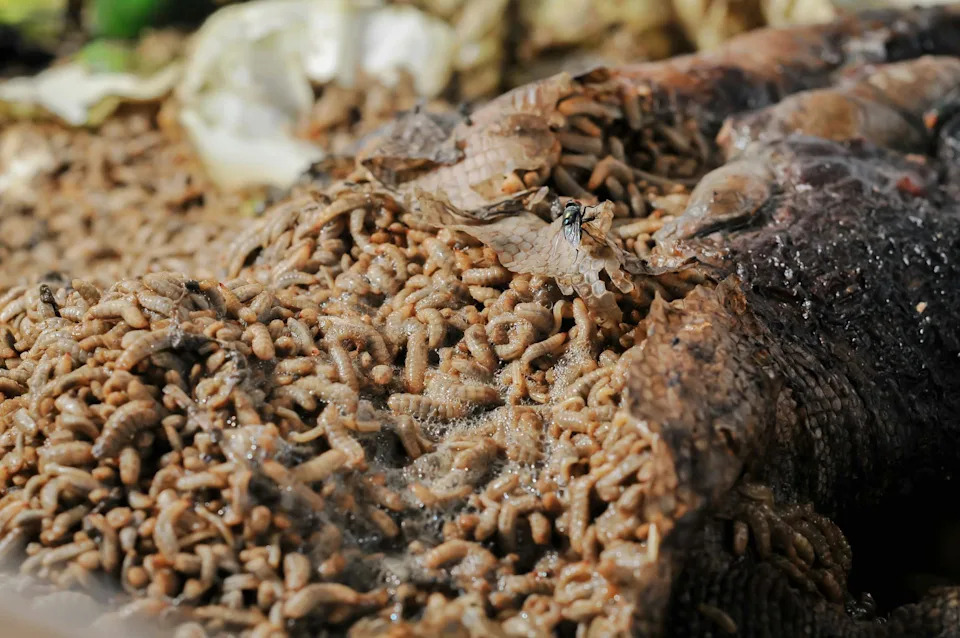
Maggots feeding on and decomposing an animal carcass.Hari Sucahyo/iStock via Getty Images Plus
Ethnographic Context And Dietary Practices
Ethnographic records — particularly from Arctic and circumpolar Indigenous foragers — document deliberate fermentation and even intentional use of putrid, maggot-rich foods as valued items rather than mere survival rations. Such practices concentrate fat, preserve meat, and change isotope values. In 2017 John Speth proposed that consuming putrid or fermented meat could help explain elevated hominin δ15N values; our data show how maggots and decomposed tissues could amplify that effect.
Implications For Interpreting Neanderthal Diets
These findings imply that high δ15N signatures in some Neanderthal and early Homo sapiens remains might reflect not only large amounts of fresh meat but also regular consumption of fatty, fermented, or semi-putrid foods and their associated larvae. Fly larvae are a fat-rich, nutrient-dense, and ubiquitous resource that hominins could have exploited easily.
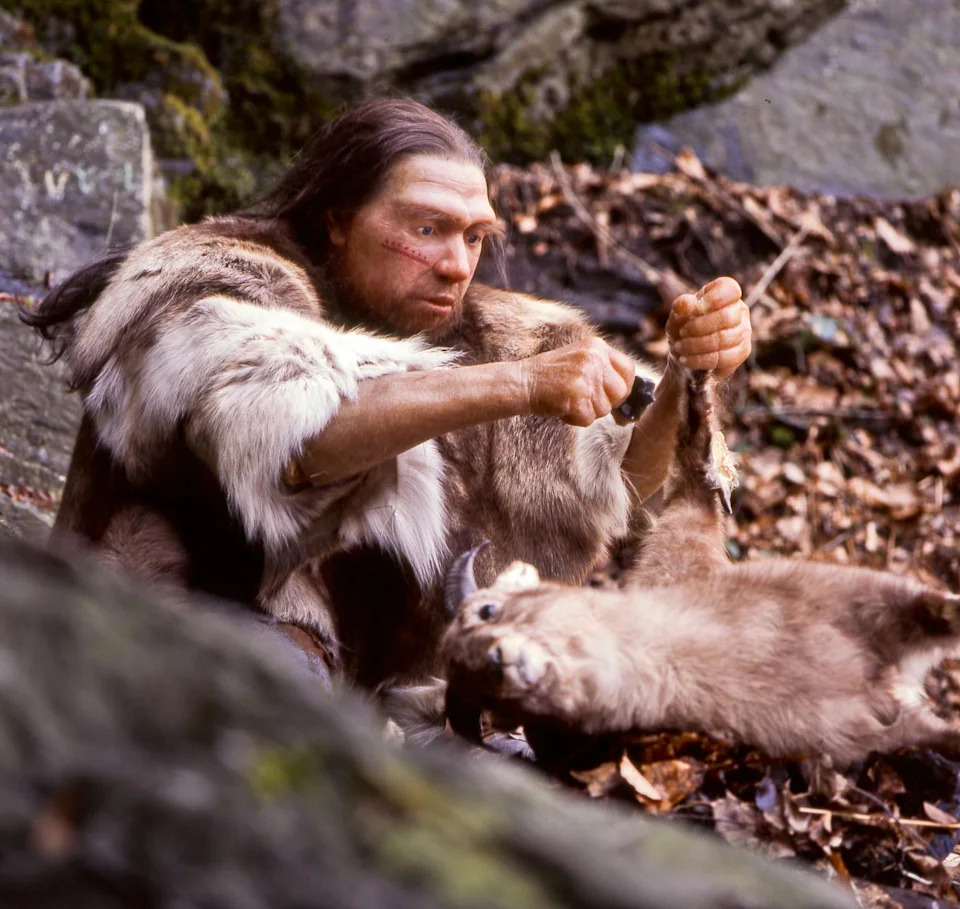
Reconstruction of a Neanderthal man butchering a goat at the Neanderthal Museum in Mettman, Germany.Pressebilder Neanderthal Museum, Mettmann/Wikimedia Commons,CC BY-SA
Remaining Questions And Future Work
We cannot yet quantify how much maggot consumption would be required to shift bone collagen δ15N to the levels observed in Pleistocene hominins. Important next steps include controlled experiments that track δ15N changes during traditional processing, storage, fermentation, and cooking practices and modeling how seasonal or life-long diets translate into bone collagen values.
Funding and Acknowledgments: This research was funded by the Haslam Foundation. Modern tissue and larvae samples were collected at the Forensic Anthropology Center, University of Tennessee, Knoxville. The study was led by Melanie Beasley (Purdue University) and builds on ideas proposed by John Speth.
Help us improve.