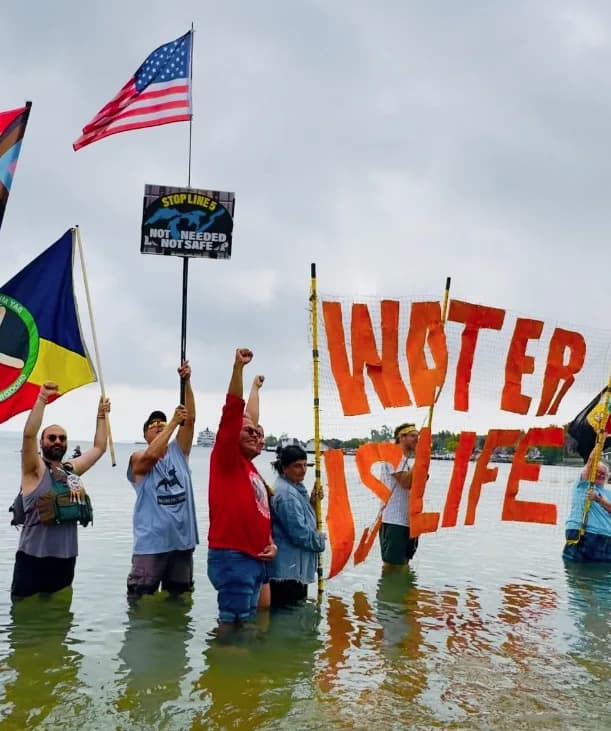
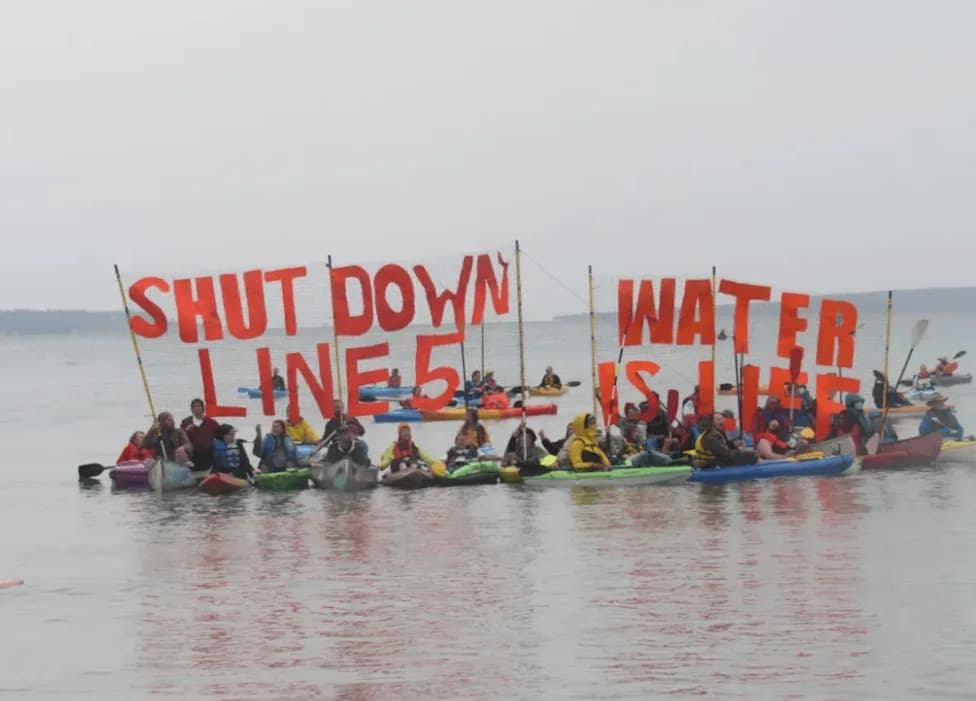
The Army Corps of Engineers’ decision on Enbridge’s Line 5 tunnel beneath the Straits of Mackinac is being viewed by Tribal Nations as a test of the United States’ treaty promises and the federal trust responsibility. Hundreds of archaeological sites and deep cultural ties to the Great Lakes demonstrate the project’s stakes. Tribal leaders warn that fragmented technical reviews fail to assess cumulative, treaty-related harms and argue the Corps may need to deny permits to protect treaty rights and public trust.
Line 5 and a Nation’s Promise: How the Army Corps’ Permit Decision Tests Treaty Rights
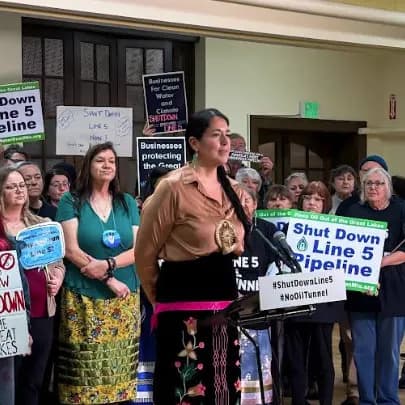
Bay Mills Indian Community Whitney Gravelle speaks against Enbridge's Line 5. (Photo/Courtesy)
The U.S. Army Corps of Engineers’ imminent decision on Enbridge’s proposed Line 5 tunnel beneath the Straits of Mackinac is being framed by many as a routine permitting matter. For Tribal Nations, however, the choice before the Corps is far larger: it is a test of whether the United States will honor treaty promises and the federal trust responsibility that protects treaty rights and the natural resources that sustain them.
What Is at Stake
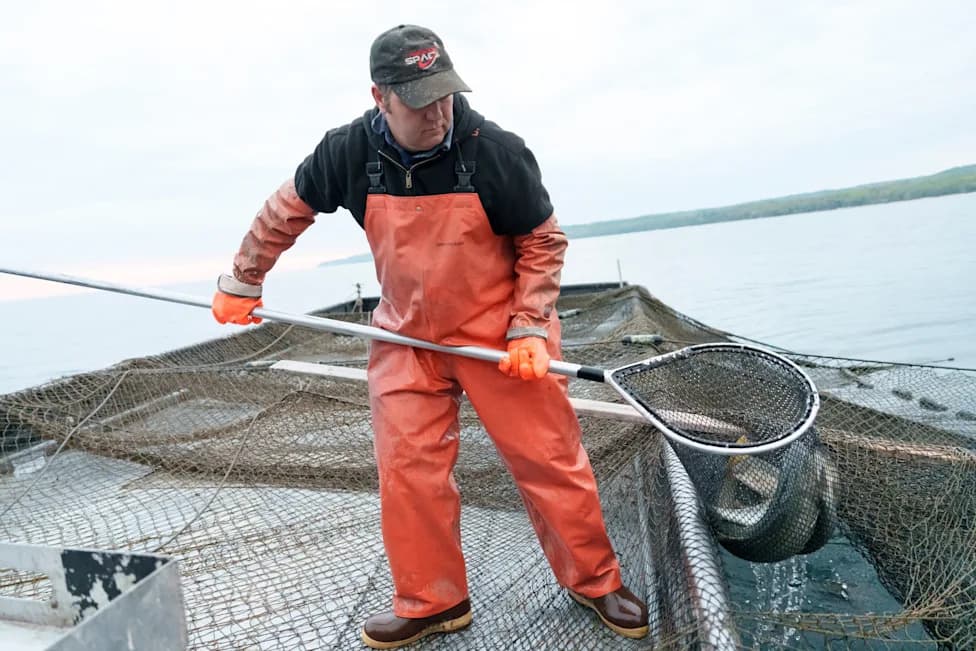
Treaties like the 1836 Treaty of Washington preserved the "usual privileges of occupancy"—the rights of Anishinaabe and other Indigenous peoples to fish, hunt, gather, and maintain relationships with land and water. For Tribal communities, those rights are lived practices tied to culture, language, ceremony, and family. A permit that threatens the Great Lakes and shoreline cultural sites therefore threatens those rights in a substantive, not merely symbolic, way.
Federal Trust Responsibility: More Than Consultation
The federal trust responsibility is a legal, moral, and constitutional obligation. It requires meaningful protection of treaty-reserved rights—not box-checking consultations followed by approvals that allow the very harms treaties were designed to prevent. A treaty right to fish is hollow if waters are left permanently vulnerable to spills. A right to gather is meaningless if construction obliterates places of medicine and ceremony.
Fragmented Reviews, Cumulative Harms
Throughout the review process, government agencies have often evaluated separate technical issues—wetlands, water quality, archaeological resources, endangered species—without accounting for how those impacts add up for the same communities. Tribal Nations warned the Army Corps, the State of Michigan, and Enbridge about ancestral villages and burial sites along both shores; oral histories identified places that maps omitted. Those warnings have been borne out: hundreds of archaeological sites have now been documented.
"For us these finds are not just archaeological; they are our grandparents, our stories, and proof that we have always belonged here."
A Moment To Change Course
The Army Corps has a choice: continue a long pattern of acknowledging treaty rights while approving projects anyway, or give the trust responsibility its substance by protecting treaty-reserved ways of life—sometimes by denying permits. The Corps’ decision will speak to whether treaty commitments remain meaningful when inconvenient and will either build or erode public trust.
Conclusion
This is not only a Tribal issue. The Straits of Mackinac are among the world's greatest freshwater resources; their protection is a public interest shared across communities. The Corps can answer whether the United States keeps its word, not just in law but in action. The choice will reverberate for Tribal Nations and for every American who believes national promises matter.
Whitney Gravelle is president of the Bay Mills Indian Community.
Help us improve.