Researchers at the University of Vermont have identified a contagious, clonal melanoma affecting brown bullhead catfish in Lake Memphremagog. First observed in 2012 and rising to roughly 25–40% prevalence in some surveys, the disease appears to have saturated the 30-mile binational lake within five years and has been detected across parts of northeastern North America. Genomic analyses show the tumor cells are transmitted directly from fish to fish (not via a virus or bacterium), making this the fourth documented transmissible cancer and the first in a freshwater fish.
Scientists Identify Fourth Transmissible Cancer — Contagious Melanoma Found in Freshwater Bullhead Catfish
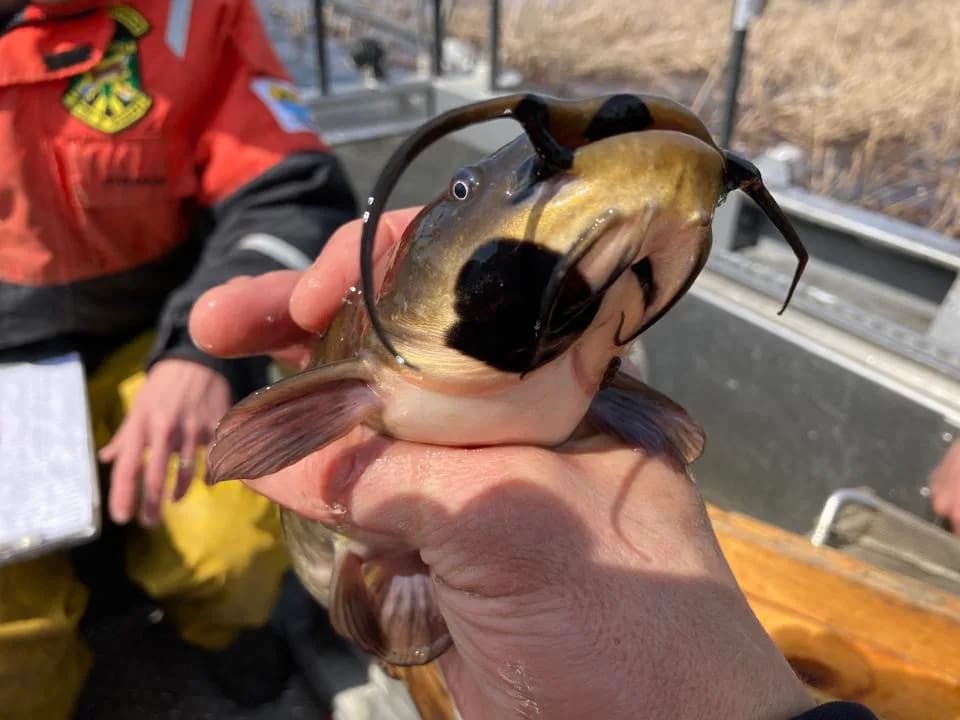
A bullhead catfish with melanoma from Lake Memphremagog, Vermont.Vermont Fish & Wildlife
In 2012 an angler pulled a brown bullhead from Lake Memphremagog, Vermont, bearing large black lesions that looked like tar smeared across its skin. The fish was brought to Peter Emerson, a Vermont Fish and Wildlife biologist who had surveyed the lake since 2009 and had never seen anything like it.
Within three years the striking black growths appeared on roughly 25–40% of the lake's bullhead population. This week, researchers at the University of Vermont reported in Nature that the lesions are an infectious melanoma: living cancer cells that spread directly from fish to fish.
What the Researchers Found
Extensive environmental testing following Tropical Storm Irene (2011) and years of sequencing turned up no chemical culprit, virus, or microbial pathogen. Instead, genomic analysis revealed the tumors share hundreds of thousands of identical mutations across different fish—evidence that the cancer is clonal and transmissible as intact cancer cells rather than driven by an external infectious agent.
"It's a clonal cancer," said Julie Dragon, associate professor of microbiology and molecular genetics and director of the University of Vermont bioinformatics core. "It's not driven by a bacteria or a virus. It's the infectious agent itself, and it's moving from fish to fish."
Distribution and Spread
By 2017 the team had re-surveyed multiple sites in Vermont and Quebec and found similar prevalence at each location, suggesting the disease had saturated the 30-mile binational Lake Memphremagog within five years. Comparative genomics indicate the cancer’s origin was likely outside Memphremagog: tumor genomes are genetically closer to healthy bullhead from New Hampshire and Maine than to the fish in which the tumors currently grow.
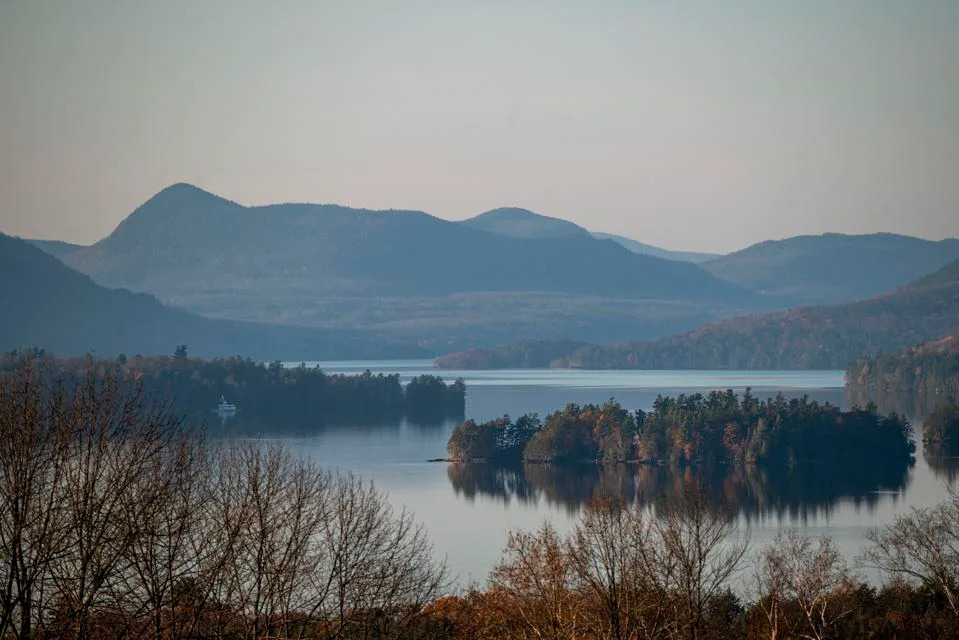
NEWPORT, VERMONT: The sun sets on Lake Memphremagog, which stands the United States and Canadian borders on November 8, 2021. (Photo by Josh Kuckens for The Washington Post via Getty Images)
The disease is not confined to a single lake. Reports and genetic confirmations now cover much of northeastern North America—including parts of New England and the Canadian Maritime provinces—and sporadic findings elsewhere. However, the cancer remains patchy: many lakes with bullhead show no signs of the disease, suggesting that arrival and dispersal, rather than host suitability, limit its presence.
Ecological Context and Risks
Ecologists describe this pattern as broad geographic range combined with narrow local occurrence and occasional high local prevalence. Such a pattern points to dispersal—often human-mediated movement between waters—as the primary limiting factor, similar to invasive species dynamics.
The impact on individual fish can be severe—tumors appear on the body, inside the mouth and on the barbels (the whisker-like sensors bullhead use to find food), sometimes shortening them and altering feeding. Yet Memphremagog remains productive and bullhead remain plentiful in many places, and prevalence in the lake has stabilized, which raises the possibility the disease may settle into an endemic equilibrium rather than causing catastrophic collapse.
How Common Are Transmissible Cancers?
This melanoma is only the fourth transmissible cancer documented by scientists and the first in a freshwater fish. Experts caution that such events may be more common than the record implies—finding them requires paired genomic analysis of tumors and hosts, which is rarely performed at scale in wildlife.
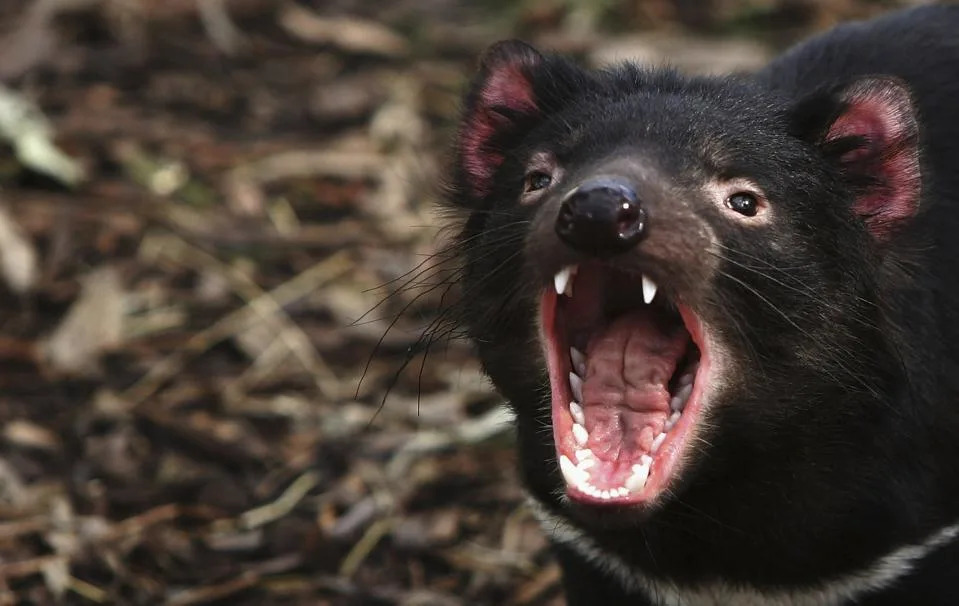
HOBART, TAS - AUGUST 31: A Tasmanian Devil bears it's teeth at a quarantine facility August 31, 2005 in Hobart, Australia. The Devil, a native marsupial unique to Tasmania, is under threat from Devil Facial Tumor Disease (DFTD) which is decimating numbers throughout Tasmania. Several devils are being monitored under quarantine situations on the mainland, while another group have been moved to Maria Island, to form an "insurance population" should the disease spread. (Photo by Ian Waldie/Getty Images)
Examples of differing outcomes include devil facial tumor disease (DFTD) in Tasmanian devils, which has driven steep declines in that species, and transmissible leukemias in bivalves, which have spread without causing host collapse. The future trajectory for bullhead remains uncertain.
Surveillance and Management
Dragon's team leverages crowd-sourced photos from anglers on the Fishbrain app to locate tumored bullhead, turning an angler network into a large-scale surveillance tool. Such citizen-science approaches are increasingly valuable for detecting wildlife disease outbreaks and range shifts that would otherwise go unnoticed.
Management options are unresolved. Existing rules that prohibit moving bait and water out of Lake Memphremagog were enacted to limit invasive species and predate this cancer’s discovery; some biologists suggest these rules should be revisited. Experts differ on intervention: in some wildlife diseases, managers are advised to do nothing and allow natural dynamics to play out, while in others targeted measures are warranted.
Bottom line: Genomic evidence shows a contagious, clonal melanoma is affecting brown bullhead catfish in Lake Memphremagog and across parts of northeastern North America. The disease raises new questions about the frequency of transmissible cancers in wildlife, the mechanisms of spread between water bodies, and how (or whether) managers should respond.
Help us improve.