Bryan Johnson, 48, announced an autoimmune gastritis diagnosis and later posted that he had "cloned" himself, claiming a newborn clone exists in a Petri dish. Scientists say the procedure he described fits induced pluripotent stem cell (iPSC) reprogramming with Yamanaka factors, which can reset cells but does not create embryos or newborns. The claim drew mixed reactions online and renewed ethical questions about using human-derived tissues for organ growth or experimental therapies. No independent verification of a viable clone has been published.
Bryan Johnson Claims He "Cloned" Himself — Scientists Say It's iPSC Reprogramming, Not A Newborn
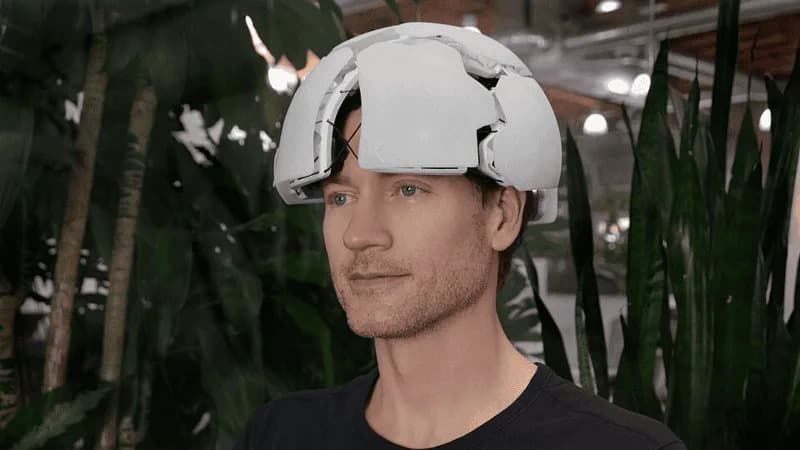
Bryan Johnson, pictured here during his earlier brain-interface experiments with Kernel | ©Image Credit: Wikimedia Commons / Katriece Ray
Tech entrepreneur Bryan Johnson, 48, revealed he was diagnosed with autoimmune gastritis and later posted that he had "cloned" himself, claiming a newborn "baby Bryan" currently resides in a Petri dish. The National Institutes of Health (NIH) warns that autoimmune gastritis can cause severe iron and vitamin B12 deficiencies and may lead to anemia.
Johnson said the diagnosis prompted an ambitious experimental shift. On X (formerly Twitter) he wrote:
"I just cloned myself … as a newborn. With this clone, I can become my own blood boy, test therapies on the clone, grow organs for transplantation, develop new treatments and inject young cells."
However, the laboratory steps Johnson described—drawing blood, extracting cells, exposing them to Yamanaka factors and returning them to an embryonic-like state—are consistent with induced pluripotent stem cell (iPSC) research rather than reproductive cloning. In iPSC work, scientists reprogram adult skin or blood cells to a pluripotent state so they can, in the lab, differentiate into many cell types. That reprogramming does not create an embryo and cannot develop into a newborn.
What the Science Actually Shows: Yamanaka factors reset a cell's gene-expression program to produce pluripotent cells capable of self-renewal and differentiation. While iPSC technology is powerful for modeling disease and exploring regenerative therapies, it does not equate to producing a viable embryo or a born human.
Public Reaction and Ethics: Johnson's posts produced mixed reactions online—some found the claims unsettling or attention-seeking, while others pointed out that unconventional approaches have at times yielded breakthroughs. Scientists and bioethicists stress that attempts to grow organs, test therapies on human-derived tissues, or pursue reproductive applications raise complex ethical, regulatory and safety questions that require oversight and peer-reviewed validation.
Johnson framed the diagnosis as an opportunity, calling it "one of the best things that has happened to me in a long time" because it opened new paths to "repair and strengthen the body." As of now, no independent, peer-reviewed evidence has been published to verify the existence of a viable cloned newborn, and experts emphasize the distinction between iPSC reprogramming and reproductive cloning.
Sources: Posts on X (formerly Twitter), National Institutes of Health, UCLA, NewsNation, and literature on iPSC/Yamanaka-factor research.
Help us improve.