Cambridge scholar Sarah Dillon has transcribed and analysed a six-page handwritten draft by Alan Turing commonly called Pryce's Buoy. Likely written in late 1952 or early 1953, the unfinished story depicts a tentative sexual encounter between a working-class man and a scientist who appears to stand in for Turing. The manuscript ends abruptly on the sixth page with the words 'Ron wouldn't,' and Dillon identifies a clear influence from Angus Wilson's novel Hemlock and After. The fragment offers a fresh, more playful and sexually candid perspective on Turing's late-life creativity.
Rediscovered Alan Turing Short Story Reveals Playful, Sexual Side of the Computing Pioneer
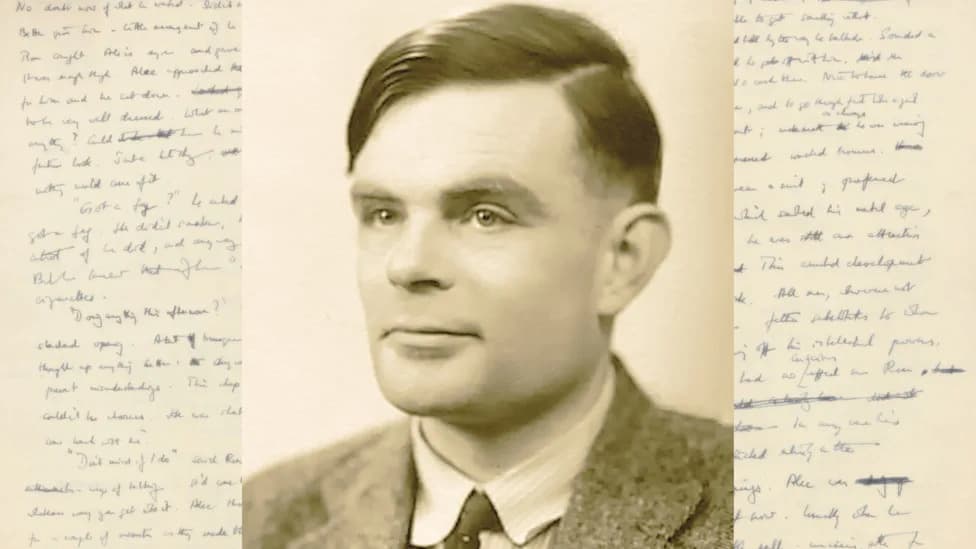
'Pryce's Buoy' is a six-page draft clearly based on Turing's own experiences.
New archival work by Cambridge scholar Sarah Dillon sheds light on a lesser-known side of Alan Turing: a playful, sexually aware literary voice that complicates the familiar image of him as an isolated logician. Dillon has transcribed and analysed a six-page, handwritten, unfinished draft by Turing—often referred to as Pryce's Buoy—and published her findings in The Review of English Studies.
A Different Portrait of Turing
The untitled draft, likely written in late 1952 or early 1953, stages a tentative encounter between Ron Miller, a working-class man, and Alec Pryce, a scientist who appears to stand in for Turing. The narrative focuses on the small, charged gestures and the mutual hesitancy that precede an intimate encounter: furtive glances, private judgments, and the anxiety of misreading social signals.
“We've distilled a version of Turing that is a two-dimensional stereotype. He's come to be seen as socially unaware, entirely concerned with logic and numbers, and pretty isolated,” Dillon writes, arguing that the draft reveals a more playful, witty and sexually candid side of the author.
Manuscript Details and Unfinished Ending
The manuscript occupies six pages and breaks off mid-sentence on the final page with the words: Ron wouldn't. No other drafts of the story are known to exist, so the plot's resolution remains a mystery. Dillon and other scholars speculate whether the remainder was lost or deliberately removed at a later date; some have even wondered whether Turing's family might have intervened.
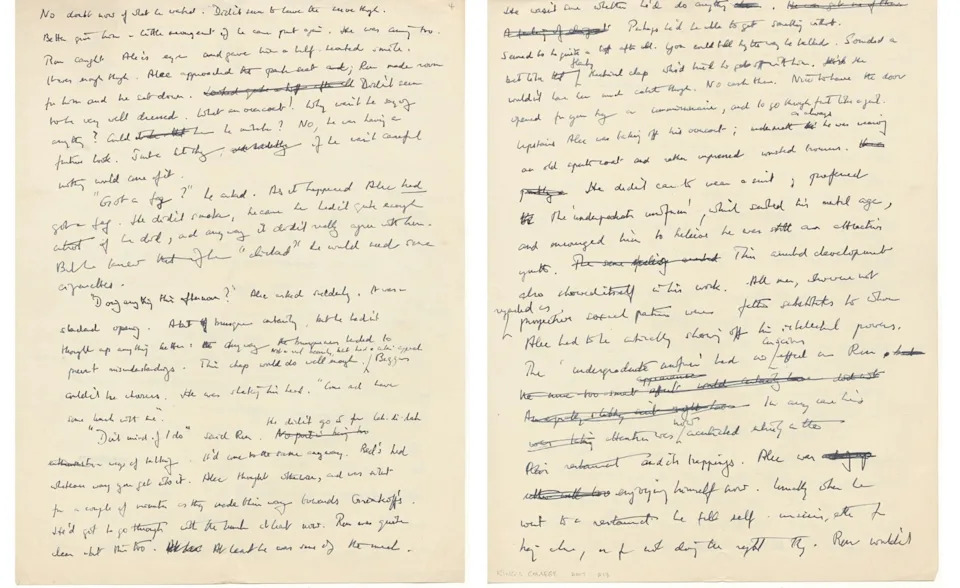
The 5th and 6th pages of Alan Turing's unfinished and unpublished short story known as 'Pryce's Buoy.' Credit:King's College, Cambridge
Literary Influences
Dillon traces a clear literary debt to Angus Wilson, whose controversial 1952 novel Hemlock and After was part of the same postwar King's College social milieu. She demonstrates that Turing borrowed structural and stylistic elements from Wilson—replicating sequence, echoing diction, and using a shifting focalization technique—while shaping them into his own voice. Dillon emphasizes that such imitation is a normal and useful step for writers experimenting with form.
Why It Matters
Though fragmentary and unpolished, Pryce's Buoy offers a rare window into Turing's private imagination and creative restlessness in the final years of his life. At 41, and living in a society that criminalised his sexuality, Turing appears to have been using literature as a space for play, desire and experimentation. The draft neither diminishes his scientific legacy nor sanitises his life; instead, it enriches our understanding of the man behind the achievements.
Image credit: King's College, Cambridge (pages from the unfinished short story often labeled 'Pryce's Buoy').
Help us improve.