Researchers from the University of Western Australia captured the first in‑situ footage of a female Arctic bobtail squid (Rossia muelleri) with multiple egg masses in Northeast Greenland National Park. The sighting, at depths greater than 164 feet in roughly 29°F (≈ −1.7°C) water, is the first direct evidence that cephalopods can reproduce in sub‑zero Arctic conditions. The discovery provides a baseline to monitor ecological change as the Arctic warms and highlights how low‑impact ROV surveys aboard expedition vessels can help fill biodiversity gaps.
Researchers Film Arctic Bobtail Squid With Eggs — First Direct Evidence of Cephalopod Reproduction in Sub‑Zero Waters
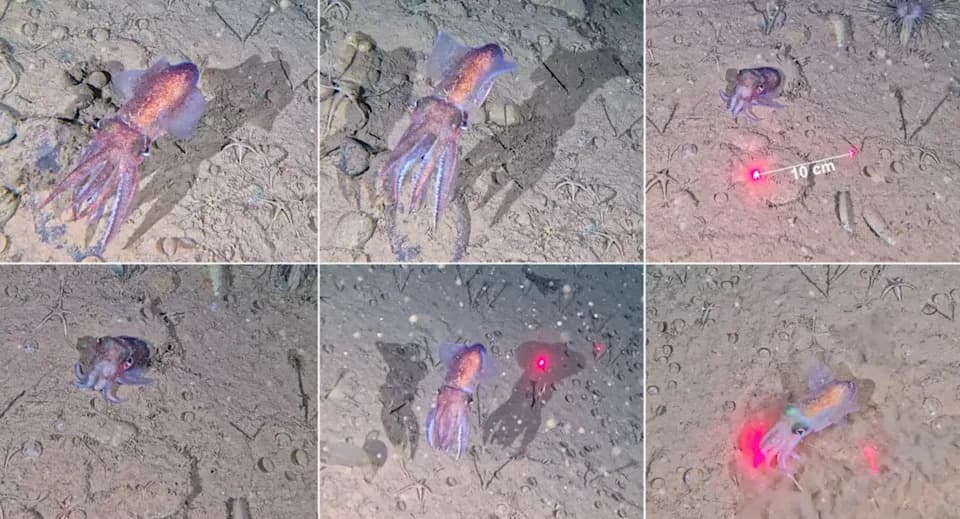
Scientists recorded a female Arctic bobtail squid alongside multiple egg masses for the first time.
Marine biologists from the University of Western Australia have recorded a female Arctic bobtail squid (Rossia muelleri) in its natural habitat alongside multiple egg masses, providing rare direct evidence that cephalopods can survive and reproduce in sub‑zero Arctic waters.
The observation was made during an expedition to Northeast Greenland National Park, one of the world’s largest but least‑studied protected areas. The team encountered the squid at a depth exceeding 164 feet (more than 50 metres) in seawater measured at about 29°F (approximately −1.7°C).
What the Footage Shows
First in‑situ evidence: High‑quality video and imagery captured a female Rossia muelleri with several nearby egg clutches, marking the first direct documentation of reproduction by a cephalopod in such cold Arctic conditions.
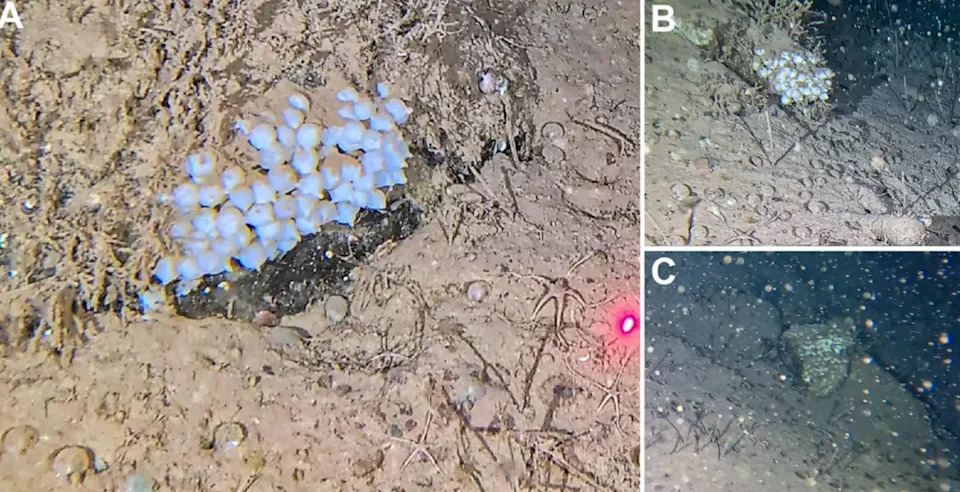
This discovery shows that the Arctic bobtail squid can survive and reproduce in one of Earth's most extreme marine environments.
How the Discovery Was Made
The researchers used a lightweight remotely operated vehicle (ROV) deployed from a Secret Atlas micro‑cruise vessel, with logistical support from the non‑profit group Yachts for Science. The team highlighted that low‑impact scientific surveys conducted alongside expedition tourism can help close major biodiversity gaps in remote polar regions.
Why It Matters
Cephalopods are important components of marine food webs as both predators and prey and are sensitive to environmental change. This discovery establishes a valuable baseline for monitoring how Arctic ecosystems respond as the region warms, and it expands our understanding of the physiological and ecological limits of squids and octopuses.
Publication: The study describing the observation was published in the journal Polar Biology.
These findings underscore both the adaptability of some marine species to extreme conditions and the value of combining responsible tourism with targeted scientific research to document life in the planet’s most remote oceans.
Help us improve.