The Zionist Home–The Reservists, led jointly by Yoaz Hendel and Chili Tropper, was launched ahead of the October 27 election and says it may join a Netanyahu-led government only if that coalition upholds core Zionist principles. The alliance prioritizes universal military conscription, a state inquiry into October 7 failures, and a security-first platform covering Lebanon, Gaza and Judea and Samaria. It opposes including non-serving haredi parties in government and seeks judicial reform by broad consensus while aiming to attract voters outside the pro‑Netanyahu camp.
Hendel and Tropper Form ‘Zionist Home–The Reservists’ — Could Join Netanyahu If Coalition Upholds Zionist Principles
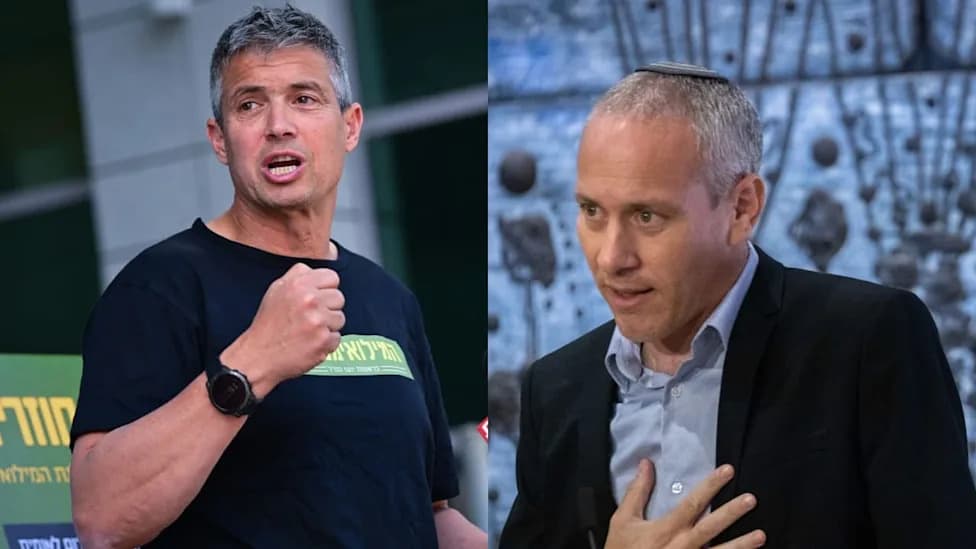
Yoaz Hendel (L), Chili Tropper. (photo credit: AVSHALOM SASSONI/FLASH90, OLIVIER FITOUSSI/FLASH90)
Former ministers Yoaz Hendel and Chili Tropper have launched a joint ticket, The Zionist Home–The Reservists, ahead of Israel's October 27 election, saying the new alliance could join a government led by Benjamin Netanyahu only if that government reflects the alliance's core Zionist principles.
Hendel, who founded the Reservists party and led it until the merger with Tropper, will share leadership of the new list. The pair have framed their movement as a vehicle for a "broad Zionist government" and repeatedly emphasized that they are not tethered to either Netanyahu's bloc or the opposition.
Ideology Over Personalities
Asked whether the alliance would work with Netanyahu, Hendel placed ideology and policy ahead of personalities. He said his reference point is the government’s agenda rather than any single politician. Hendel made clear that Netanyahu is not a personal red line; the real test is whether the government is a Zionist one that advances the alliance’s priorities.
“My point of reference is not Netanyahu. I am not looking at where Netanyahu is or what he needs to do. I need to focus on other things,” Hendel said. “If, tomorrow, there is a government of 70–80 Zionist seats and Netanyahu is part of it, of course I would join it. Netanyahu is not my red line. My red line is what kind of ideology the government represents, whether it is a Zionist government.”
Coalition Boundaries
Hendel explicitly rejected alliances that include ultra-Orthodox (haredi) parties that do not serve in the Israel Defense Forces, arguing those parties should not be part of the next government. He said a 61-seat government for Netanyahu would be untenable if it required partnering with such haredi factions because that would block conscription reform and shirk responsibility for national security.

Yoaz Hendel, head of the Reservists' Party and former minister, holds a press conference in Petah Tikva, May 10, 2026. (credit: AVSHALOM SASSONI/FLASH90)
“I do not hide the fact that I want Netanyahu to leave [office], but he is not the most important thing for me. Power is not the goal. I do not need to be prime minister,” Hendel said, underscoring that the alliance is policy-driven rather than personality-driven.
Policy Priorities
The alliance has set out a concise platform centered on national security and service obligations. Key policy aims include:
- Introducing universal conscription by passing a law requiring all eligible Israelis to serve in the IDF, with special attention to the futures of long-serving reservists;
- Establishing a state commission of inquiry into government failures surrounding the October 7, 2023 attacks;
- Maintaining a hardline security posture: preventing Hezbollah from reoccupying the high ridges in Lebanon, keeping a fixed security perimeter in and around Gaza, and securing control of the high ground in Judea and Samaria while promoting settlement;
- Opposing the creation of a Palestinian state and supporting a free-market economic approach;
- Pursuing judicial reform but doing so through cross‑political consensus rather than unilateral moves.
Organization And Outlook
Hendel said the alliance is considering, but not actively negotiating, mergers with other blocs and expressed confidence that the list can pass the electoral threshold based on available polling. He described the partnership with Tropper as a "natural fit" and suggested the list could become a home for roughly 300,000 Israelis who do not identify with a purely pro-Netanyahu camp.
New figures on the list include Shira Shapira, whose son Aner Shapira was killed in the October 7 attacks, and reservist Elyasaf Peretz, son of Israel Prize laureate Miriam Peretz. Hendel also highlighted Tropper’s capacity to build broad agreements as a key asset for advancing judicial and other reforms.
Hendel concluded by stressing that the alliance’s central mission is to secure policy outcomes that strengthen national security, ensure equitable burden-sharing in military service, and improve the domestic economy and absorption of new immigrants.
Help us improve.