President Trump has said the US-Saudi civilian nuclear pact will proceed only if Saudi Arabia recognises Israel and joins the Abraham Accords. The White House confirmed Trump has raised the condition with Saudi leaders. The US Department of Energy describes the package as a "peaceful nuclear co-operation" with safeguards; critics warn it could increase proliferation risks. The agreement will now go to Congress for review.
Trump Says US-Saudi Civil Nuclear Deal Hinges On Saudi Recognition Of Israel
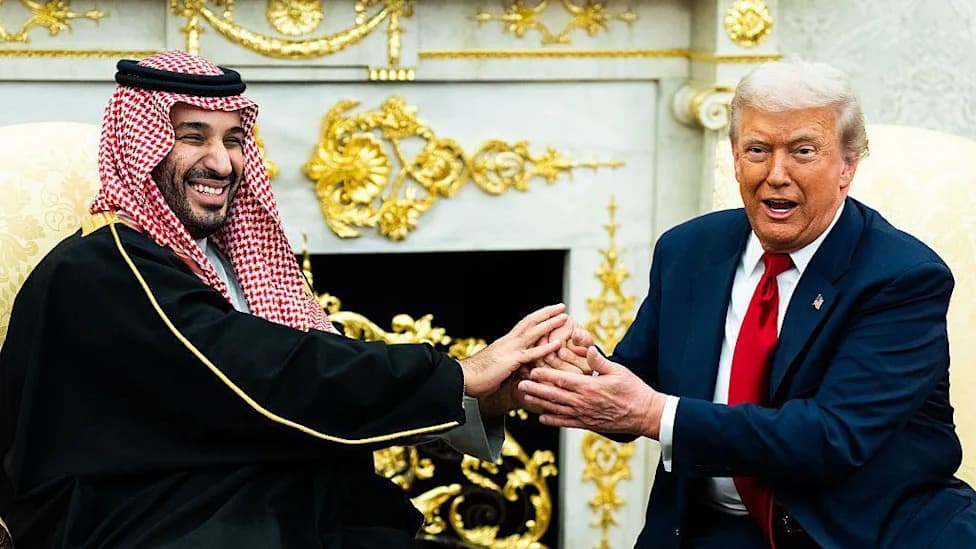
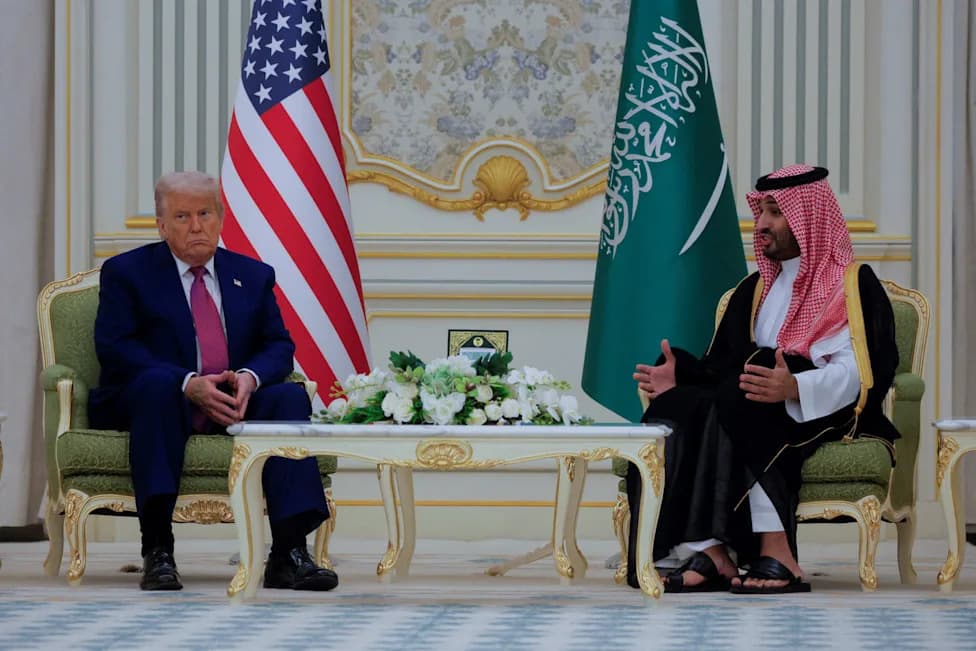
US President Donald Trump, seen with his Saudi counterpart Mohammed bin Salman, says Saudi Arabia will not be able to enrich uranium under the deal [Getty Images]
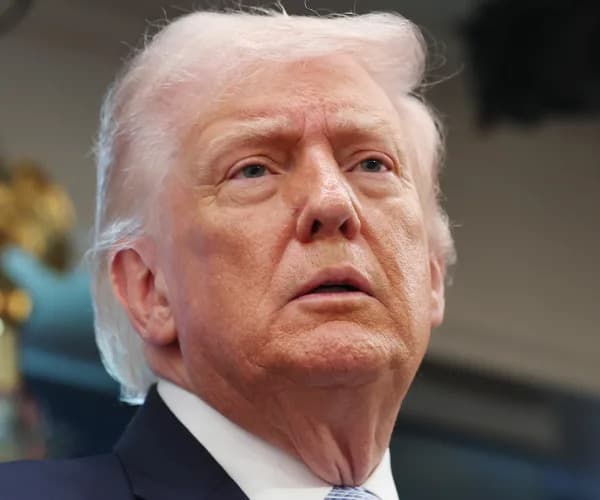
President Donald Trump has tied a proposed US-Saudi civilian nuclear cooperation agreement to a political condition: Saudi Arabia must recognise the State of Israel and join the Abraham Accords, he said on his social media platform.
Posting on Truth Social, Trump wrote: "The Civil Nuclear Deal (There will be no enrichment of material!)... which pertains only to non-military use... will be approved, but is totally subject to Saudi Arabia joining the very respected and successful Abraham Accords." It was not immediately clear whether that stipulation is written into the as-yet-unreleased agreement or whether Saudi officials have accepted the condition.
White House Response And Diplomatic Context
White House press secretary Karoline Leavitt said Trump had repeatedly raised the condition with Saudi leaders. "He has said if they don't join the Abraham Accords, the deal is off," she told reporters, adding that discussions with Riyadh would continue.
The Abraham Accords, brokered during Trump's first term, produced historic normalisations between Israel and countries including the United Arab Emirates and Bahrain; Sudan, Morocco and Kazakhstan later signed related agreements. Saudi Arabia has previously said it will not normalise relations without progress toward a Palestinian state.
What The Nuclear Agreement Covers
The US Department of Energy has described the package as consisting of a "peaceful nuclear co-operation agreement" and a "bilateral safeguards agreement." According to the department, "together, these two agreements lay the legal foundation for a decades-long, multi-billion-dollar partnership that advances several priority economic and strategic objectives, including nuclear nonproliferation."
Earlier US media reports suggested the deal might allow Saudi Arabia to pursue uranium enrichment in the future — a capability that can be used for power generation but also, if weaponised, for nuclear weapons. In his post, Trump emphatically denied enrichment would be permitted.
"There will be no enrichment of material!" — Donald J. Trump
Reactions And Proliferation Concerns
Analysts and some lawmakers from both parties warned the initiative could elevate the risk of nuclear proliferation in an already volatile region. Former Israeli defence minister Avigdor Lieberman cautioned that "every military nuclear program begins with a civilian one." Israel, widely believed to possess nuclear weapons, maintains a policy of deliberate ambiguity and neither confirms nor denies that status.
Rosemary Kelanic, director of the Middle East programme at the US-based think tank Defense Priorities, said it would be "quite shocking" if the US allowed Saudi enrichment facilities, noting the US has not previously helped another country enrich uranium on its soil because indigenous fuel production raises proliferation risks.
Next Steps
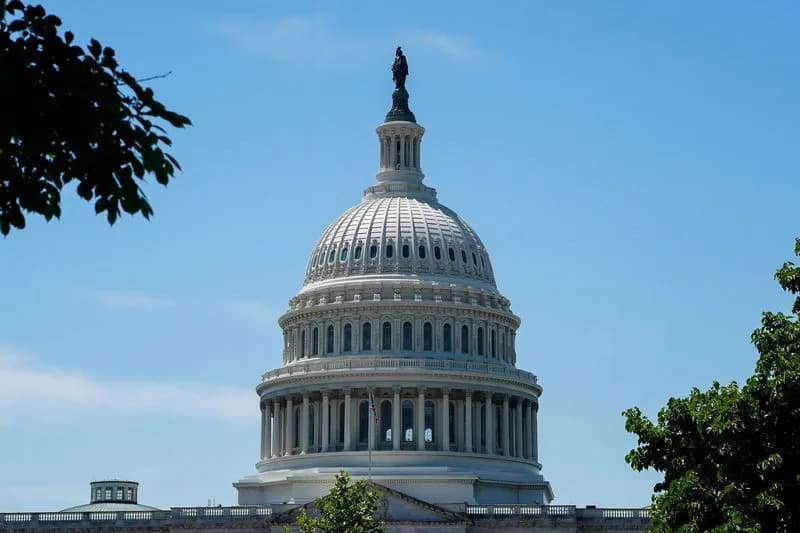
The agreement will be submitted to the US Congress for review. Some lawmakers from both parties are expected to oppose the package, though Republicans currently control both chambers and opponents do not appear to have the votes needed to block it.
Saudi officials had not publicly responded to Trump's remarks at the time of publication. Israel welcomed the president's position: Prime Minister Benjamin Netanyahu's office said Saudi accession to the Abraham Accords "would be an historic leap forward for peace in the Middle East," while Economy Minister Nir Barkat said Israel could "manage" civilian Saudi nuclear power if it remained peaceful.
Help us improve.