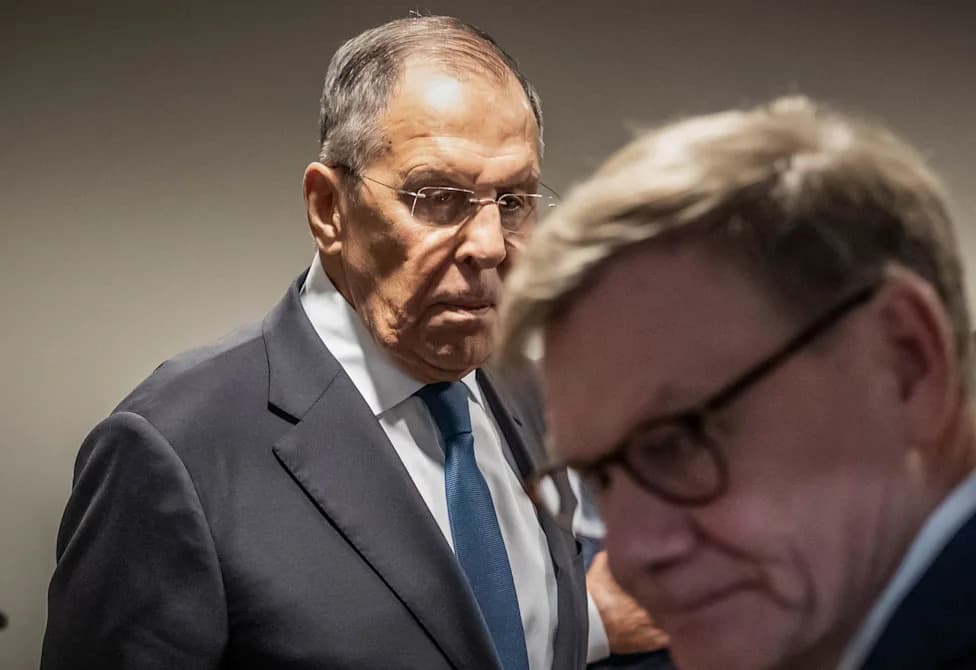
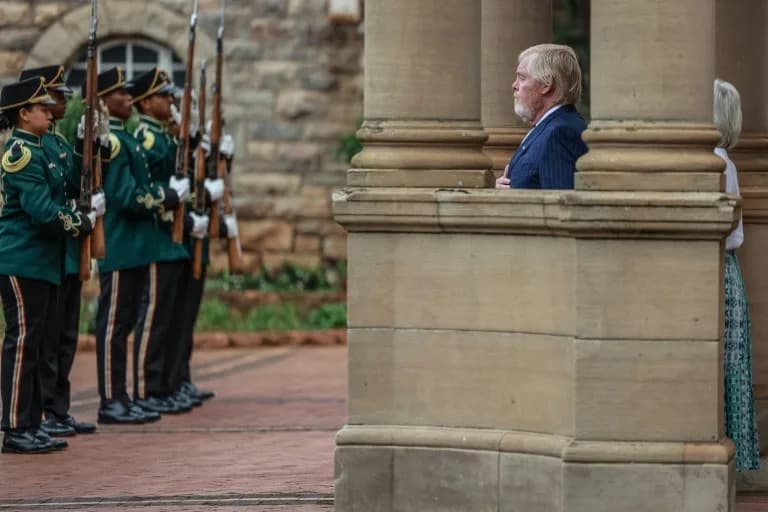
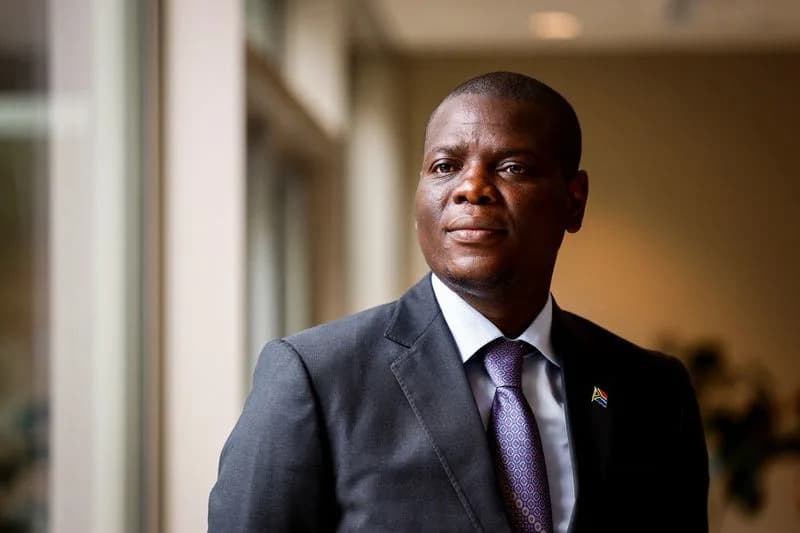
German Foreign Minister Johann Wadephul condemned the US decision to bar South Africa from the December G20, calling it a sidelining of a key African voice. Speaking in Johannesburg at the end of a four‑day Africa visit, he urged deeper cooperation amid rising economic uncertainty and called for UN reform, including permanent African seats on the Security Council. Wadephul also highlighted South Africa’s economic ties with Germany — roughly €20 billion in trade in 2025 and nearly 600 German firms operating there — and noted an EU–South Africa raw materials partnership since 2025.
Germany’s FM Warns Against Sideling South Africa, Calls For Stronger African Role
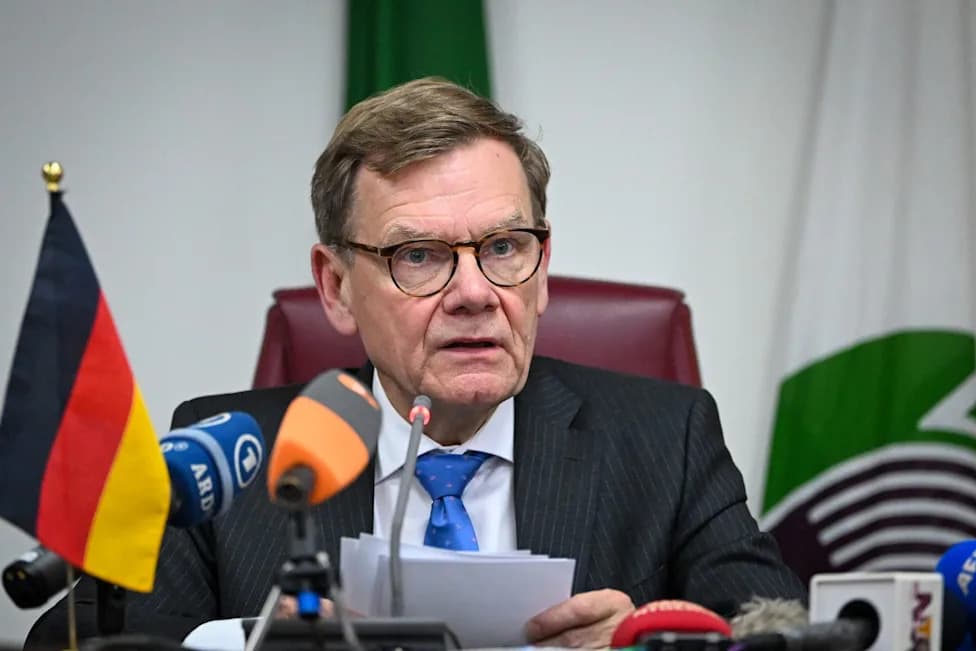
FILE PHOTO - German Foreign Minister Wadephul speaks alongside Nigeria's Minister of Foreign Affairs Bianca Odumegwu-Ojukwu (Not Pictured) with participants of the expanded roundtable discussion. (is associated with: «Wadephul backs greater African role in international diplomacy») Soeren Stache/dpa
German Foreign Minister Johann Wadephul sharply criticised US President Donald Trump’s decision to exclude South Africa from the December G20 summit in Florida, calling the move a dangerous sidelining of “an important African voice and a regional economic and political powerhouse.” Wadephul made the remarks in Johannesburg at the South African Institute of International Affairs on the final day of a four‑day tour of Africa.
During his visit he held separate meetings with President Cyril Ramaphosa and Foreign Minister Ronald Lamola. Wadephul warned that excluding South Africa from the G20 undermines global cooperation at a moment of rising economic uncertainty.
“To exclude South Africa means sidelining an important African voice and a regional economic and political powerhouse. This can be in no one’s interest. Particularly at a time of growing global economic uncertainty, we need more cooperation, not less.”
Multilateralism and UN Reform
Wadephul said multilateral institutions are under heavy strain and some require reform. He argued the United Nations “no longer reflects the realities of today’s world” and warned that many countries feel insufficiently represented. He made a direct call for permanent African representation on the UN Security Council, saying there can be no genuinely representative United Nations without it.
Economic Ties And Strategic Cooperation
Wadephul highlighted South Africa’s economic importance: it is the largest economy in sub‑Saharan Africa and, with a trade volume of around €20 billion (about $22.8 billion) in 2025, is Germany’s largest African trading partner. Nearly 600 German companies operate in South Africa, making the country a central anchor for German business on the continent. Experts also point to strong potential for cooperation on raw materials; since 2025 an EU–South Africa raw materials partnership has been in place.
Wadephul also referenced the wider political context: President Trump has publicly accused South Africa of committing genocide against white farmers — an allegation firmly rejected by experts and the South African government. The United States also boycotted the G20 summit held in Johannesburg at the end of 2025.
Outlook
Wadephul described a “crisis of multilateralism” and urged renewed international cooperation and reform to ensure global institutions better reflect present‑day geopolitical and economic realities — including a stronger, formal role for African states.
Help us improve.