Communities across Galicia are reintroducing native livestock—especially the small, mountain-adapted Cachena cow—to graze flammable undergrowth and lower wildfire risk after severe 2025 fires. Collective land managers, regional incentives and local breeding support helped native-herd numbers rise from about 1,800 in the late 1990s to over 30,000 by early 2026, including roughly 8,000 Cachena. Experts praise grazing as an effective fuel-reduction tool but urge combining it with mechanical thinning, pruning and controlled burns.
How 'Goat-Cows' and Native Herds Are Helping Galicia Fight Wildfires
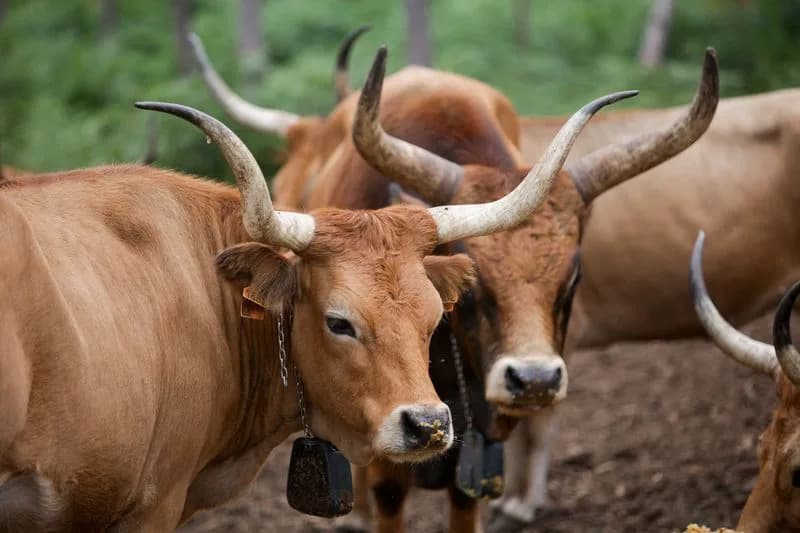
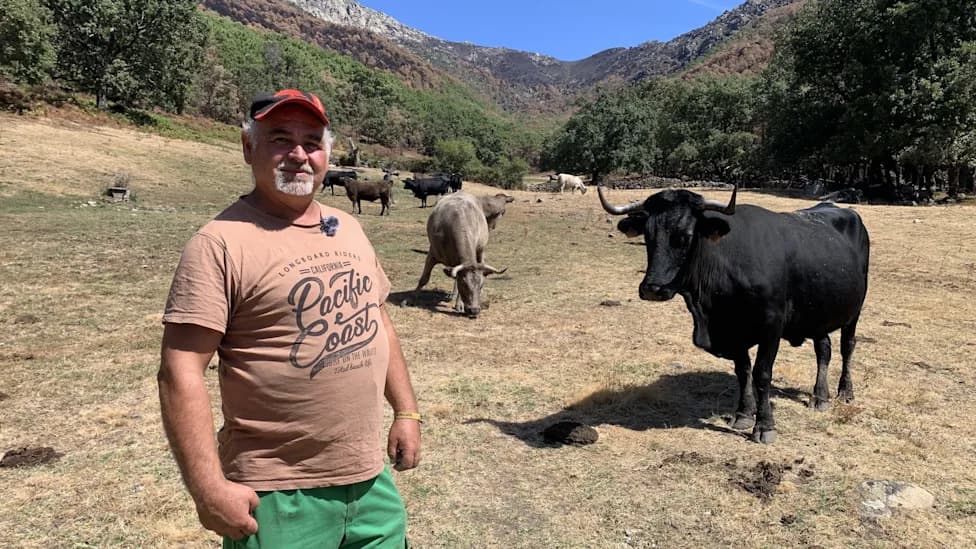
Cachena cows in the Sierra do Galineiro, as rural communities re-introduce native livestock like endemic cows and goats to rebalance ecosystems and reduce the risk of wildfires, in Gondomar, Spain, July 7, 2026. REUTERS/Miguel Vidal
Communities across Galicia are reintroducing native livestock—most notably the small, goat-like Cachena cow—to graze flammable undergrowth, restore ecosystems and reduce wildfire risk after an exceptionally severe 2025 fire season.
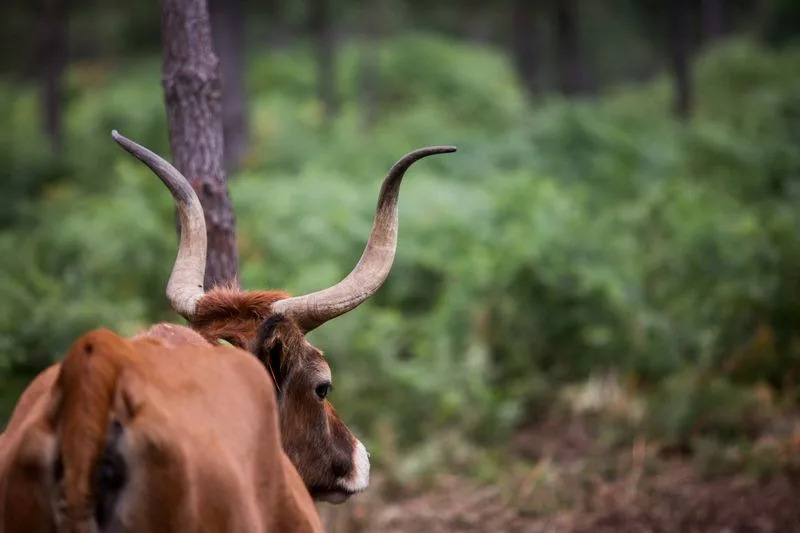
A Cachena cow in the Sierra do Galineiro, as rural communities re-introduce native livestock like endemic cows and goats to rebalance ecosystems and reduce the risk of wildfires, in Gondomar, Spain, July 7, 2026. REUTERS/Miguel Vidal
Rebuilding Landscapes With Native Breeds
Decades of large-scale planting of highly combustible pine and eucalyptus for industry displaced traditional breeds and left swathes of land untended as rural populations migrated to cities. Local associations in places such as Vincios have revived an age-old prevention practice: letting native goats, sheep and long-horned Cachena cattle graze common lands to keep scrub at safe heights.
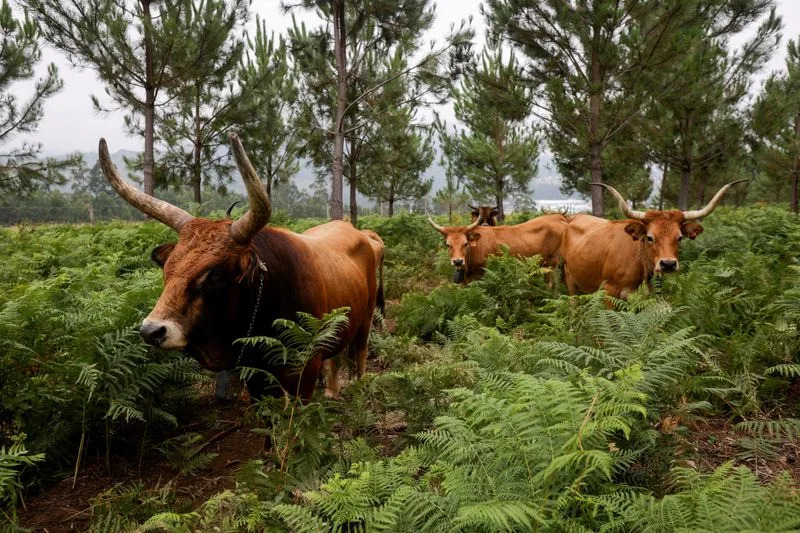
Cachena cows in the Sierra do Galineiro, as rural communities re-introduce native livestock like endemic cows and goats to rebalance ecosystems and reduce the risk of wildfires, in Gondomar, Spain, July 7, 2026. REUTERS/Miguel Vidal
Those community efforts, combined with regional incentives and support from a local zoological centre, helped native-livestock numbers climb from just over 1,800 in the late 1990s to more than 30,000 by early 2026, according to regional association BOAGA. Cachena cows have risen from roughly 400 to about 8,000.
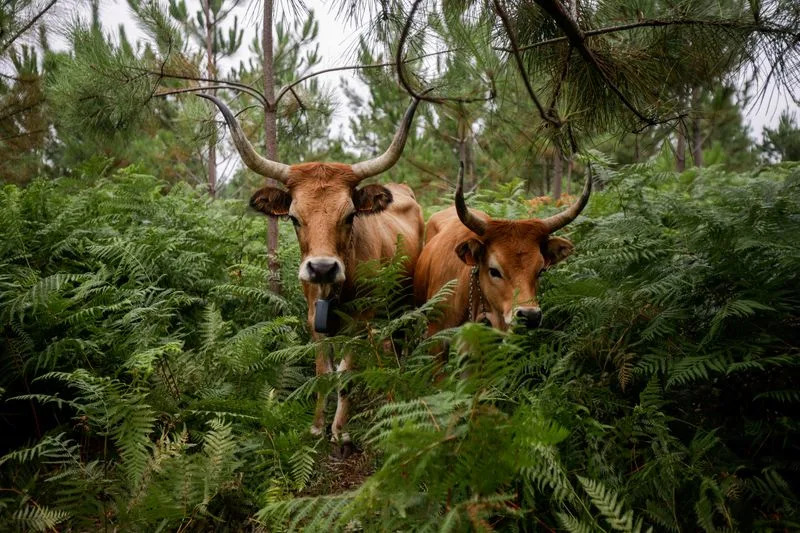
Cachena cows in the Sierra do Galineiro, as rural communities re-introduce native livestock like endemic cows and goats to rebalance ecosystems and reduce the risk of wildfires, in Gondomar, Spain, July 7, 2026. REUTERS/Miguel Vidal
Practical Benefits On The Ground
The animals reduce fuel loads by eating brambles, gorse and broom—shrubs whose oils can burn fiercely and carry flames into tree canopies—while leaving enough vegetation to maintain biodiversity. Farmers are being encouraged to keep young females rather than sell them, and bulls have been supplied at low cost to speed breeding.
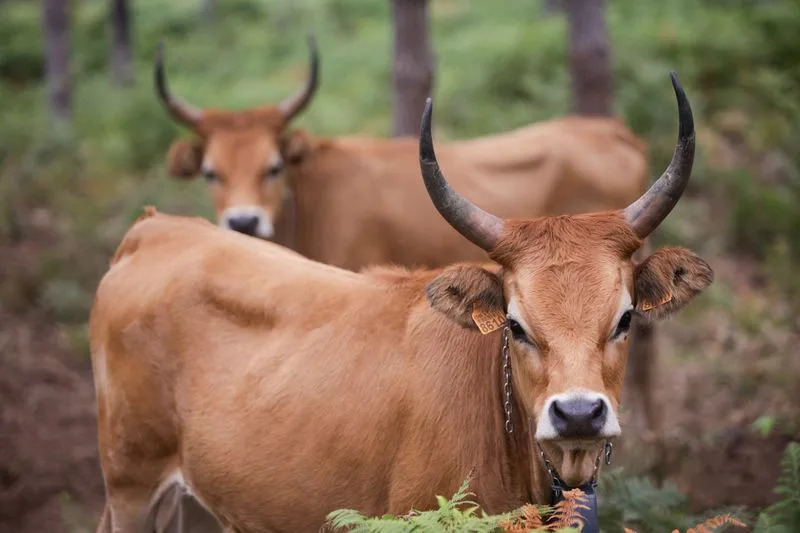
Cachena cows in the Sierra do Galineiro, as rural communities re-introduce native livestock like endemic cows and goats to rebalance ecosystems and reduce the risk of wildfires, in Gondomar, Spain, July 7, 2026. REUTERS/Miguel Vidal
"The native livestock keeps scrubland at an appropriate height so it does not become dangerous," said Jose Taboada, coordinator of the Vincios land collective.
To allow free movement across rugged terrain without fencing, many of the animals wear GPS collars. The Cachena, nicknamed "goat-cows," are particularly well adapted to the steep, mountainous ground that larger cattle struggle to navigate.
Scale, Context And Expert Advice
Vincios is one of roughly 3,000 Galician communities that collectively manage around 700,000 hectares—about a quarter of the region—under a system rooted in medieval common-land traditions and formalized in 1989. Last year nearly 119,000 hectares (about 294,000 acres)—an area roughly twice the size of Madrid—burned in the region.
Scientists link increasingly severe wildfire seasons in southern Europe to climate change. Spain, one of Europe's most forested countries, recorded average July temperatures roughly 5.6°C above 1961–1990 levels so far this month, according to the Reuters Climate Monitor.
"Grazing is backed by studies but should be combined with other measures such as mechanical thinning, pruning and controlled burns carried out by trained teams," said forestry engineer and professor Jose Vicente Oliver.
Other Spanish regions, including Andalusia, Catalonia and Castile-La Mancha, are also turning to livestock grazing as part of broader fire-prevention strategies. Local collectives stress that grazing must be economically viable for farmers—through meat or milk production—while serving long-term land stewardship goals.
Looking ahead: Grazing with native breeds offers a low-tech, nature-based layer of defence against wildfires, but experts say it is most effective when integrated with professional forest management and community planning.
Help us improve.