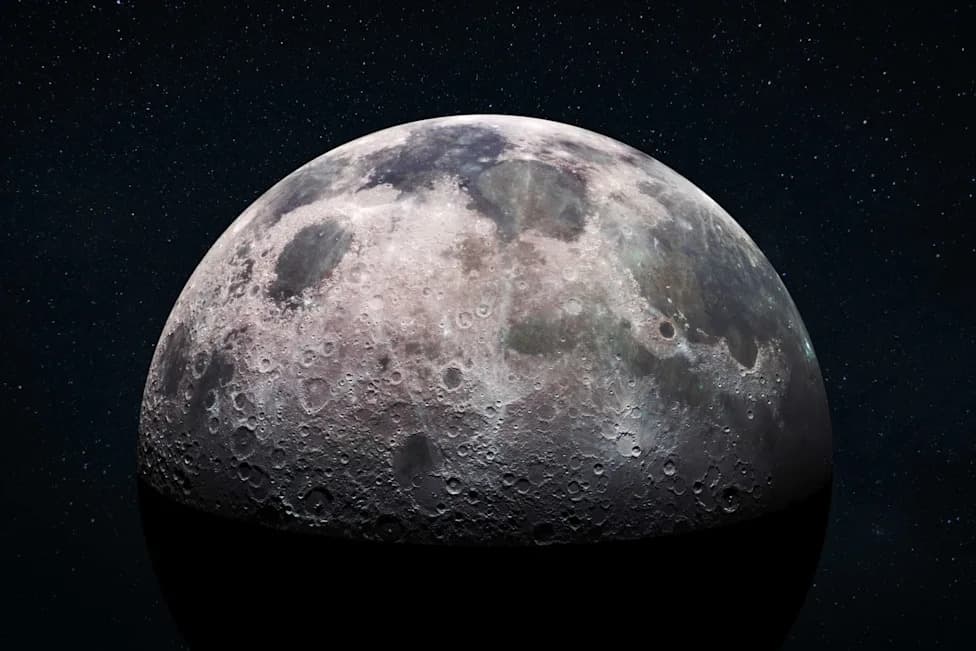
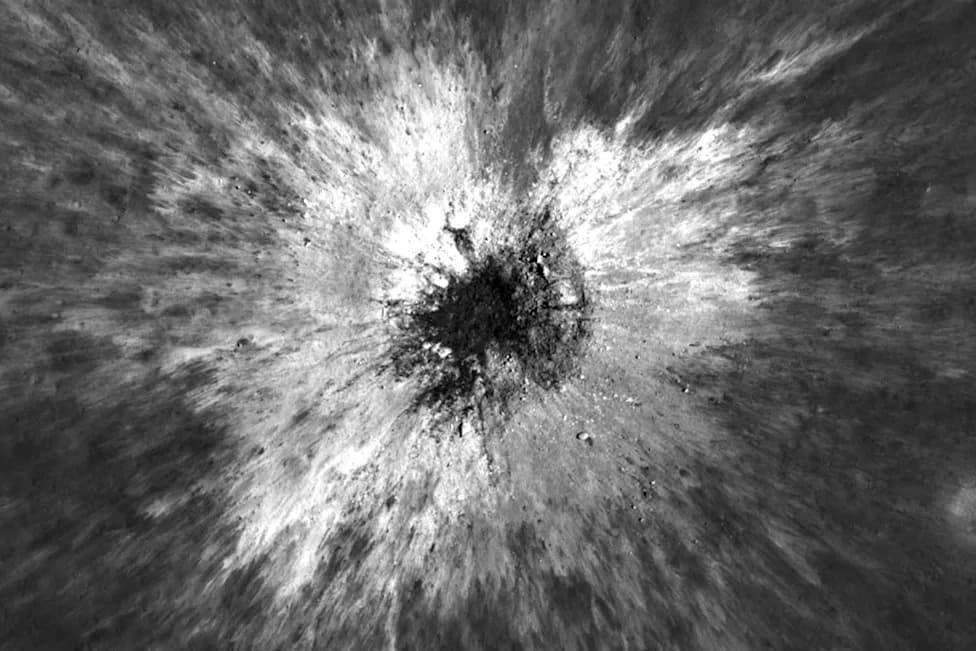
Bill Gray used Project Pluto simulations to predict that a Falcon 9 upper stage will strike the Moon near Einstein Crater on August 5 at about 2:35 AM ET. The stage—left adrift after a Jan. 15, 2025 launch carrying Firefly's Blue Ghost and ispace's Hakuto-R—measures roughly 39 ft by 13 ft and weighs about 4,000 kg. Impact speed is estimated at ~5,400 mph, but researchers say the hollow shell and lower relative speed mean a modest crater is likely. Observers in South America and much of North America may be able to see and study the resulting dust plume.
SpaceX Falcon 9 Upper Stage Expected To Strike Moon Near Einstein Crater — Visible From Earth on Aug 5
SpaceX
On August 5 at about 2:35 AM ET (≈06:35 UTC), the upper stage of a SpaceX Falcon 9 rocket is predicted to collide with the Moon near the Einstein Crater. The impact trajectory was calculated by Bill Gray, developer of the Project Pluto desktop planetarium software, after he input the rocket's orbital data into his simulation tools.
Where the Stage Came From
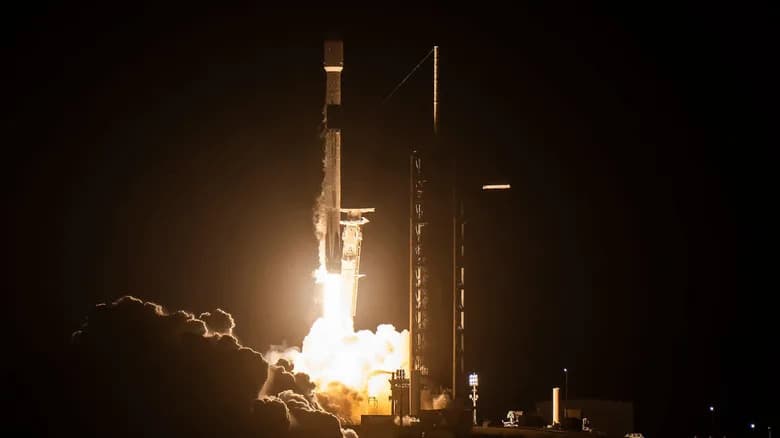
The upper stage originated from the Falcon 9 launch on January 15, 2025 that carried Firefly Aerospace’s Blue Ghost lunar lander and Japan’s ispace Hakuto-R lander. After deploying the landers, the rocket stage exhausted its fuel and was unable to deorbit, leaving it adrift in space until the predicted lunar impact.
Impact Details
The hardware expected to strike the lunar surface measures roughly 39 feet (≈12 m) long and 13 feet (≈4 m) wide, with a mass near 4,000 kg. It is forecast to impact at about 5,400 mph (≈8,700 km/h). In a paper co-authored by Gray and colleagues, researchers used a physics simulator to model the collision and concluded the event is unlikely to create a large crater because the Falcon 9 upper stage is largely a hollow shell and is moving more slowly than most natural impactors of comparable size.
Why Astronomers Care
Even if the strike is modest, the event is a valuable, real-time opportunity for astronomers to observe an artificial lunar impact. Ground-based telescopes can monitor the dust plume, ejecta behavior, and transient flash at the moment of impact. Observations will help scientists study impact dynamics on airless bodies and assess hazards from deliberate or accidental impacts by space debris.
Where To Watch
Visibility depends on local darkness and the Moon's altitude at the time of impact. Observers in South America and in low- to mid-latitude regions of North America—particularly locations away from the U.S. West Coast where the Moon will be higher in the sky—have the best chance of seeing any flash or plume with moderate-to-large telescopes. Amateur and professional observers should prepare to record the event if skies are clear.
Note: Times are approximate and predictions of orbital debris impacts can carry uncertainties. Interested observers should follow updates from tracking groups and astronomy communities as the date approaches.
Help us improve.