U.S. District Judge Ana Reyes has ordered the Pentagon to explain how Defense Secretary Pete Hegseth’s plan to screen and offer testosterone replacement therapy to troops differs, both medically and logistically, from hormone treatment for transgender men. Reyes requested details on similarities and differences and the Pentagon’s rationale for any differential treatment. Hegseth’s initiative would screen service members 30 and older annually, with younger troops able to volunteer; any treatment would be voluntary. The order arises in litigation challenging the Trump-era ban on transgender troops, which remains enforceable while appeals proceed.
Judge Seeks Pentagon Explanation Of How Hegseth’s Testosterone Program Differs From Transgender Hormone Care
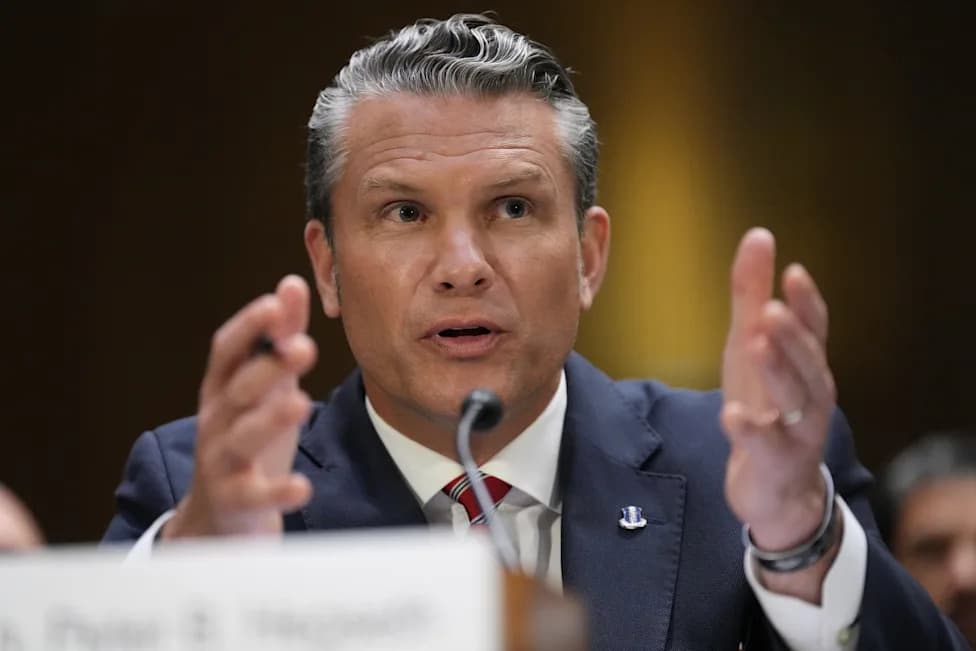
Defense Secretary Pete Hegseth testifies at a Senate Appropriations Committee hearing, Tuesday, July 21, 2026, on Capitol Hill in Washington. (AP Photo/Jacquelyn Martin)
WASHINGTON — A federal judge has ordered the Pentagon to explain how Defense Secretary Pete Hegseth’s newly announced program to screen and treat service members for low testosterone compares, in practice and policy, with hormone treatment provided to transgender men in the military.
U.S. District Judge Ana Reyes raised the question Wednesday in a lawsuit challenging the Trump-era ban on transgender troops. Reyes pointed to language in the ban that states the Armed Forces must "adhere to high mental and physical health standards ... without the benefit of routine medical treatment or special provisions." She asked the parties to clarify what that language means in light of the new screening initiative.
Court Order Seeks Medical And Logistical Details
Reyes ordered both sides to detail "the similarities and differences in administering TRT, both medically and logistically, for trans men compared to other service members, including cis individuals." She used the acronym TRT to refer to testosterone replacement therapy. The judge also requested the Pentagon’s "basis for treating trans men and other service members differently between this new policy and the Military Ban," seeking the department’s rationale for any disparate treatment.
What Hegseth Announced
Hegseth announced last week that the Defense Department will roll out annual screenings for what he described as "testosterone deficiency." Under his plan, service members aged 30 and older would be screened as part of routine medical checks; those under 30 could volunteer for testing. Hegseth said in a social media video that any testosterone replacement therapy would be voluntary.
Scientific Context And Debate
Medical research shows testosterone levels in men typically decline with age and that low levels have been associated with symptoms such as erectile dysfunction, reduced libido, mood changes and weight gain. But clinicians and researchers have long debated how to define clinically significant deficiency and when hormone replacement is appropriate. Critics say some public messaging from administration officials mixes established science with broader claims that are less well substantiated.
Legal Background
Judge Reyes, a Biden nominee, is presiding over a suit filed in late January 2025 by transgender active-duty service members and former service members seeking to reenlist following President Trump’s return to office. Reyes ruled last year against Trump’s executive order excluding transgender troops. A divided federal appeals panel later returned the case to her after partially addressing aspects of her decision; the appeals court found the ban unlawful and ruled that the plaintiffs could not be discharged.
Reyes has since granted class-action status, potentially extending any future ruling to a broader group of service members. However, the ban remains in effect for now: the U.S. Supreme Court has allowed the Pentagon to enforce it while litigation continues.
Why This Matters: The court’s request aims to determine whether a policy that expands access to testosterone treatment for certain troops is consistent with—or contradicts—the policies that limit or exclude gender-affirming care for transgender service members.
Help us improve.