The Andean leaf-eared mouse survives on icy Andean volcano summits up to 22,110 ft (6,739 m) by evolving physiological, behavioral and genetic adaptations. Researchers sampled populations from 2020–2023, ran controlled lab trials and sequenced genomes, finding traits that improve heat retention, oxygen transport and the ability to detoxify otherwise poisonous plants. Despite these local adaptations, gene flow keeps populations genetically connected across elevations, and researchers collected 167 voucher specimens for museum archives.
How Mice Thrive On Godforsaken Volcano Summits: Surviving At 22,110 ft By Eating Toxic Plants
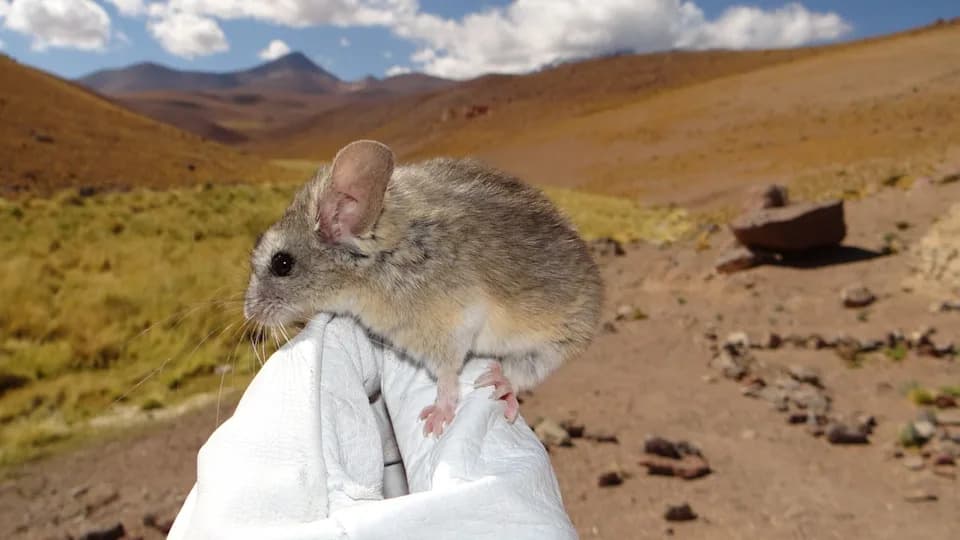
Andean leaf-eared mice have a variety of strategies to survive at high altitudes. | Credit: Marcial Quiroga-Carmona
Scientists have uncovered how Andean leaf-eared mice (Phyllotis vaccarum) survive on icy, dormant volcano summits in the Andes at elevations that are inhospitable to long-term human life. Recorded at a record 22,110 ft (6,739 m) on the summit of Llullaillaco, these mice combine physiological, behavioral and genetic strategies to cope with extreme cold, thin air and scarce vegetation.
Fieldwork And Methods
Between 2020 and 2023, a team led by Jay Storz of the University of Nebraska–Lincoln conducted mountaineering fieldwork across low, mid and very high elevations. Researchers trapped mice on remote summits, documented their behavior, and transported specimens to laboratories in Chile for controlled experiments. In small environmental chambers the team measured responses to cold and low oxygen, and they sequenced the species genome to identify altitude-related genetic changes.
Key Physiological And Genetic Adaptations
Laboratory and genomic analyses show that high-elevation mice are better at retaining body heat and maintaining efficient oxygen transport than lowland counterparts. Genomic data revealed multiple local adaptations: changes in pathways for oxygen use and thermoregulation, and alterations in digestion and detoxification genes that likely allow these mice to process plant compounds that would be toxic to other mammals. This dietary flexibility expands their food options on sparsely vegetated summits.

Storz surveyed the mice with other experienced mountain climbers. Here he is pictured with Mario Pérez Mamani and Franz Checca on the summit of Hualca Hualca in Peru. | Credit: Jay Storz
Behavior And Ecology
Field observations indicate high-altitude mice are more active during daylight hours, possibly taking advantage of slightly warmer microclimates and reduced predator pressure. Despite these altitude-specific traits, populations across the elevational range remain genetically similar overall. Ongoing gene flow between lowland and highland groups prevents full genetic isolation of summit populations.
Ethics, Specimens And Safety
To study internal anatomy and physiology, the researchers humanely euthanized and preserved 167 voucher specimens for museum collections, an archive the authors say will be valuable for future research. Storz emphasized that sampling did not threaten population viability. The fieldwork was hazardous: the teams faced classic high-altitude risks, and one colleague on a separate expedition required evacuation for high-altitude pulmonary edema.
Why It MattersThe findings push the known vertical limits for non-flying mammals beyond prior estimates of about 18,000 ft, and illustrate how evolution can assemble multiple solutions to extreme cold, hypoxia and food scarcity.
Conclusions
By combining physiological resilience, behavioral shifts and genetic changes that permit detoxification of otherwise poisonous plants, Andean leaf-eared mice are able to persist and even thrive on some of the highest, harshest terrains on Earth. The study, published July 9 in the journal Science, highlights both the ingenuity of evolution and the value of careful field and genomic research in extreme environments.
Help us improve.