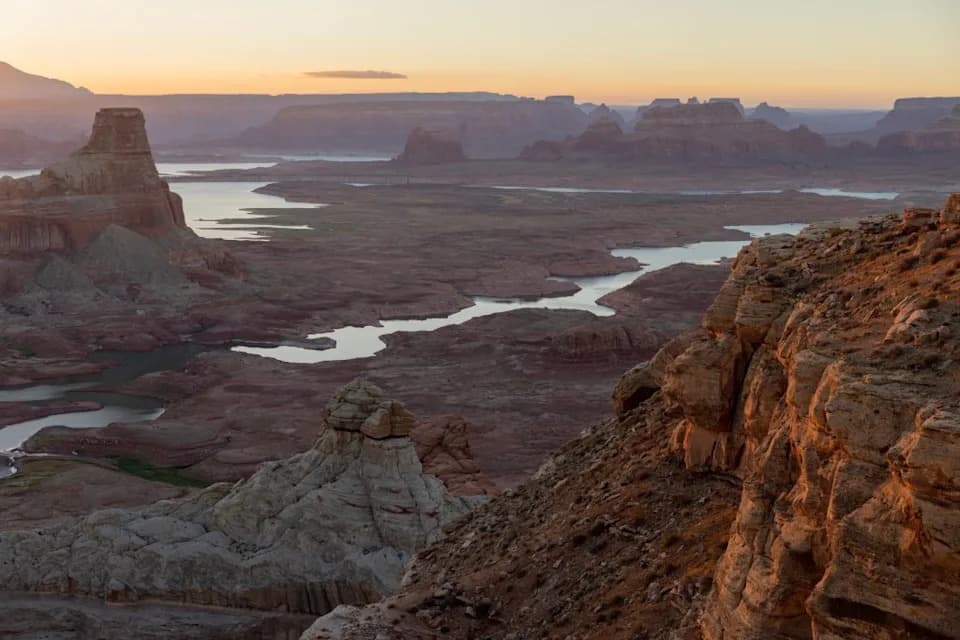
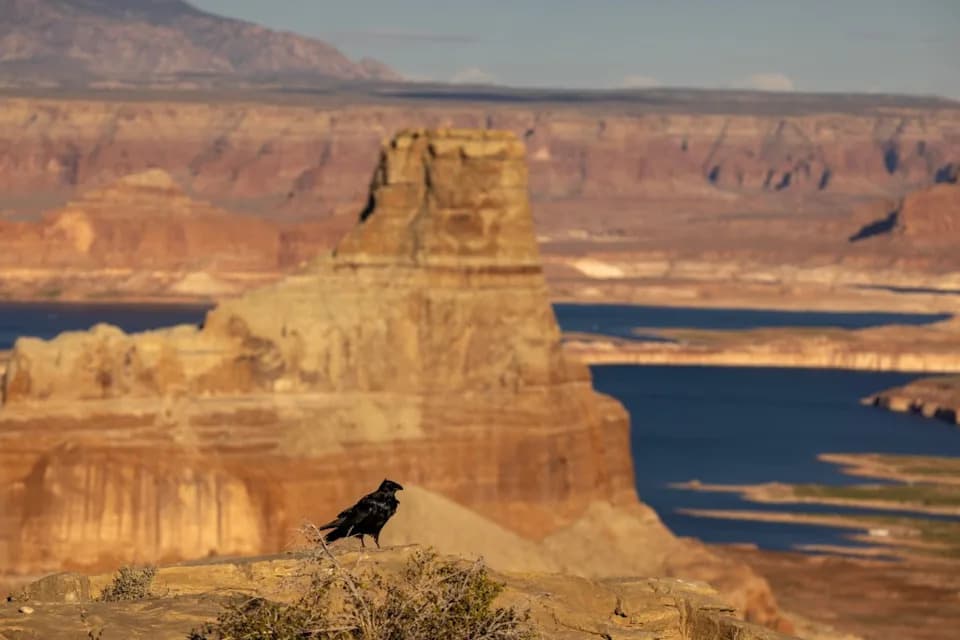
Lake Powell has fallen to roughly 23% capacity after a record-dry winter, extreme heat and long-term overuse, bringing the reservoir close to historic lows and threatening hydropower generation. Marinas are adapting by extending ramps, relocating docks and investing tens of millions of dollars to preserve access. Combined storage in Lake Powell and downstream Lake Mead is the lowest in nearly 70 years, raising concerns for water supplies and regional economies. Federal releases and short-term management plans are being used to slow the decline while long-term agreements remain unresolved.
As Lake Powell Falls to 23%, Marinas Extend Ramps and Relocate Docks to Reach Shrinking Water
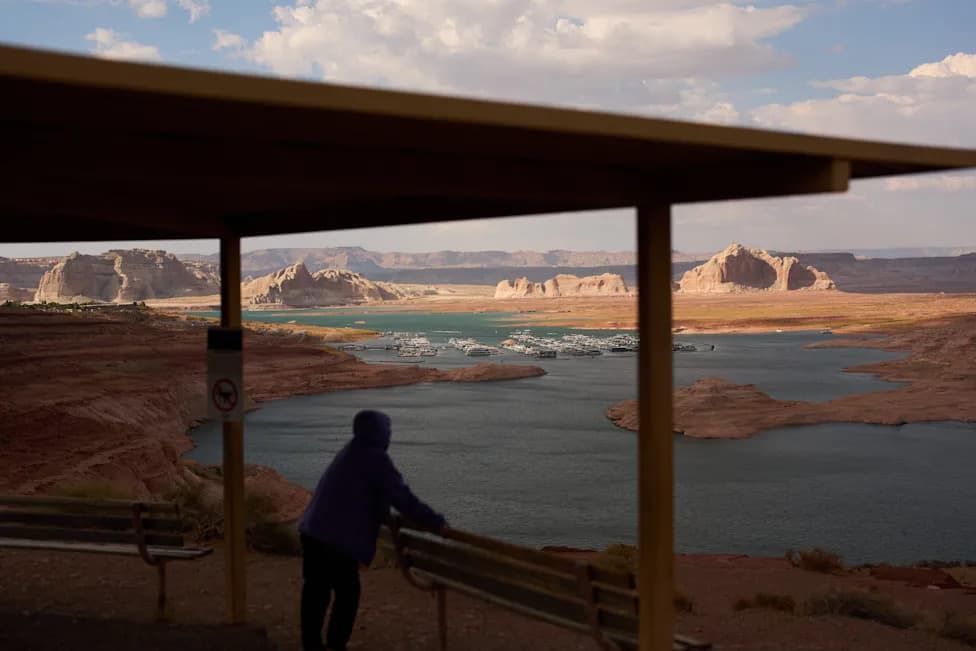
A person stands at an overlook near the Wahweap Marina on Lake Powell at the Glen Canyon National Recreation Area, Tuesday, July 14, 2026, near Page, Ariz. (AP Photo/John Locher)(AP Photo/John Locher)
Page, Ariz. — Lake Powell has fallen to roughly 23% of its capacity, forcing marinas and recreation operators to adapt as access to the water becomes increasingly difficult. Boat ramps have closed or been repeatedly extended, docks are being moved to deeper water, and major construction projects are underway to reach the ever-receding shoreline.
Why Water Levels Are Falling
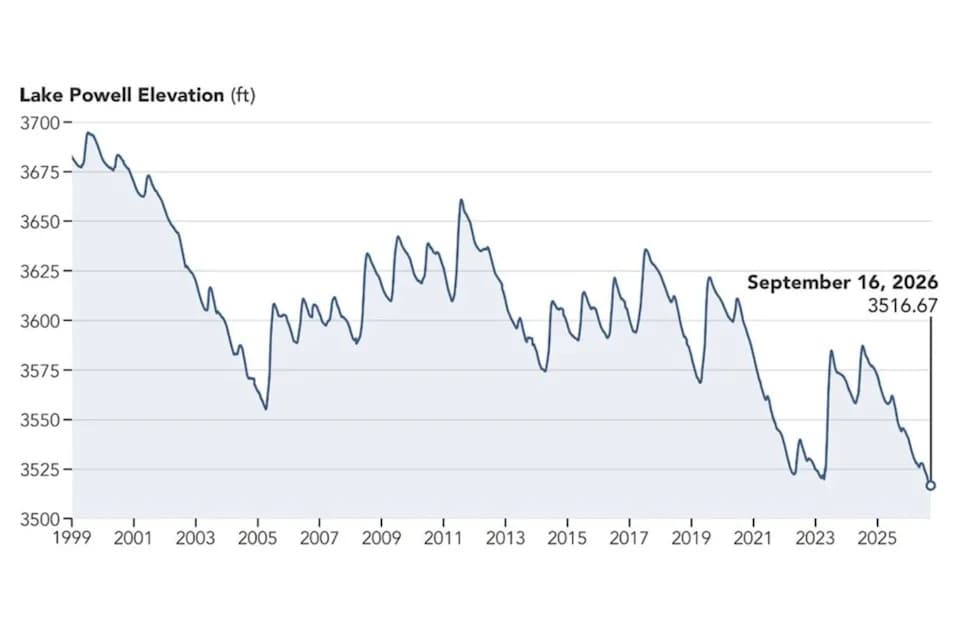
A record-dry winter, sustained extreme heat, decades of heavy water use, and long-term climate-driven drought have combined to push Lake Powell toward historic lows. The reservoir is about 33 feet (10 meters) above the elevation at which Glen Canyon Dam’s hydropower turbines would stop producing electricity, and it could drop to an all-time low as early as September without substantial replenishment.
Regional Context
Together with downstream Lake Mead — the nation’s largest reservoir — Powell is part of a two-reservoir system at its lowest combined storage in nearly 70 years. Researchers warn that, without significant changes to basinwide water use or a wet winter and spring, record lows are likely to continue.
How Marinas Are Responding
Marinas and ramp operators are investing in large-scale projects to preserve recreational access. Antelope Point Marina plans an approximately $81 million ramp extension to reach water when the lake drops to 3,520 feet (1,073 meters). At Bullfrog Bay, operators are relocating a marina to deeper water and planning a new ramp and access estimated at $73.4 million. The Wahweap Stateline ramp has also been continually extended as water levels fall.
“We’ll be able to launch no matter what,” said Kenneth Runnels, chief administrator with Antelope Point Holdings, describing the planned ramp work.
Broader Impacts
Lower water levels are not only a navigational and infrastructure challenge but also an economic one. Reduced access has cut into tourist traffic in Page and other gateway communities, affecting local businesses and tax revenues. The U.S. Bureau of Reclamation has flagged Powell among several western reservoirs at or near record lows. Elsewhere in the Southwest, Elephant Butte on the Rio Grande sits at roughly 2% capacity, requiring heavy equipment just to clear sediment for launches and prompting declines in visitor numbers.
To help stabilize Powell, up to 1 million acre-feet (about 1.23 billion cubic meters) will be released from Flaming Gorge Reservoir through next April. Federal officials are expected to announce a short-term plan soon for how the seven Colorado River basin states and tribal partners should share the river’s reduced supplies; long-term operating guidelines expire this year.
Safety And Recreation
The National Park Service warns that exposed shorelines, submerged obstacles and shifting channels create new navigation hazards. In many areas it is no longer safe for houseboats and some small motorized craft to launch from existing ramps, and closures increase congestion at ramps that remain usable.
Despite the challenges, marina managers say there is still water for recreation in parts of the lake this season; the main problem for many visitors is access rather than a lack of water itself.
Reporting: Pineda reported from Los Angeles; Associated Press reporter Susan Montoya Bryan contributed from Albuquerque, N.M. The Associated Press receives support from the Walton Family Foundation for coverage of water and environmental policy; AP is solely responsible for all content.
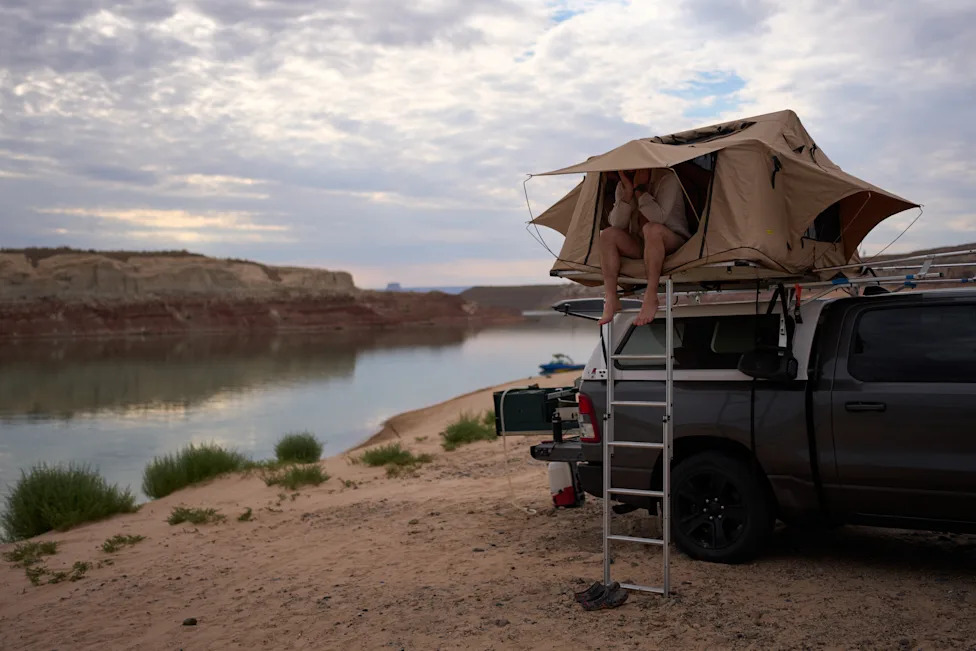
Mark Budzko rubs his eyes as he wakes up while camping beside Lake Powell at the Glen Canyon National Recreation Area, Wednesday, July 15, 2026, near Big Water, Utah. (AP Photo/John Locher)(AP Photo/John Locher)
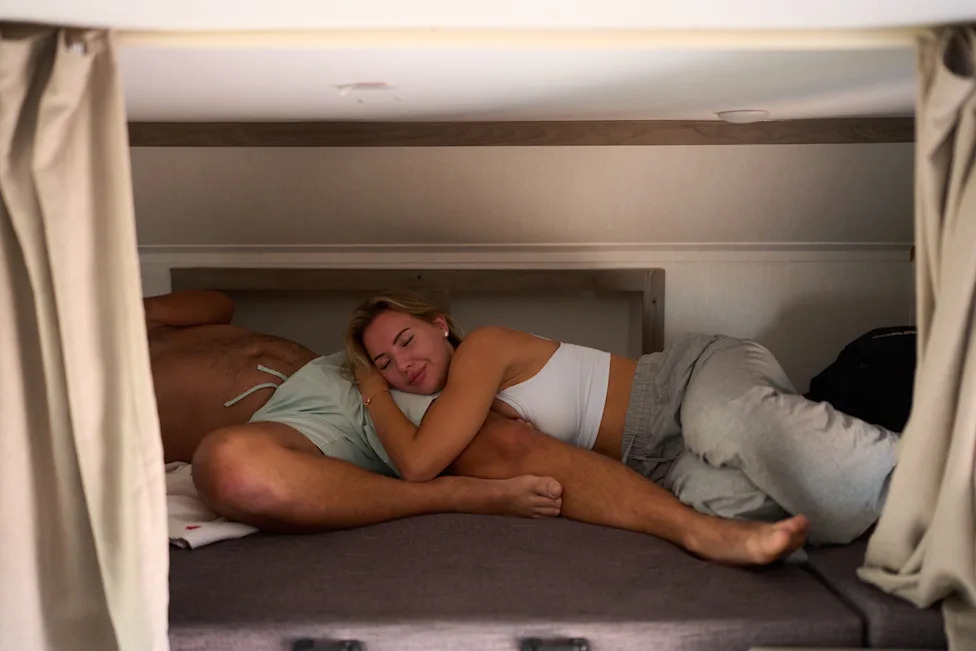
Maria Max rests while camping along Lake Powell at the Glen Canyon National Recreation Area, Wednesday, July 15, 2026, near Big Water, Utah. (AP Photo/John Locher)(AP Photo/John Locher)
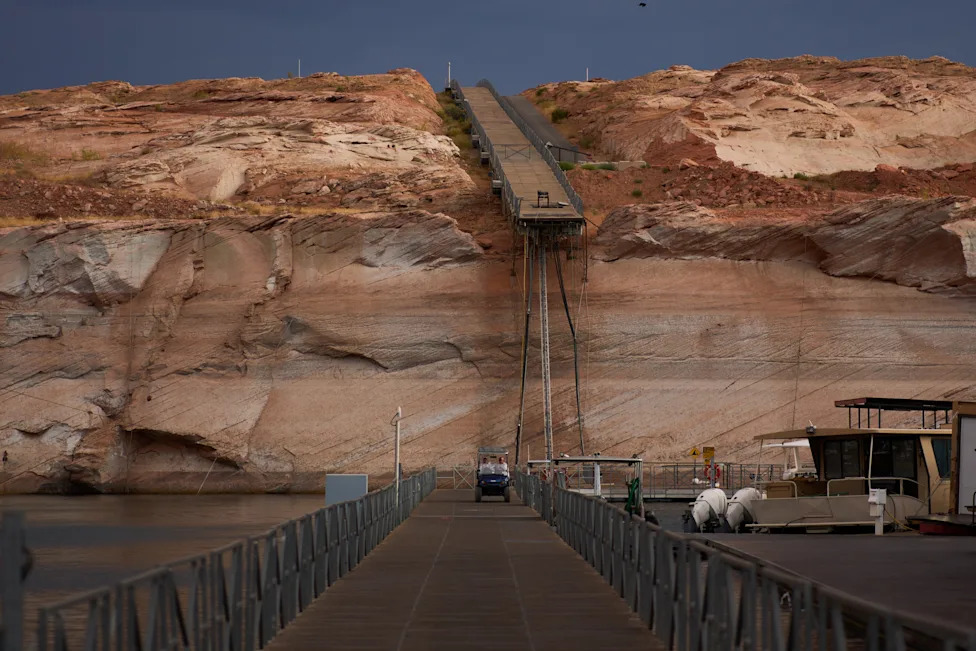
People ride a golf cart beneath a protruding dock used during higher water levels at the Antelope Point Marina on Lake Powell at the Glen Canyon National Recreation Area, Tuesday, July 14, 2026, near Page, Ariz. (AP Photo/John Locher)(AP Photo/John Locher)
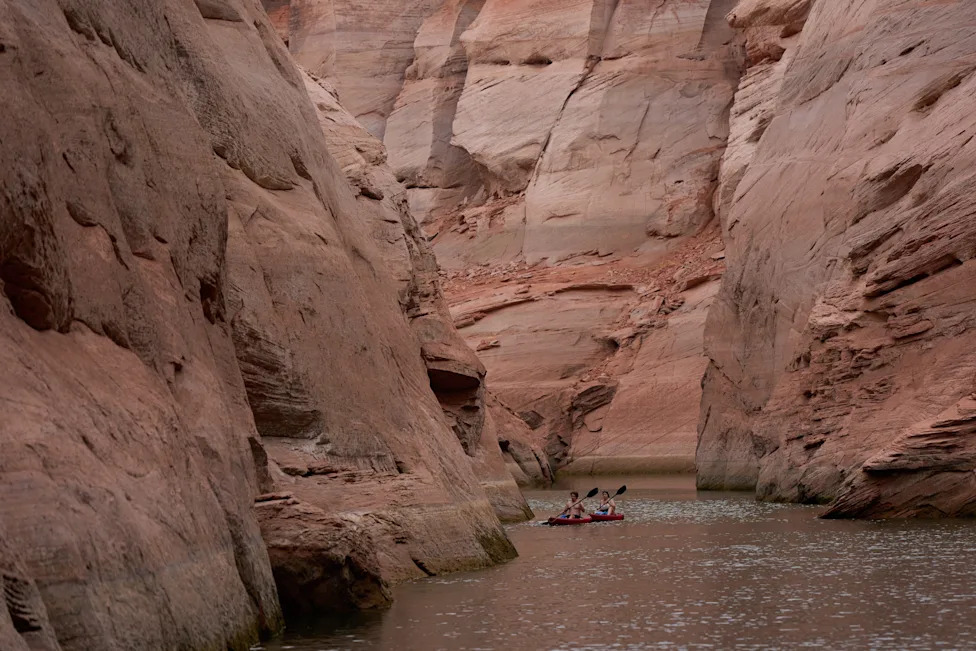
People paddle through a canyon on Lake Powell at the Glen Canyon National Recreation Area, Wednesday, July 15, 2026, near Page, Ariz. (AP Photo/John Locher)(AP Photo/John Locher)
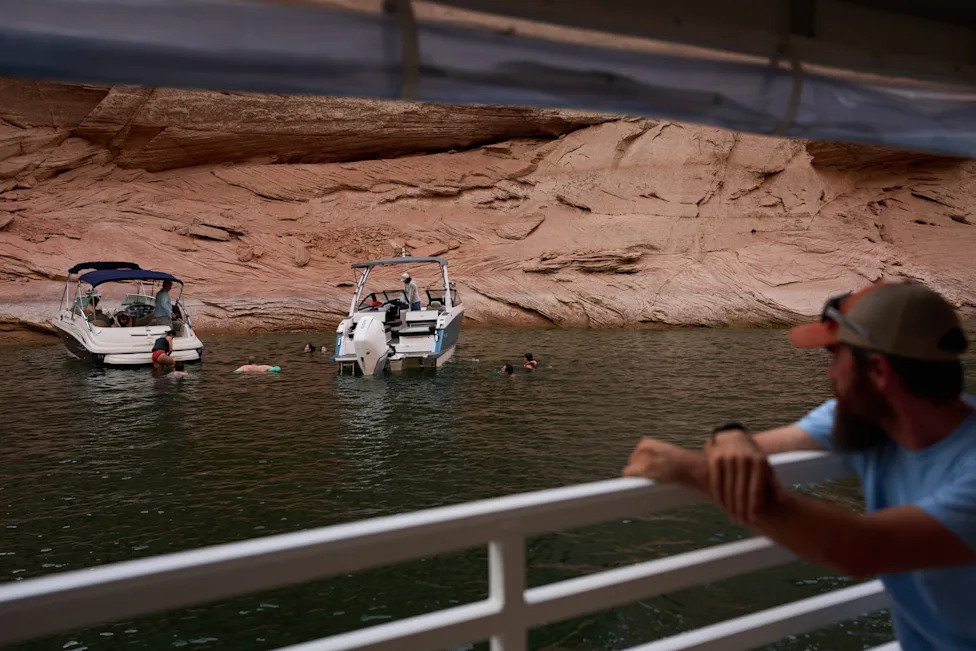
Boaters swim in a canyon on Lake Powell at the Glen Canyon National Recreation Area, Wednesday, July 15, 2026, near Page, Ariz. (AP Photo/John Locher)(AP Photo/John Locher)
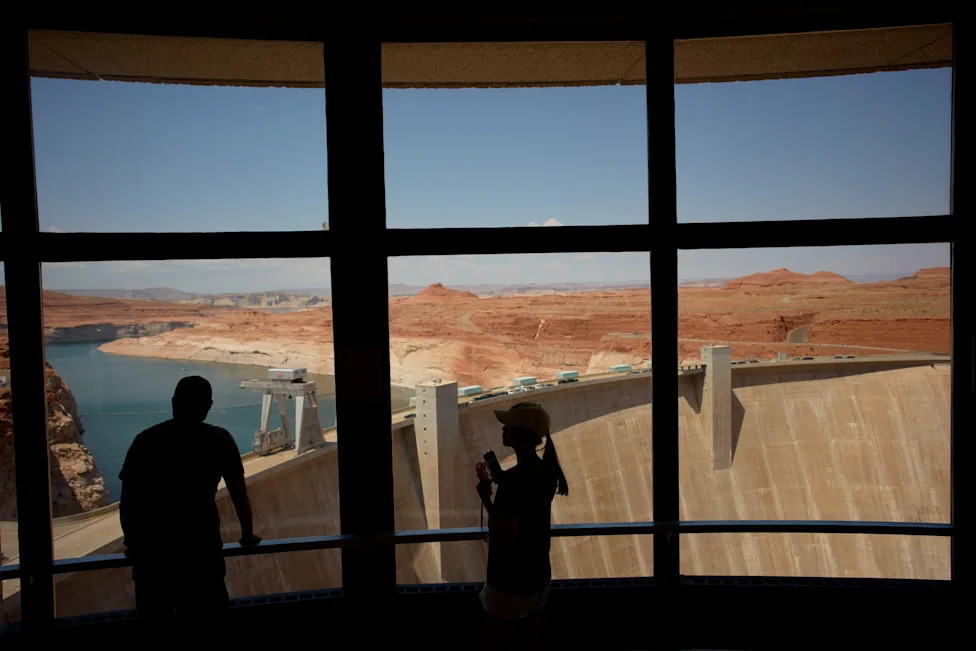
People look at the Glen Canyon Dam, Tuesday, July 14, 2026, near Page, Nev. (AP Photo/John Locher)(AP Photo/John Locher)
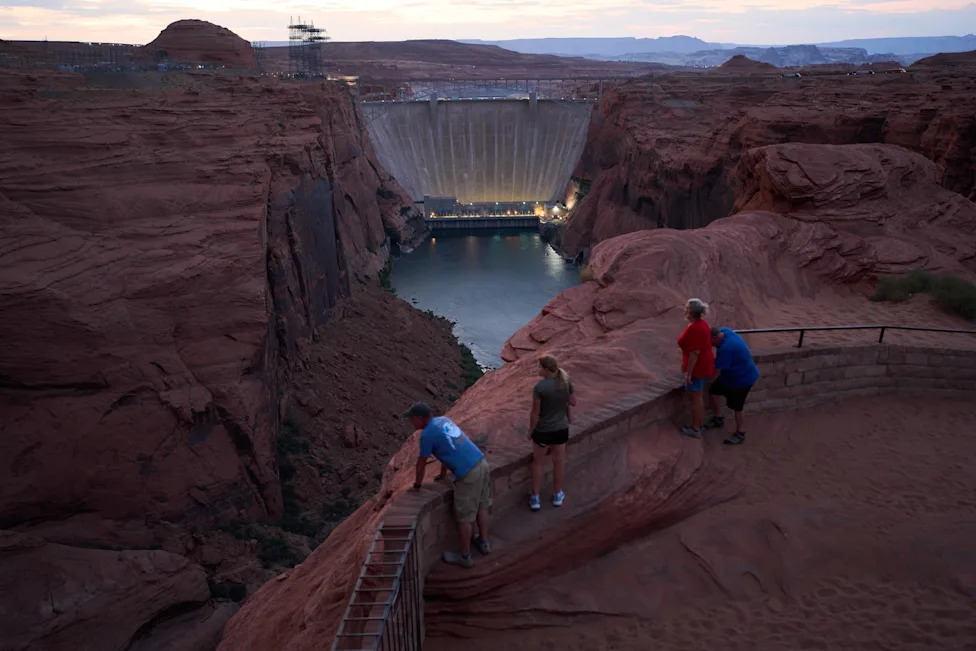
People view the Glen Canyon Dam from a viewpoint above the Colorado River, Tuesday, July 14, 2026, in Page, Ariz. (AP Photo/John Locher)(AP Photo/John Locher)
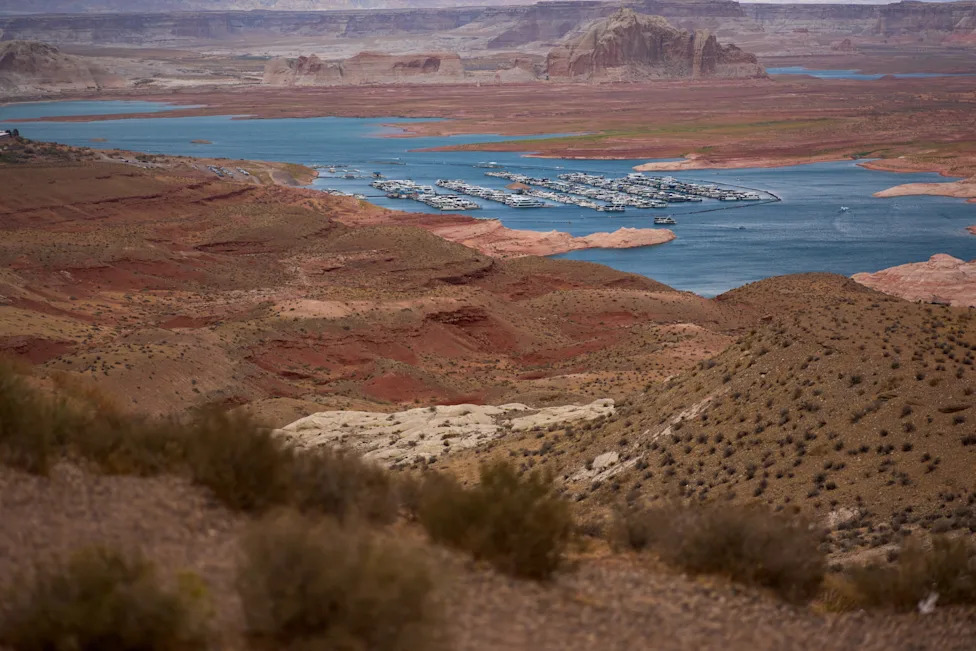
The Wahweap Marina floats on Lake Powell at the Glen Canyon National Recreation Area, Wednesday, July 15, 2026, near Page, Ariz. (AP Photo/John Locher)(AP Photo/John Locher)
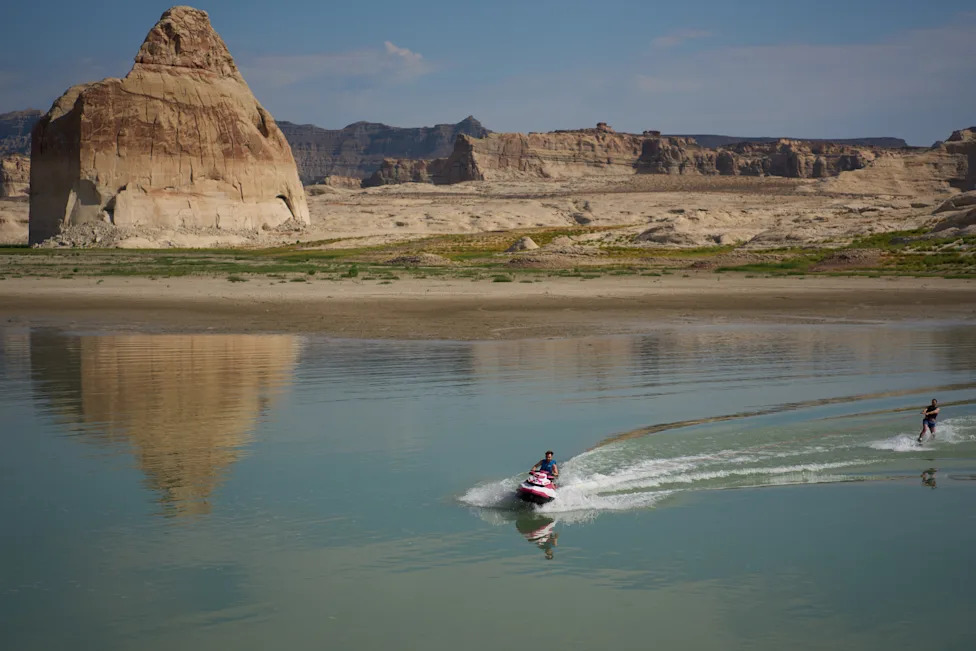
Vitalii Volna drives a jet ski on Lake Powell at the Glen Canyon National Recreation Area, Wednesday, July 15, 2026, near Big Water, Utah. A bathtub ring of light minerals on Lone Rock behind shows the high water mark of the lake. (AP Photo/John Locher)(AP Photo/John Locher)
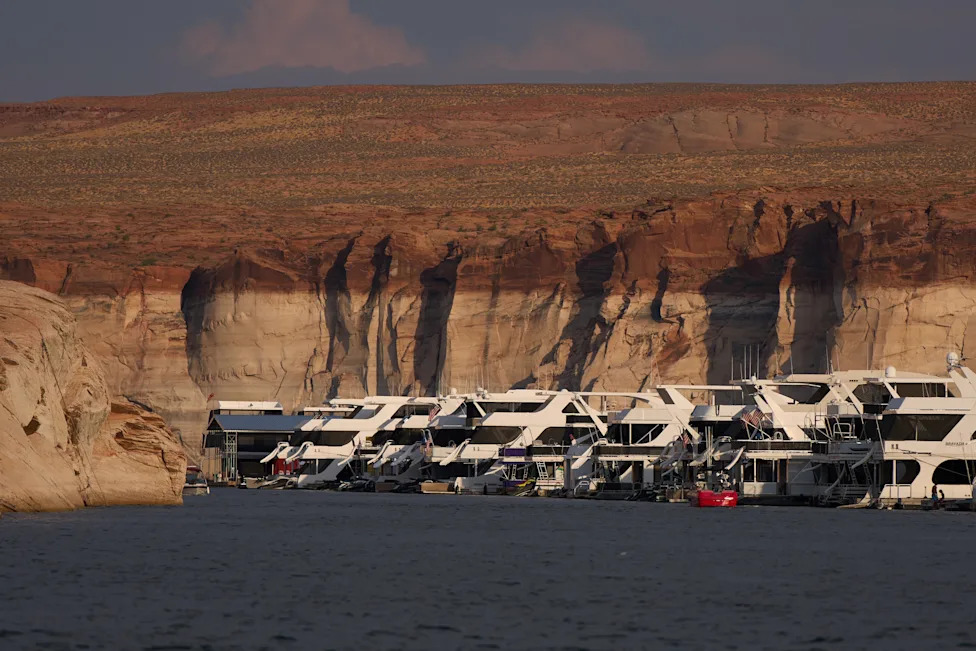
Houseboats are moored at the Antelope Point Marina on Lake Powell at the Glen Canyon National Recreation Area, Wednesday, July 15, 2026, near Page, Ariz. A bathtub ring of light minerals on the canyon walls show the high water mark of the reservoir. (AP Photo/John Locher)(AP Photo/John Locher)
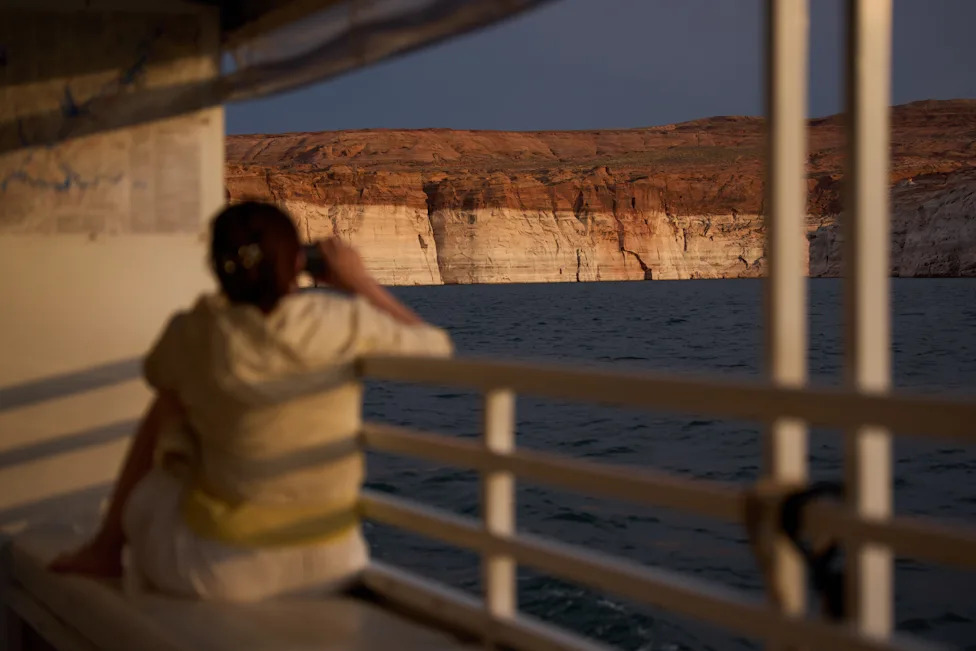
A person takes a picture during a tour on Lake Powell at the Glen Canyon National Recreation Area, Wednesday, July 15, 2026, near Page, Ariz. A bathtub ring of light minerals on the canyon wall shows the high water mark of the reservoir. (AP Photo/John Locher)(AP Photo/John Locher)
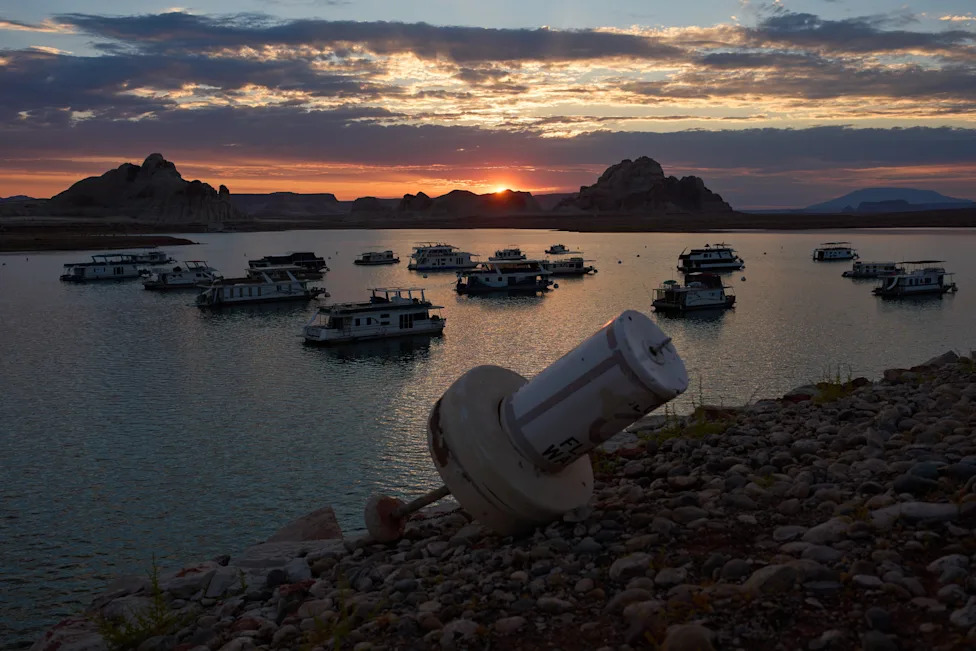
A formerly floating buoy now sits high and dry above Lake Powell at the Glen Canyon National Recreation Area, Wednesday, July 15, 2026, near Page, Nev. (AP Photo/John Locher)(AP Photo/John Locher)
Help us improve.