New York City confirmed the first death in a Legionnaires' disease outbreak on the Upper East Side, where at least 67 people have been infected and dozens hospitalized. Tests detected Legionella bacteria in cooling towers on more than 75 buildings, which have been ordered cleaned, drained and disinfected. Investigators continue searching for the specific source; the CDC says Legionnaires' is treatable but carries about a 10% mortality rate.
First Death Confirmed in New York City's Upper East Side Legionnaires Outbreak
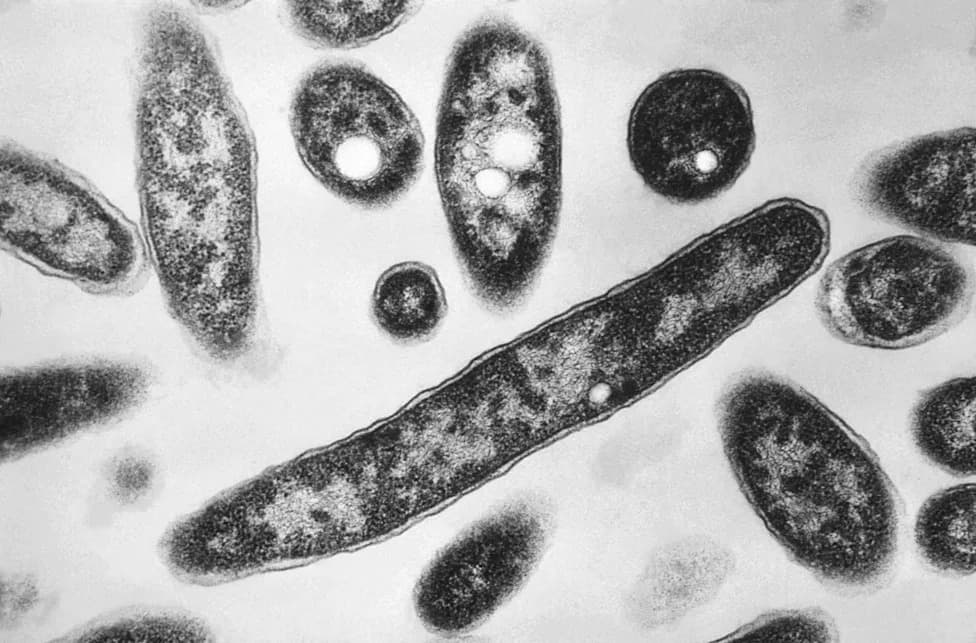
FILE - This 1978 electron microscope image made available by the Centers for Disease Control and Prevention shows Legionella pneumophila bacteria which are responsible for causing the pneumonic disease Legionnaires' disease. (Francis Chandler/CDC via AP, File)
City health officials on Friday confirmed the first death linked to a Legionnaires' disease outbreak centered on Manhattan's Upper East Side. At least 67 people have been infected and dozens have been hospitalized, according to the New York City Department of Health.
Investigation and Response
Investigators are working to identify the specific source of the cluster, which the city began tracking on July 2 after two cases were detected in the area. Tests have detected living or dead Legionella bacteria in cooling towers on more than 75 Upper East Side buildings, including prominent museums, private schools and high-end apartment houses.
Officials have ordered all identified cooling towers to be cleaned, drained and disinfected. While cooling towers and other systems that aerosolize warm water are common sources of Legionella, it is not yet known which, if any, of the detected towers contributed to this particular outbreak.
What Is Legionnaires' Disease?
Legionnaires' disease is a severe form of pneumonia caused by Legionella bacteria. The U.S. Centers for Disease Control and Prevention says the illness is treatable but has an approximate 10% mortality rate among diagnosed patients. Legionella thrive in warm water and can spread through cooling towers, hot tubs and showerheads; most infections occur when people inhale tiny contaminated water droplets. The disease does not spread from person to person.
City officials noted that last year a separate outbreak in Harlem sickened more than 100 people and resulted in seven deaths, underscoring the risks posed by contaminated building water systems when not properly maintained.
Key actions for building operators: inspect and maintain cooling towers, clean and disinfect systems when contamination is detected, and follow public health orders promptly to reduce risk.
Help us improve.