After finding the shea tree of her childhood cut down, Lucy Everlyn Atim founded Moyao Africa Initiative in 2023 to convert discarded shea husks into cooking briquettes while helping women produce shea butter. The enterprise works with over 1,200 women, employs six staff and runs school environmental clubs, partnering with NARO to distribute seedlings. To scale year-round production and make cleaner briquettes, Atim is raising about $530 for a carboniser, crusher and briquette press.
Saving Shea: A Ugandan Woman Turns Waste Into Clean Cooking Fuel and Livelihoods
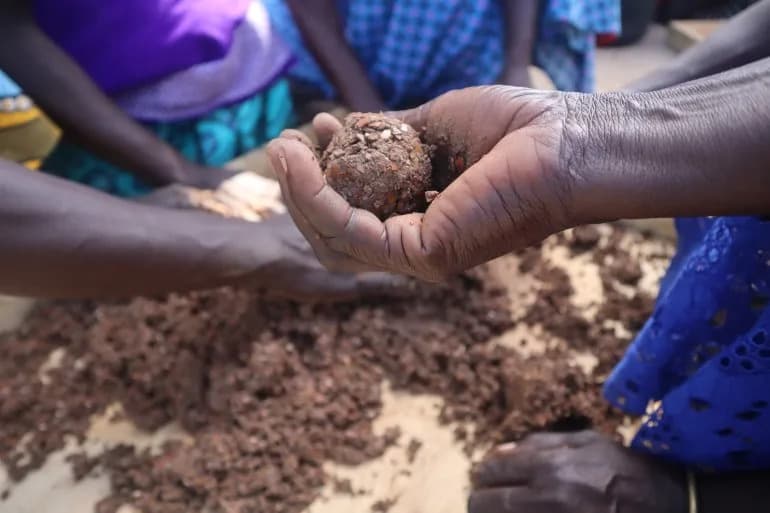
A shea briquette moulded into a ball [John Okot/Al Jazeera]
When Lucy Everlyn Atim returned to Alebtong after six years working on child-rights issues in South Sudan, she discovered that the shea tree of her childhood — locally known as moyao — had been cut down. The loss was a personal blow and a signal of a wider problem: across northern Uganda, many native trees are being felled to make charcoal.
Uganda loses an estimated 122,000 hectares of forest each year, driven largely by charcoal production and logging. With roughly 90 percent of households relying on charcoal for cooking, indigenous species such as shea and Afzelia africana are under severe pressure. Research from Makerere University found mature shea counts on fallow land dropped from about 20 trees in 2008 to between 10 and 15 by 2017 — a decline that is difficult to track because charcoal producers often remove whole trees.
Turning Waste Into Fuel
While working in South Sudan, Atim saw a woman in Yida making fuel briquettes from discarded shea husks. Inspired, she launched Moyao Africa Initiative in 2023, a social enterprise that converts shea processing waste into fuel briquettes while supporting women who process shea butter. The initiative now employs six staff and partners with more than 1,200 women organised in savings groups to collect husks, produce briquettes and process butter.
At training sessions across Alebtong, women learn the simple, low-cost steps: collect husks, crush them, mix with clay and cassava flour as a binder, press into moulds, and sun-dry the briquettes. The hands-on lessons are practical: some women pound husks in wooden mortars, others dig clay, and groups mix cassava paste before shaping briquettes to dry.
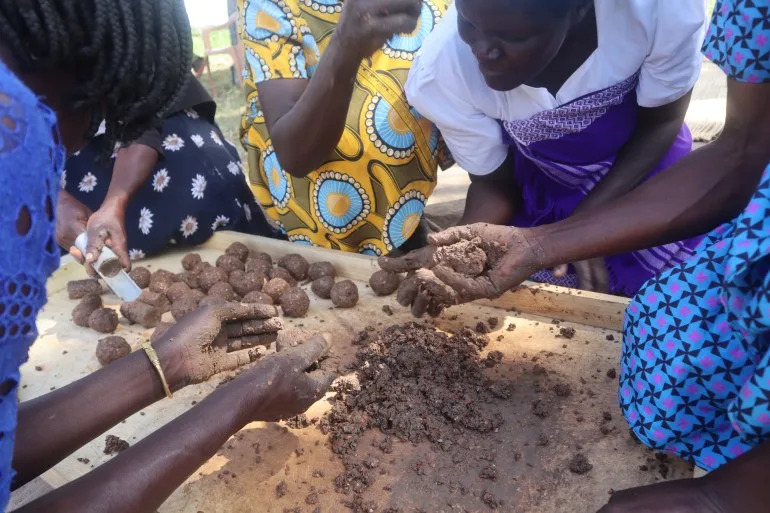
Moulding briquettes made from shea husks into different shapes [John Okot/Al Jazeera]
"Women in most households carry the responsibility of finding cooking fuel. By training them to make and sell briquettes and shea butter, we're creating income while providing an affordable alternative to charcoal," Atim said.
Impact, Constraints And Plans To Scale
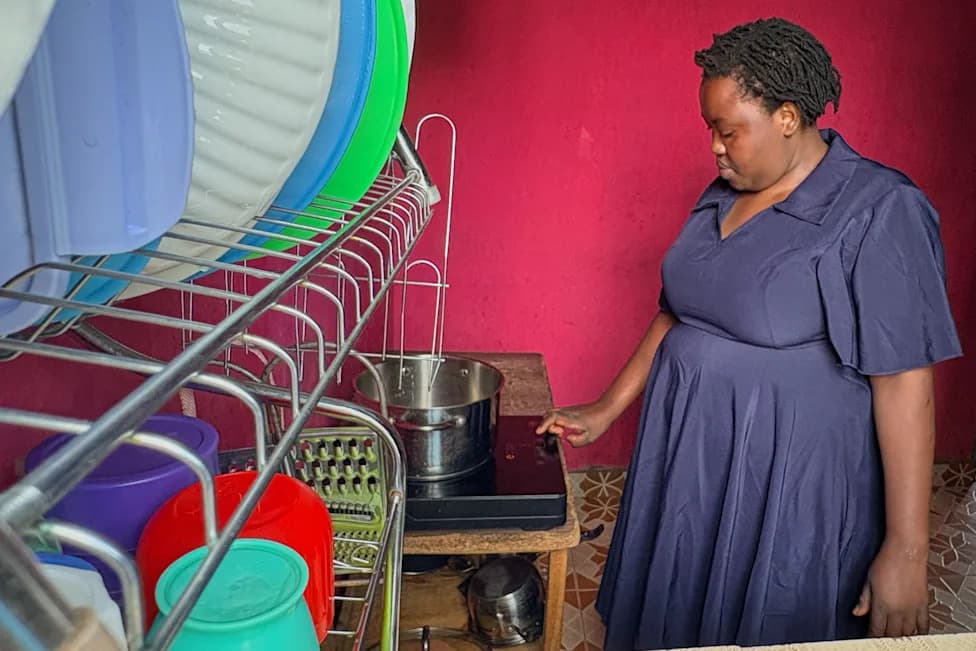
Members such as Catherine Akello, chair of the Oteno Moyao Africa Women's Group, say making briquettes has cut household fuel costs and created group savings that help families during emergencies. Demand for briquettes is growing, but production is limited by the seasonal nature of the shea harvest and the manual processing methods currently used.
To scale output year-round, Atim is saving to buy a carboniser, crusher and briquette press, a package estimated at about $530. A carboniser would allow the team to produce cleaner-burning, low-smoke briquettes that burn more efficiently — an improvement renewable energy experts say would make briquettes a more practical substitute for charcoal.
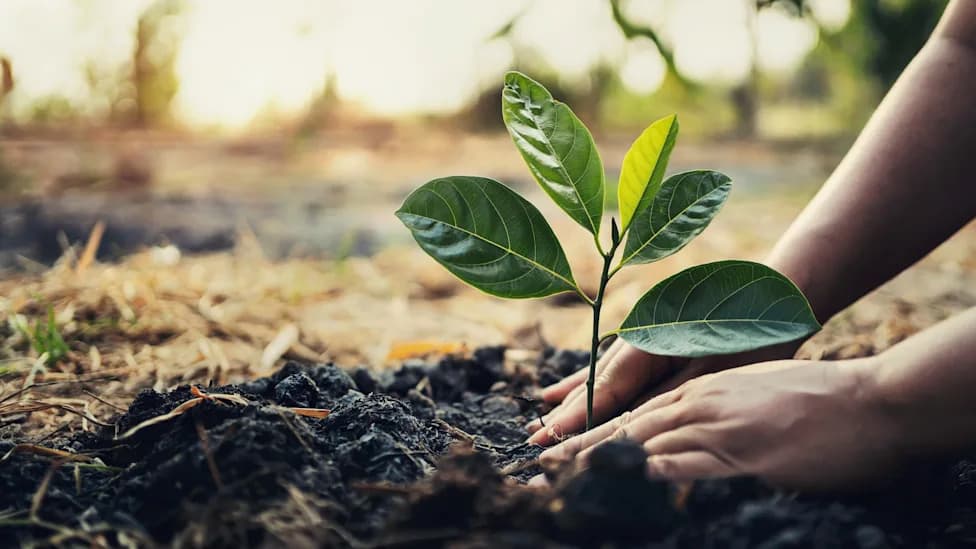
Moyao Africa Initiative also runs environmental clubs in 20 schools and partners with the National Agricultural Research Organisation (NARO) to distribute tree seedlings and encourage landscape restoration. These efforts link livelihoods with conservation: creating income from shea products helps incentivise communities to protect remaining trees.
Development experts note that while Uganda has sound policies on clean energy and reforestation, implementation and local support are essential. Grassroots organisations like Atim's — trusted by communities and attuned to local realities — can play a critical role if they receive technical and financial backing.
For Atim the work is personal and practical: by turning discarded husks into a useful, marketable fuel, she hopes fewer trees will be cut and more women will earn livelihoods tied to protecting the very trees that sustained their communities. "The shea tree may be gone from my childhood spot," she says, "but we can still save the species that so many families rely on."
Help us improve.