Mongolia's Naadam festival still features child jockeys learning to ride from an early age, with six-year-old Hurts Gantumur training on the steppe. Authorities now limit competitors to children aged 8–12 after raising the minimum age amid safety concerns. Rights groups and U.N. agencies warn of dangerous conditions and dozens of deaths over the past decade, while families emphasize the cultural importance of Naadam victories.
Mongolia's Child Jockeys Gear Up for Naadam Amid Rising Safety Concerns
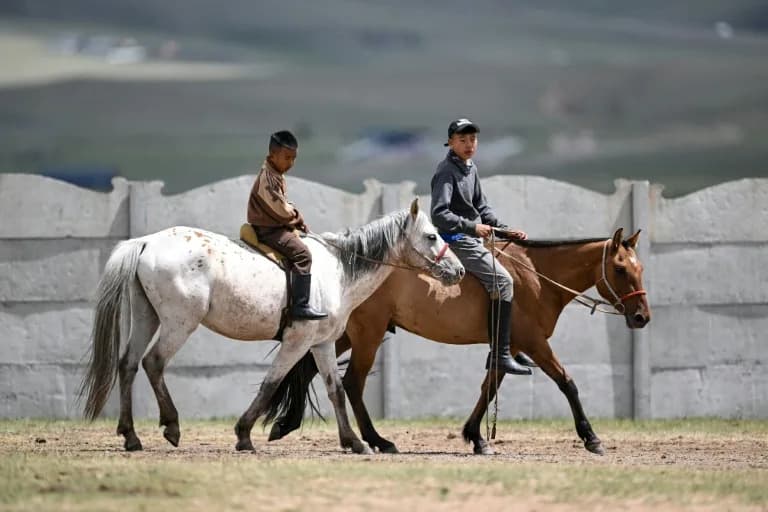
Horse racing with child jockeys is a defining feature of Naadam, Mongolia's biggest cultural festival (Adek BERRY)
Six-year-old Hurts Gantumur races across Mongolia's open steppe as he trains to become one of the child jockeys who take part in the country's largest cultural event, the Naadam festival. His elder brother, Zolboo, is 14 and already past the competition's age limit, which now allows riders only between eight and 12 years old.
Tradition and Training
Horse racing is a defining feature of Naadam, and children have long been central to the sport. Races vary by category and the horse’s age, covering distances of roughly 11 to 25 kilometres (7 to 16 miles). Riding is a basic skill in many rural communities, and aspiring jockeys commonly begin training around age five. Hurts's father, who reared racehorses for Naadam for years and now supervises his son's preparation, told AFP:
"In training, the child and the horse become one."
More than 500 child jockeys are expected to compete at this year's festival, and smaller children — including Hurts’s three-year-old twin brothers, Galt and Gerelt — are often introduced to riding from an early age.
Safety Concerns And Official Responses
At the same time, the participation of very young riders has attracted criticism from rights groups and U.N. agencies. UNICEF warned that children were competing "under circumstances that are detrimental to their health and lives," while the NGO Their World noted that some youngsters "miss school to prepare for races and work long hours for low wages at large stables." The United Nations has said the sport poses "a fatal risk to the lives and well-being of children who are recruited or will be recruited as jockeys."
Government figures show that in 2022 about 3,200 child jockeys took part in 82 races; one child jockey was killed and nine were seriously injured that year. In response to safety concerns, Mongolia raised the legal minimum age for child jockeys from seven to eight. Nevertheless, the Mongolian National Human Rights Commission reports that 46 child jockeys have died in races over the past decade.
Balancing Heritage and Safety
For many families, horse racing is a deeply rooted tradition, and victory at Naadam brings prestige to a rider's family and province. That cultural significance, combined with economic and local pressures, helps explain why families continue to train young children for the races even as authorities and international groups press for greater protections.
Context: The debate around child jockeys at Naadam highlights a wider tension between preserving cultural traditions and ensuring the safety, education and rights of children involved in competitive sports.
Help us improve.