Summary: Recent incidents in Oakland, Park Slope and Los Angeles—where Jewish patrons were publicly excluded or shamed—mirror exclusionary practices documented in 1930s Magdeburg, Germany. Historian Michael E. Abrahams‑Sprod’s interviews with survivors describe how signs and restrictions progressively isolated Jews from public life. While the U.S. currently shows institutional responses, including DOJ investigations and a lawsuit, rapid enforcement is crucial to prevent a slide into broader systemic exclusion.
Antisemitism in Cafés: Recent U.S. Incidents Echo 1930s Exclusion in Magdeburg

A father and his young son were reportedly expelled from a café for wearing a cap with a Star of David. Was that in Oakland in 2024, Park Slope last week, or Magdeburg nearly ninety years ago? The troubling answer is that all three episodes offer relevant parallels.
Oakland: Abdulrahim Harara, owner of the Jerusalem Coffee House, allegedly ejected a Jewish man and his five‑year‑old son last year after noticing baseball caps incorporating the Star of David in their design. The U.S. Department of Justice has since filed a lawsuit against the café owner; that case remains pending.
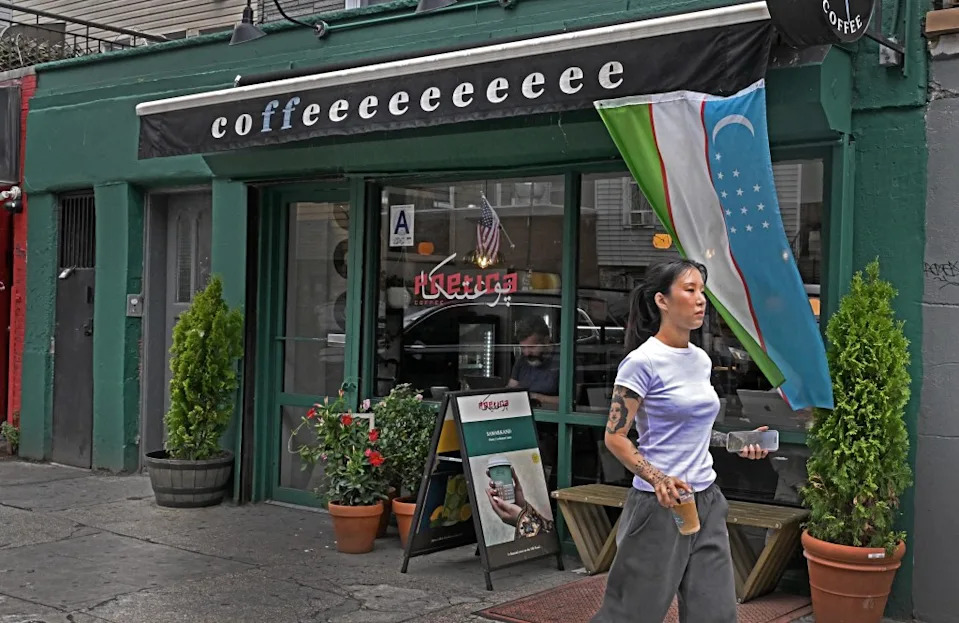
Poetica Coffee shop in Brooklyn refunded Goldman his money over his support for Israel. Gregory P. Mango for NY Post
Brooklyn (Park Slope): Representative Dan Goldman — a Jewish Democrat — and his seven‑year‑old daughter visited Poetica Coffee in the affluent Park Slope neighborhood. After the café learned the Goldmans had been customers, owner Parviz Mukhamadkulov posted on social media that he was refunding their purchase and banning them from the premises, calling them “genocide enablers,” a phrase many interpreted as targeting Jews. The DOJ has announced it is investigating the Manhattan incident.
Los Angeles: A TikTok creator known as “redhead heretic” has filmed visits to Los Angeles cafés, including Couplet Coffee, publicly identifying proprietors she says are Israeli and prompting walkouts. In one clip she is heard saying, "Thank you for leaving," to departing patrons.

Tiktok/@redheadherertic
Historical Parallel: Magdeburg in the 1930s
Australian scholar Michael E. Abrahams‑Sprod has documented how Jews in Magdeburg, Germany, were progressively excluded from public life in the 1930s. Notices reading “Jews Not Served Here” (Juden unerwünscht) appeared across shops, hotels, cinemas, public transit, grocery stores and restaurants.
One survivor recalled that, at age eight in 1933, such signs were posted “on nearly every shop” and that it became difficult for his mother to do routine shopping.
Another interviewee, Gisela Kent, remembered a café called “Schwarzs Kaffee‑Garten” where her family once spent Sundays until about 1936, when they either stopped going or were asked to stop: “As such signs spread, you just didn’t go out.” Survivor Gerry Levy described being taken for ice cream by his aunt and then being approached and asked to leave once they were identified as Jews.

Tiktok/@redheadherertic
Food was also weaponized: in December 1935 Magdeburg’s chief of police decreed that only Jews judged “inconspicuous” and “of acceptable appearance” could purchase cases of milk. By 1938, Abrahams‑Sprod writes, Jews in Magdeburg “were effectively living in a ghetto without walls” because threats made public life unbearable.
Why the Comparison Matters — And Where It Breaks Down
These historical testimonies illuminate how exclusionary messages in public spaces normalize discrimination and escalate social isolation. Recent chants and threats outside synagogues, and targeted exclusions in cafés and stores, echo that objective: to make Jewish people feel unwelcome and afraid to participate in public life.
There are important differences between antisemitic incidents in the United States today and the state‑sanctioned persecution of Nazi Germany. Chief among them is institutional response: U.S. authorities — including the Department of Justice — are investigating and, in one case, suing. Swift, consistent enforcement of civil‑rights protections is essential to prevent isolated episodes from coalescing into broader, systemic exclusion.
Conclusion: The recent café expulsions and public shaming incidents are alarming reminders that exclusionary rhetoric and actions can quickly erode community safety. Preserving an open, pluralistic public sphere requires both vigilance from citizens and decisive action from institutions.
Dr. Medoff is founding director of The David S. Wyman Institute for Holocaust Studies and the author of more than 20 books on Jewish history and the Holocaust.
Help us improve.