Baykar and Leonardo completed the first live phase of the K‑SWARM programme in Çorlu, where a Kizilelma UCAV autonomously taxied, took off, joined formation and was handed over to an M‑346FA crew who commanded further manoeuvres. The tests used Baykar’s Smart Fleet Autonomy algorithms, a new integrated avionics suite and an advanced RF data link after extensive simulation rehearsals. Further K‑SWARM trials will add complexity, situational awareness and steps toward greater autonomy and swarming, with clear export and strategic implications for Turkey.
Baykar and Leonardo Complete K‑SWARM Live Trials: Kizilelma UCAV Joins M‑346 in First Crewed–Uncrewed Teaming
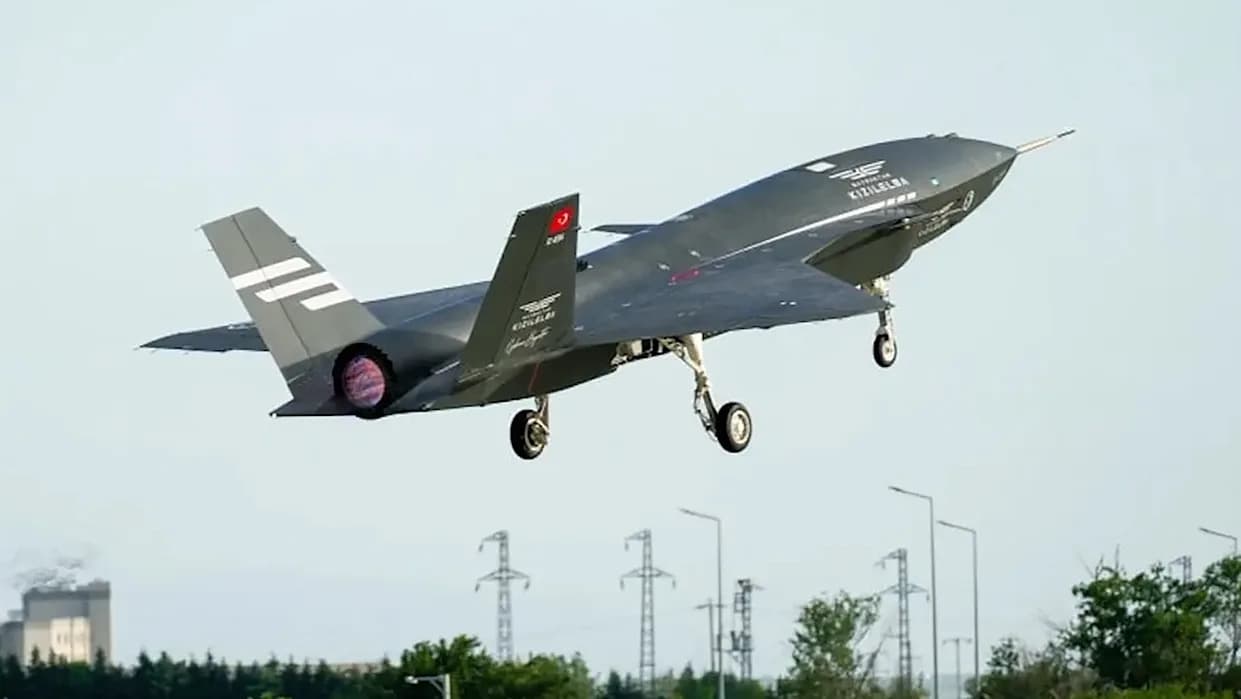
Turkey’s Baykar and Leonardo of Italy say they have successfully completed the first live trials of their K-SWARM concept, demonstrating collaborative operations between crewed and uncrewed aircraft as part of an effort to develop next-generation autonomous air combat capabilities. The trials, involving Baykar’s Kizilelma uncrewed combat air vehicle (UCAV) and Leonardo’s M-346 light combat aircraft, are the latest to explore what is fast becoming a key element in the evolution of air combat.
Baykar of Turkey and Italy’s Leonardo have successfully completed the first live-flight phase of their joint K‑SWARM programme, demonstrating crewed–uncrewed teaming (CUC‑T) between a Kizilelma UCAV and an M‑346 Fighter Attack (M‑346FA) at Baykar’s flight and test centre in Çorlu, Turkey.
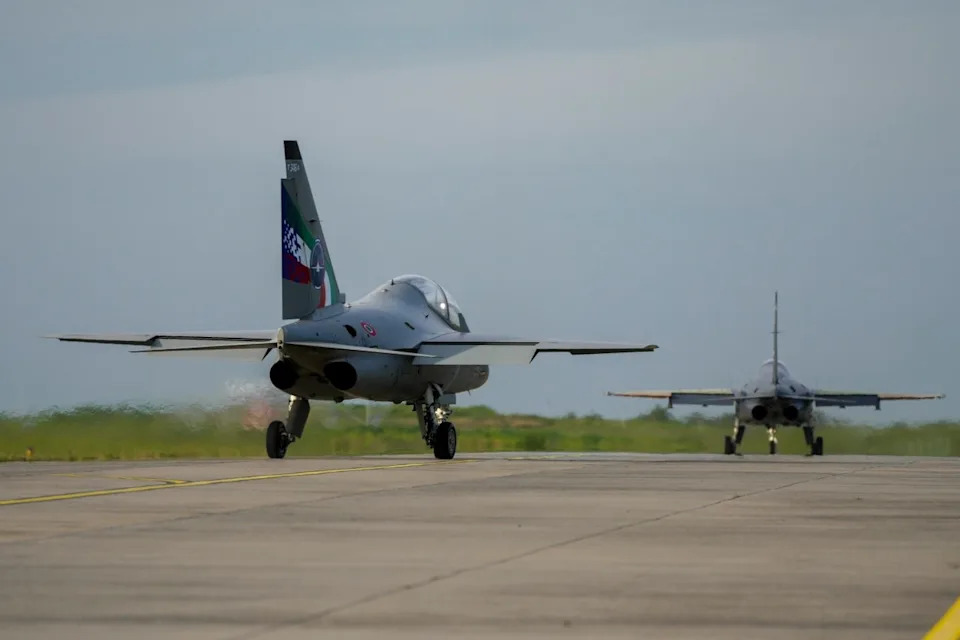
T-346A and M-346FA taxi out for a sortie during the K-SWARM trials.Leonardo
The trials involved a Leonardo-owned M‑346FA flying together with Baykar’s Kizilelma uncrewed combat air vehicle (UCAV), while an Italian Air Force T‑346A served as a chase aircraft. During the campaign the Kizilelma autonomously completed taxi and takeoff, joined formation with the M‑346, and — after an autonomous phase — was handed over to the M‑346 crew, who then issued formation and manoeuvre commands.
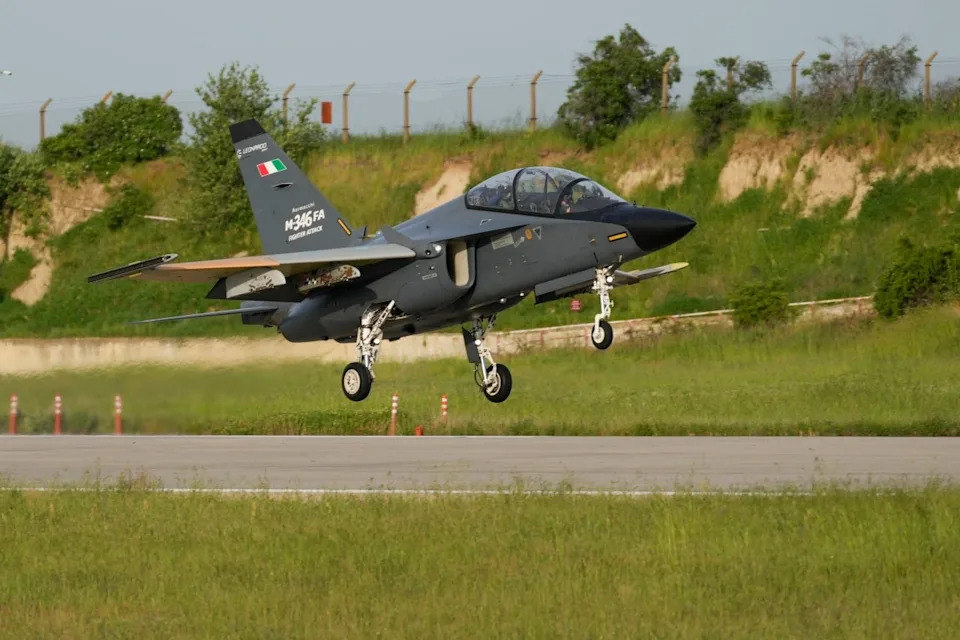
The M-346FA as used in the K-SWARM trials.Leonardo
How The Trials Worked
For the live tests Baykar employed its Smart Fleet Autonomy algorithms developed in the company’s Hardware‑in‑the‑Loop (HIL) Laboratory. After the autonomous launch and join, control was transferred to the two‑person M‑346 crew via a newly integrated avionics suite and a crewed/uncrewed computing system. The Kizilelma executed formation changes, separations and rejoins autonomously following initial pilot directions, with data exchanged over an advanced radio‑frequency link.
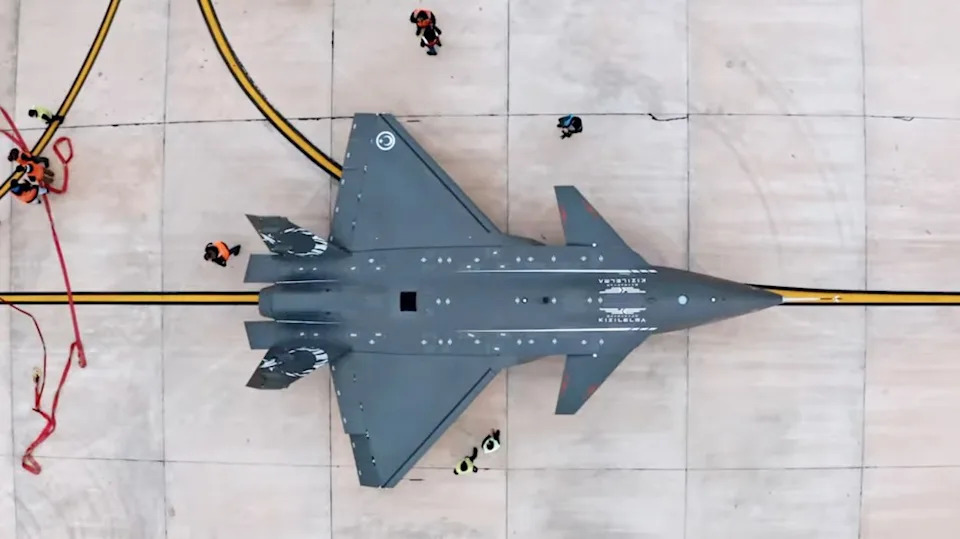
A top view of a Kizilelma UCAV.BaykarBaykar
From Simulation To Flight
Baykar and Leonardo rehearsed tactics, procedures and algorithms in simulation before live trials using an M‑346 full‑mission simulator in Venegono and Leonardo’s PC2LAB in Turin. This virtual testing reduced risk by validating software, communications and tactics ahead of real‑world flights.
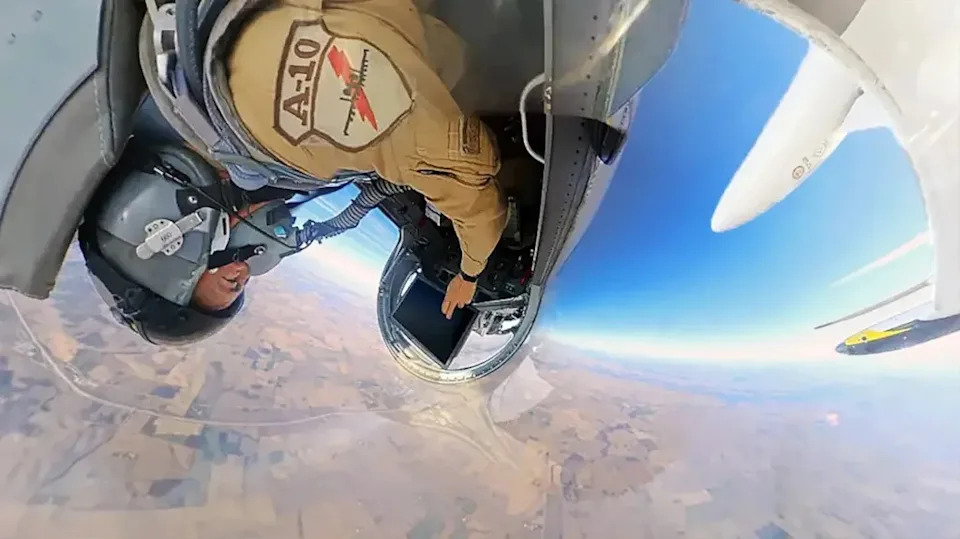
A view from the backseat of an L-39 Albatros light jet being used as a drone controller in a Skunk Works test. Note the touch-screen type user interface.Lockheed Martin
Platform Background And Capabilities
The Kizilelma programme traces back to about 2013 and was first shown publicly in July 2021. It made its brief first flight in December 2022. Baykar positions Kizilelma as a fighter‑type UCAV with planned supersonic capability in later variants, reduced‑observable features and mission sets typical of crewed fighters. In its definitive form the design uses a single Ivchenko‑Progress AI‑322F turbofan rated at roughly 10,000 lb of thrust with afterburner.
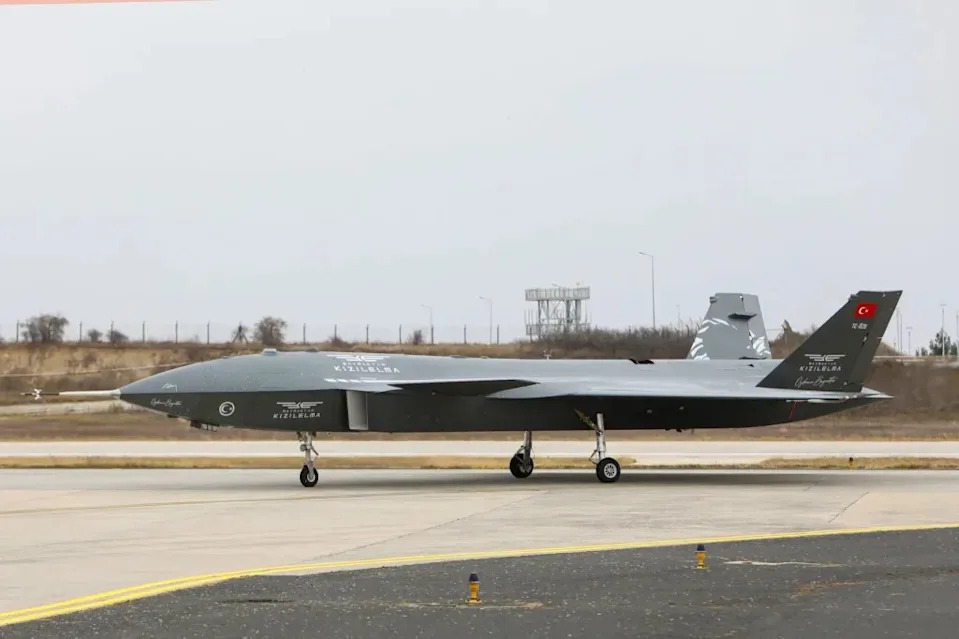
The Kizilelma during earlier taxi trials.Baykar
Last year Turkey reported the Kizilelma launched a Turkish‑made Gökdoğan radar‑guided air‑to‑air missile to destroy a target drone — a noteworthy milestone for UCAV weaponization. Around the same time, Boeing’s MQ‑28A Ghost Bat also demonstrated an AIM‑120 AMRAAM launch in Australian tests.
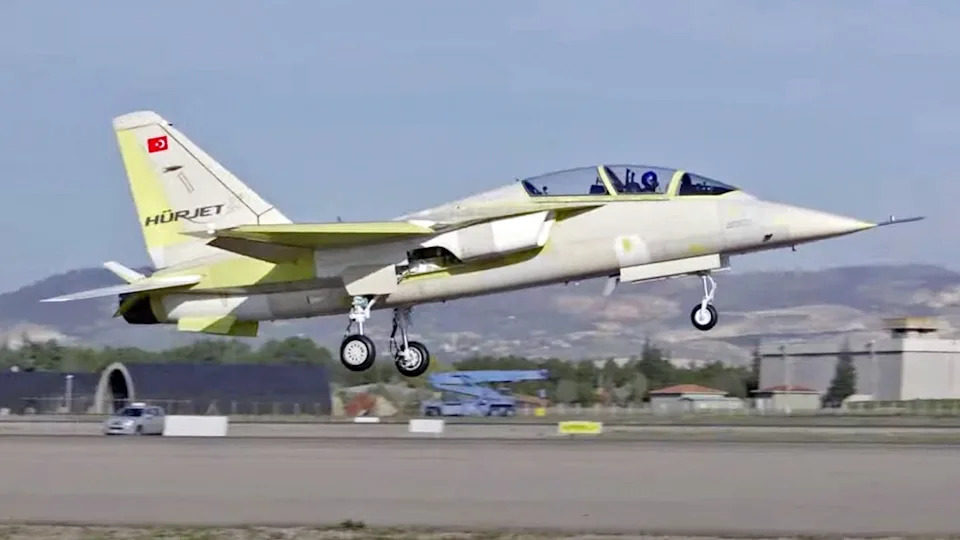
Turkish light fighter trainer made its first flight in 2023.TAI screencapTAI screencap
Next Steps And Strategic Implications
Baykar and Leonardo plan further, more complex K‑SWARM tests in the coming months that will expand situational awareness, coordination and autonomous behaviours. Public information notes prior trials of Kizilelma with a Toygun electro‑optical targeting pod and an AESA radar — sensors that will support richer autonomy and teaming capabilities.
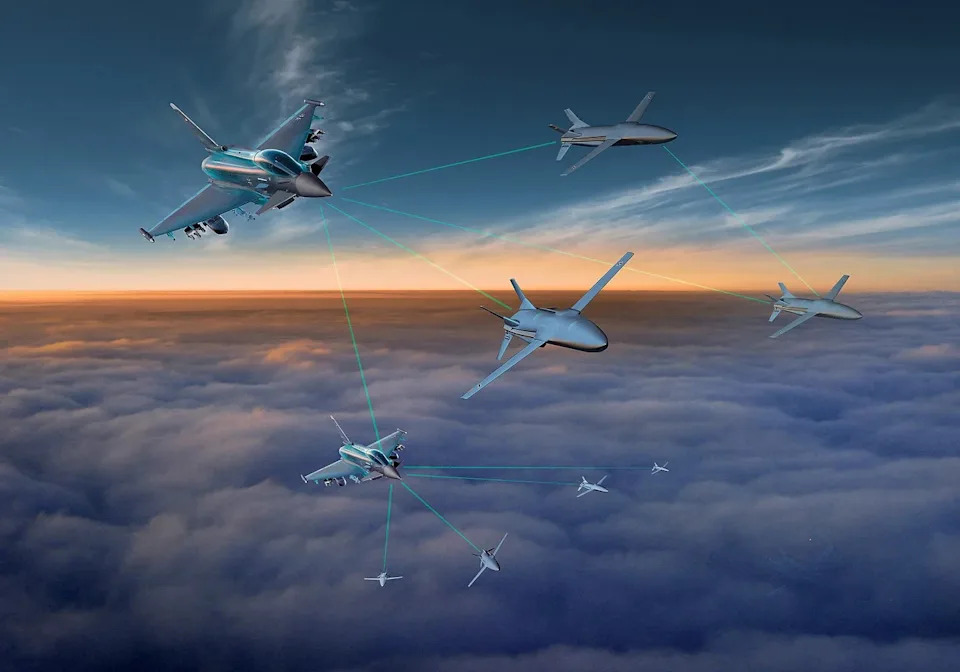
A rendering from Airbus of manned-unmanned teaming with Typhoon fighters, a type that is also on order for Turkey.Airbus
Longer term, the K‑SWARM effort aims to incrementally shift uncrewed systems from remote piloting toward increased autonomy driven by AI, while retaining human pilots’ authority and decision‑making. The programme also envisions eventual swarming behaviours, which would raise complexity dramatically.
Operationally and geopolitically, the achievement places Turkey among a small group of nations demonstrating advanced crewed–uncrewed teaming. The capability has potential export appeal, in part because many Turkish defence products are not subject to U.S. ITAR restrictions. Combined packages pairing Kizilelma with platforms such as the TF Kaan or Hürjet — and integrated weapons options — could be attractive to international customers.
Challenges Ahead
While handing control of a UCAV to a crewed jet is an important technical step, scaling the concept will require: interoperability with diverse aircraft, managing larger formations, robust and secure communications, and mature autonomy that allows the UCAV to handle substantial tactical decision‑making under pilot oversight. The autonomy engine, AI agents and resilient data links will determine whether K‑SWARM evolves from a demonstrator into an operational capability.
Contact: [email protected]
Help us improve.